An Indian-origin researcher has developed novel epicardial ablation techniques that may help treat the heart from the outside, without breaking through the organ's tissue.
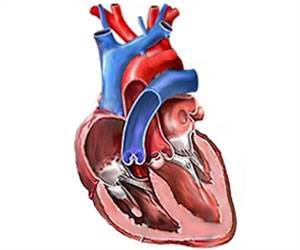
"The heart is surrounded by a one-millimeter wide, fluid-filled sac - that, by the way, you can't even see on X-ray," said Mahapatra, an assistant professor of internal medicine and biomedical engineering at U.Va.
The researcher has revealed that among the the new tools is an "epi-needle access system", which includes a retractable needle and a sensor capable of measuring the pressure and pressure frequency of surrounding tissues.
He says that the revolutionary access system, developed with George T. Gillies, requires only one 3-millimeter incision, making it much less invasive than surgical methods.

Congenital Heart Disease – Septal Defects
Heart diseases that are present at birth are called “ Congenital heart diseases”.
Heart diseases that are present at birth are called “ Congenital heart diseases”.
According to him, good news is that conditions like heart failure, atrial fibrillation, ventricular tachycardia and oesophageal failure can be helped by the new epicardial technology.
Advertisement

Heart Failure Patients May Not Benefit From Common BP Drug
A new study from Wake Forest University Baptist Medical Centre has found that a common blood pressure drug, AvaproTM, does not benefit heart failure patients.
A new study from Wake Forest University Baptist Medical Centre has found that a common blood pressure drug, AvaproTM, does not benefit heart failure patients.
The epi-needle is the first of a suite of epicardial technologies developed by Mahapatra and Gillies and disclosed to the U.Va. Patent Foundation.
Advertisement

Congestive Heart Failure Raises Fratures Risk: Study
Patients with congestive heart failure are four times more likely to sustain a serious fracture than those who have acute cardiovascular conditions, a study published Monday said.
Patients with congestive heart failure are four times more likely to sustain a serious fracture than those who have acute cardiovascular conditions, a study published Monday said.
Mahapatra reckons that the invention will turn out to be very important.
He encourages fellow clinicians to embark on paths to discovery through open, weekly discussions held in his office.
"I love taking a problem and solving it by creating a tool that you can use with your hands to help patients," he said.
Source-ANI
SRM