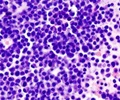
How leukemia cells become 'addicted' to genes, which if targeted could prevent diseased cells from developing, an international team of scientists have discovered.
The team, led by Dr Veronika Sexl from the University of Vienna, conducted their research on acute lymphoid leukemia (ALL) and chronic myelogenous leukemia (CML), which can both be caused by fusion protein, Bcr-Abl, created through the joining of two or more genes originally coded for separate proteins.
Inhibitor drugs such as 'Imatinib' can block vital signals and lead to leukemia cell death, but there are several mutations, which can resist these inhibitors, making them ineffective.
As an alternative strategy, the team investigated transcription factors Stat3 and Stat5, which are linked to bcr/abl-induced transformation.
Acute Lymphoblastic Leukemia - Incidence Causes Symptoms Diagnosis Treatment Prognosis
Acute lymphoblastic leukemia (ALL) is the cancer of white blood cells characterized by excess lymphoblasts. It is the most common of all childhood cancers and can be fatal in weeks if left untreated.
Acute lymphoblastic leukemia (ALL) is the cancer of white blood cells characterized by excess lymphoblasts. It is the most common of all childhood cancers and can be fatal in weeks if left untreated.
"We developed a tumors-specific gene-deletion approach to analyze the roles of Stat5 and Stat3 in Bcr/Abl-induced leukemia growth. We discovered that both factors are required for the development of Bcr-Abl, but once established only Stat5 is crucial for the survival and growth of leukemic Cells," said Sexl.
Advertisement

Chemotherapy Treatment in Children With Leukemia Hindered by Excessive Weight
Study finds obesity is an important factor contributing to chemotherapy resistance and increasing relapse rates among children with leukemia
Study finds obesity is an important factor contributing to chemotherapy resistance and increasing relapse rates among children with leukemia
"Cancer cells undergo extensive adaptations in their signaling and metabolic pathways, thereby becoming dependent on certain genes. In fact the activity of these genes can become limiting for a cancer cell," said Sexl.
Advertisement
More Effective Stem Cell Therapies for Leukemia on the Anvil
A critical first step for the development of safer and more effective stem cell therapies for patients with leukemia, multiple myeloma and anaemia has been taken by scientists at UC San Diego.
A critical first step for the development of safer and more effective stem cell therapies for patients with leukemia, multiple myeloma and anaemia has been taken by scientists at UC San Diego.
"In this study we demonstrated that bcr-abl, Leukaemia cells are addicted to Stat5 to maintain the leukemic state. We've identified Stat5 as an Achilles' heel in the signaling network downstream of Bcr-Abl. Thus, inhibition of Stat5 may provide a novel therapeutic approach for treatment of leukemia," said Sexl.
The study has been reported in EMBO Molecular Medicine. (ANI)
Source-ANI
TRI