
Engage In Daily Physical Activity To Ease Menopause Misery
Women who followed 3 weekly sessions of physical activity, such as walking, jogging, or swimming, that lasted 30 minutes showed fewer symptoms of menopause.
Women who followed 3 weekly sessions of physical activity, such as walking, jogging, or swimming, that lasted 30 minutes showed fewer symptoms of menopause.
‘Menopause could be an evolutionary fluke or 'mismatch' which arose because humans were designed for shorter lifespans but now live much longer.’
Tweet it Now
Now, for the first time, researchers from the University of Liverpool and Liverpool John Moores University have used a phylogenetic approach to evaluate the most common evolutionary hypotheses for why females outlive their fertility. Grandmother hypothesis
One of the most popular explanations put forward for the menopause is the 'grandmother hypothesis', which suggests that women live long past reproductive age in order to help successfully raise their grandchildren, thereby strengthening the likelihood that their own genes are passed on. Others argue that the menopause offers no selective advantage and is an evolutionary fluke or 'mismatch' which arose because humans were designed for shorter lifespans but now live much longer.

Early Menopause Can Trigger Depression Later In Life
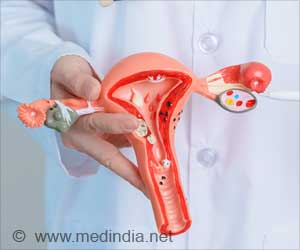
Older age at menopause and a longer reproductive period mean more prolonged exposure to endogenous estrogens, which may be associated with a lower risk for depression later on.
Older age at menopause and a longer reproductive period mean more prolonged exposure to endogenous estrogens, which may be associated with a lower risk for depression later on.
The researchers found that not one hypothesis alone could adequately explain why the menopause evolved, and suggest a new scenario called 'non-adaptive origins followed by evolutionary tinkering' that unites the 'mismatch' and the 'grandmother' theories.
Advertisement

This is Why Migraine Worsens in Women Approaching Menopausal Age
The risk of migraine is most apparent in women during the later stage of perimenopause. This is a time when they first begin skipping their menstrual cycles and experience low levels of estrogen.
The risk of migraine is most apparent in women during the later stage of perimenopause. This is a time when they first begin skipping their menstrual cycles and experience low levels of estrogen.
Evolutionary biologist, Dr Kevin Arbuckle, from the University of Liverpool, said: "Our results suggest that the menopause arose through a non-adaptive 'mismatch' between lifespan and reproductive span. Subsequently we think that in populations where males remained at home and females dispersed to reproduce, an adaptive benefit drove the extension of this post-reproductive period."
Advertisement

Intravaginal DHEA Reduces Vaginal Discomfort After Menopause
After menopause, the lining thins and secretes less and less fluid which leads to discomfort with sex as well as increased susceptibility to infections.
After menopause, the lining thins and secretes less and less fluid which leads to discomfort with sex as well as increased susceptibility to infections.
Co-author Dr Hazel Nichols, from Liverpool John Moores University, added: "Conflicting views in science can be challenging to reconcile, but our study suggests that both adaptive and non-adaptive ideas may be correct - it's just that they apply to different parts of the evolution of this most unusual reproductive trait."
Source-Eurekalert