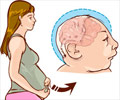
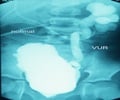
Researchers at University of Utah have suggested that women with both a pre-pregnancy sexually transmitted disease (STD) and urinary tract infection (UTI) are more likely to deliver babies with a severe birth defect called gastroschisis.
Gastroschisis is a birth defect in which infants are born with their intestines and other internal organs outside the abdomen.Headed by Marcia L. Feldkamp, Ph.D., P.A., assistant professor of pediatrics at the U School of Medicine and director of the Utah Birth Defect Network, this study may partly tell about a global increase in gastroschisis.
"Gastroschisis is a public health issue worldwide, and the prevalence is on the rise in Utah. We don't understand why this is occurring. But the incidence of STDs is also increasing and there may be a connection," The British Medical Journal quoted Feldkamp, as saying.
Feldkamp said that one of the study conducted by other Utah researchers reported a tenfold increase in gastroschisis from 1971-2002.
The researchers believe that gastroschisis may be caused by environmental and maternal factors. This birth defect is also influenced by the age of a woman giving birth. As compared to women over 25 years of age, women less than 20 years old are 11 times more likely to have babies with gastroschisis.
This Utah study is a multi-site national investigation using birth defect surveillance systems in Utah and nine other states, namely Arkansas, California, Georgia, Iowa, Massachusetts, New Jersey, New York, North Carolina, and Texas.
Advertisement
It was found that women who agreed to be having both an STD and UTI immediately before or early in pregnancy were four times more likely to have a child with gastroschisis. Mothers under 25 whose babies had gastroschisis reported having an STD and UTI nearly five times more than mothers in the control group. In women 25 or older, none of the mothers reported having both types of infection. The researchers concluded that mothers in both groups reported having more UTIs than STDs.
Advertisement
"One of the problems, especially with Chlamydia, is these infections are subclinical (unreported) because the woman doesn't know she has it. We probably have many cases that go undiagnosed," said Feldkamp.
She stressed that the issue is quite important in the under-20 age group as STDs are on a rise in women in this demographic. Mainly Chlamydia is rapidly increasing and can result in both a sexually transmitted disease infection and a UTI.
"If teens are having sex and getting pregnant, they're at risk of sexually transmitted diseases. They're not thinking about the consequences, so that's a huge problem with this age group," she said.
However, Feldkamp said that those babies who are born with gastroschisis are more likely to survive today than they were a few decades back, with about a 90 percent survival rate. Surgeons will place the intestines back in the abdomen. But this sometimes can be a slow process resulting in complications.
The study is published in the online British Medical Journal.
Source-ANI
SRM