A distinct ECG-derived spectrographic phenotype, designated as narrow-band elevated low frequency coupling (e-LFCNB)has been identified in a study in the July 1 issue of the journal SLEEP. This biomarker is associated with prevalent hypertension, stroke, greater severity of sleep disordered breathing and sleep fragmentation in patients suffering from obstructive sleep apnea (OSA).
Results indicate that the odds ratio for prevalent stroke was 1.65 [CI: 1.19.29] in those with versus without the presence of e-LFCNB. The biomarker was detected in 1,233 participants (23.5 percent), with statistically significant differences between those with and without it. Patients with the biomarker tended to be older (average 64.7 years versus 61.4 years), male (63.3 percent versus 45.1 percent), slightly heavier (average body mass index 29.3 versus 28.6) and sleepier (according to the Epworth Sleepiness Score test results). Sleep apnea severity and use of diuretics, calcium blockers, and B-blockers were associated with increased e-LFCNB. After adjustment for age, sex, body mass index, hypertension, and diabetes, only prevalent stroke remained associated with both categorical and continuous measures of e-LFCNB, while treated and total hypertension were associated only with the ECG biomarker as continuous measure.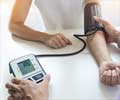
High Blood Pressure
High blood pressure or hypertension is defined as a blood pressure of above 140 mm Hg (systolic) and or 90mm Hg (diastolic).
High blood pressure or hypertension is defined as a blood pressure of above 140 mm Hg (systolic) and or 90mm Hg (diastolic).
"Central sleep apnea is precisely timed, meaning that breathing stops and starts with near identical timing from event-to-event," said Thomas. This type of timing abnormality results in the narrow-band pattern, even if by usual scoring methods the respiratory abnormality looks obstructive." We found that having the pattern suggesting a central or breathing control abnormality was associated with worse sleep, more severe sleep apnea, high blood pressure and an increased risk of prevalent strokes. Therefore, OSA patients who are at increased risk for high blood pressure may be at even greater risk if they also have a control abnormality."
The cross-sectional retrospective study obtained polysomnographic and clinical data from 5,247 patients (of the original 6,441) who were included in the baseline examination of the Sleep Heart Health Study (SHHS), a multi-center longitudinal study of participants over the age of 40, designed to determine the cardiovascular consequences of sleep apnea at a population level. Associations were estimated with use of various drugs and pathologies including prevalent hypertension and cardiovascular and cerebrovascular disease.
High Blood Pressure | Hypertension - Causes, Symptoms, Diagnosis & Treatment
High blood pressure or hypertension is a chronic condition, which usually lasts a lifetime once it is developed.
High blood pressure or hypertension is a chronic condition, which usually lasts a lifetime once it is developed.
The authors claim that there is an increased prevalence of periodic breathing following ischemic cerebrovascular disease, which is one way by which strokes may cause an increase in the biomarker. Hypertension may be the cause of undiagnosed cardiac dysfunction, which may also lead to an increase in the presence of e-LFCNB.
Advertisement
Pre-Eclampsia - Causes - Symptoms - Diagnosis - Treatment - FAQs
In pre eclampsia a pregnant woman develops high blood pressure and proteinuria during pregnancy.
In pre eclampsia a pregnant woman develops high blood pressure and proteinuria during pregnancy.
Source-Eurekalert
RAS
Dialysis - Hemodialysis, Peritoneal Dialysis and Role of Diet and Drugs
Dialysis is an artificial process for removing excess water and waste from the blood. Hemodialysis and peritoneal dialysis are the types of dialysis.
Dialysis is an artificial process for removing excess water and waste from the blood. Hemodialysis and peritoneal dialysis are the types of dialysis.