
Yellow Fever | Acute Viral Hemorrhagic Fever - Causes, Symptoms, Diagnosis & Treatment
Yellow fever is a hemorrhagic fever that is transmitted by infected mosquitoes and it can lead to liver failure and death.
Yellow fever is a hemorrhagic fever that is transmitted by infected mosquitoes and it can lead to liver failure and death.
‘New BBB-Minibrain model presents an alternative method that can be used by the pharmaceutical industry to perform regulatory tests on live viral vaccines. The new method aims to reduce the use of animals for testing vaccines.’
Tweet it Now
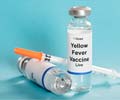
For several years now, following the adoption of EU Directive 2010/63/EU,1 the scientific community has been actively seeking to reduce the practice of animal testing. But in many cases, these efforts are hindered by a lack of acceptable alternatives that satisfy regulatory authorities. This is particularly the case for the regulatory testing required for live viral vaccines, such as the yellow fever vaccine; suppliers must demonstrate that the seed lots used to produce vaccine batches sold on the market do not represent a risk of neurotoxicity. These tests are currently performed on animals, which are monitored for the emergence of any clinical signs in the central nervous system that may suggest neurotoxic side effects.
Against this backdrop, Institut Pasteur scientists developed a 3D culture model mimicking the human blood-brain interface, the "BBB-Minibrain", in 2014. This model, formed of a blood-brain barrier (BBB) associated with a mixed culture of neurons, astrocytes and microglia (a "minibrain"), can be used to detect when viruses enter the brain through the BBB, their multiplication in the minibrain and the emergence of any neurotoxic effects. A patent application (WO2016038123) was filed for the model.

Beautiful Faces and Maimed Animals
Most of you are perhaps unaware that these beautifully packed cosmetic items have a ‘bloody past’. Before these items appear in the market they undergo extensive testing on countless animals.
Most of you are perhaps unaware that these beautifully packed cosmetic items have a ‘bloody past’. Before these items appear in the market they undergo extensive testing on countless animals.
Working with Sanofi Pasteur research teams, they demonstrated that the BBB-Minibrain can be used to identify any rare viral particles in vaccine preparations that have acquired the ability to enter the brain and multiply there. This test therefore paves the way for the rejection of any seed lots containing mutant viruses capable of entering the brain and becoming neurovirulent.
Advertisement
Zika Fever - Causes, Symptoms, Diagnosis, Treatment and Prevention
Zika virus is transmitted to humans by infected mosquitoes which causes mild fever with maculopapular rash. No treatment or vaccine is currently available.
Zika virus is transmitted to humans by infected mosquitoes which causes mild fever with maculopapular rash. No treatment or vaccine is currently available.
These findings represent a first proof of concept and feasibility for the development of an alternative test that complies with the "3Rs" principle. Work to develop this test is ongoing. The long-term aim is to secure approval for the new test from regulatory authorities.
Advertisement
Dengue Vaccine - Types, Symptoms, Treatment & Prevention
Several dengue vaccines are under development. Dengvaxia, Sanofi’s live-attenuated tetravalent dengue vaccine is already commercially available in 10 dengue endemic countries.
Several dengue vaccines are under development. Dengvaxia, Sanofi’s live-attenuated tetravalent dengue vaccine is already commercially available in 10 dengue endemic countries.
Source-Eurekalert