
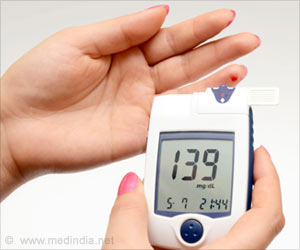
Number of Diabetes Patients to Reach 79.4 Million in India: Doctors
The incidence of diabetes will also rise in other parts of the world with the figures likely to increase from 171 million a decade ago to 366 million by 2030.
The incidence of diabetes will also rise in other parts of the world with the figures likely to increase from 171 million a decade ago to 366 million by 2030.
‘Poly Cystic Ovary Syndrome (PCOS) is the most common endocrine disorder in women of reproductive age. PCOS symptoms vary from women to women thus making its diagnosis delayed or confusing. India currently reports 10 percent of the world's PCOS cases.’
Tweet it Now
"Insulin resistance has been recognised as a risk factor for diabetes and may be the earliest detectable abnormality in individuals who proceed to develop diabetes," said Md. Ashraf Ganie, a senior endocrinology consultant and assistant professor at AIIMS. Insulin resistance is a condition in which the body produces insulin but does not use it effectively. When people have insulin resistance, glucose builds up in the blood instead of being absorbed by the cells, leading to type 2 diabetes or pre-diabetes.
PCOS is the most common endocrine disorder in women of reproductive age. Symptoms are irregular menstrual periods, irregular ovulation, hirutism, weight gain, hair loss and oily skin or acne. PCOS symptoms vary from women to women thus making its diagnosis delayed or confusing.

Cycling to Office may Cut Risk of Type 2 Diabetes
Though marked as a recreational activity, cycling can significantly reduce the risk of Type 2 diabetes, if used as a means of transport to work daily.
Though marked as a recreational activity, cycling can significantly reduce the risk of Type 2 diabetes, if used as a means of transport to work daily.
"PCOS is also associated with an increased risk of developing health problems in later life span, such as type 2 diabetes, hyper tension and heart disease, metabolic syndrome, NASG and sleep apnea. However, it has been seen that 50 percent of affected women are not aware of it," Nutan Agarwal, gynaecologist at AIIMS, told IANS.
Advertisement
US Government Diabetes Screening Guidelines Misses Out High-risk Patients
The 2015 Diabetes screening guidelines recommend that people undergo screening for diabetes if they are aged 40 to 70 years old and are overweight or obese.
The 2015 Diabetes screening guidelines recommend that people undergo screening for diabetes if they are aged 40 to 70 years old and are overweight or obese.
Source-IANS

Duodenum-Jejunum Gastric Bypass Surgery May Help Cure Diabetes
Bypass surgery reversed the metabolic abnormalities indicative of diabetes and significantly improved glucose tolerance and insulin sensitivity.
Bypass surgery reversed the metabolic abnormalities indicative of diabetes and significantly improved glucose tolerance and insulin sensitivity.