
Government Revises Ceiling Prices of 42 Essential Medicines by 15%
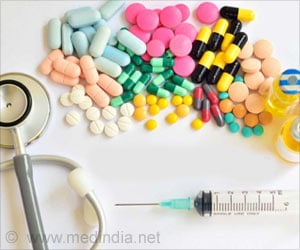
The government capped the prices of 42 essential medicines used in treatment of various ailments including tuberculosis, cancer and cardiac diseases.
The government capped the prices of 42 essential medicines used in treatment of various ailments including tuberculosis, cancer and cardiac diseases.
‘Pharmaceutical companies should offer vaccines to all the countries at an affordable price.’
Tweet it Now
Pfizer has since announced a special price for the vaccine to humanitarian organisations, in line with GSK, the other producer of this type of vaccine.But in an editorial published today, Els Torreele at the Open Society Foundations in New York and Professor Mariana Mazzucato at the University of Sussex, argue that donations and benevolent price reductions for selected countries or populations "remain random acts of charity that do not get to the heart of the problem: the unacceptable commodification of human lives by drug companies using monopoly pricing power to determine who lives and who dies."
They point out that pneumonia vaccines are likely to cost less than a dollar to produce, but are typically being sold at $120-160 (£96-£130; €110-€150) per dose in wealthy countries, and at least three doses are required to protect a child. Pfizer's revenue from this vaccine was $6.2bn in 2015.
Indian Drug To Treat Liver Cirrhosis Saves Aussie’s Life At Minimal Cost
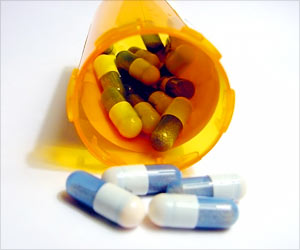
The total treatment regime of 84 tablets costed around 100,000 Australian dollars. But the same treatment with the same drug in India is 900 dollars.
The total treatment regime of 84 tablets costed around 100,000 Australian dollars. But the same treatment with the same drug in India is 900 dollars.
"Though this has been applauded as an act of corporate social responsibility, they say the price "is still more than profitable, and there is no transparency around the cost structure of vaccine manufacture or company use of tax deductions to assess the true generosity of such offers."
Advertisement
So what is the reason behind this price hike, they ask?
Advertisement
As with medicines, the often cited justification for high vaccine prices is that research and development is expensive and risky, they add. Yet a detailed estimate of the development cost of rotavirus vaccines suggests that companies could recover all fixed costs quickly and offer these vaccines to all countries at affordable prices.
Instead, "they seek to fragment the market, selling in middle and high income countries in ways that maximise short term returns."
They call on companies to agree on a fair price that takes into account the research and manufacturing costs, the public research contributions, and the public health importance of vaccines. "This, rather than charitable donations meant to mask the system failures of a profit maximising healthcare economy, would be a beneficial corrective for public health," they say.
"The right price for vaccines must take into account the value of their collective creation but also the fact that they are essential goods produced collectively to safeguard the vulnerable - no matter where they live," they conclude.
Source-Eurekalert