Human System to Cultivate Skin Cells for Grafting
Laminins, the specific type of tissue-proteins found in human body, help create a safer treatment for severe burns or other skin-related defects.
Laminins, the specific type of tissue-proteins found in human body, help create a safer treatment for severe burns or other skin-related defects.
‘Using this information, cellular and molecular pathways that are affected by aging can be manipulated to delay or even reverse the skin aging process.
’
Tweet it Now
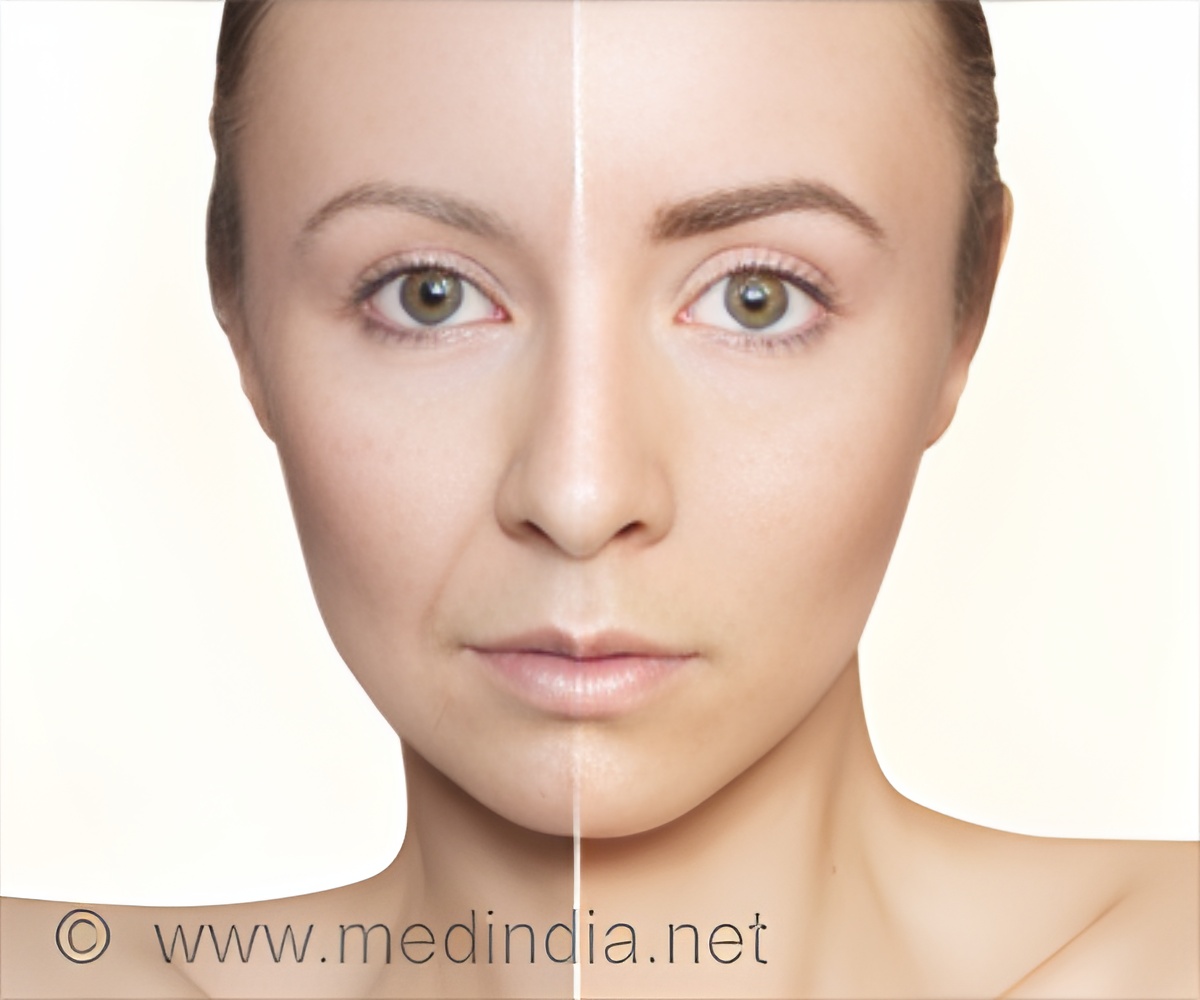
With age, our tissues lose their function and capacity to regenerate after being damaged. A study published today in Cell by scientists at the Institute for Research in Biomedicine (IRB Barcelona) and the Centro Nacional de Análisis Genómico of the Center for Genomic Regulation (CNAG-CRG) explains how dermal fibroblasts age.The main conclusion drawn is that these fibroblasts lose their cell identity as if they had "forgotten" what they are, and consequently, their activity is altered, thus affecting tissue.
The study reveals the cellular and molecular pathways affected by aging and proposes that they could be manipulated to delay or even reverse the skin aging process.
New Method for Turning Skin Cells into Pluripotent Stem Cells Developed
By using CRISPRa researchers have succeeded in converting skin cells into pluripotent stem cells by activating the cell's own genes.
By using CRISPRa researchers have succeeded in converting skin cells into pluripotent stem cells by activating the cell's own genes.
Dermal fibroblasts are key for the production of collagen and other proteins that make up the dermis and that preserve the skin's function as a barrier. The activity of these cells is also crucial for the repair of skin damage. As we age, the dermis loses its capacity to produce collagen, and consequently its capacity to repair wounds is also significantly impaired.
Advertisement
Non-Healing Skin Cells From Diabetic Foot Ulcers Reprogrammed as Stem Cells
Skin cells from diabetic foot ulcers can be reprogrammed to acquire properties of embryonic-like cells, revealed researchers.
Skin cells from diabetic foot ulcers can be reprogrammed to acquire properties of embryonic-like cells, revealed researchers.
Holger Heyn, team leader at the CNAG-CRG and co-leader of the study, explains that "cutting-edge technologies allow molecular analysis of individual cells. In this study, we have applied advanced techniques to obtain high-resolution images of fibroblasts as they age".
Advertisement
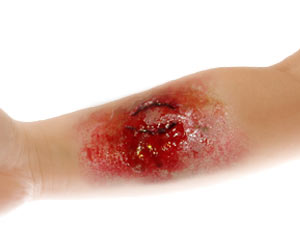
Skin Cells 'Walk' to Wounds to Repair It: Washington State University Researchers
How the skin cells will alter the proteins holding them in place and move to repair a wound has been observed by Washington State University researchers.
How the skin cells will alter the proteins holding them in place and move to repair a wound has been observed by Washington State University researchers.
The single-cell analysis confirmed the loss of fibroblast identity in aged animals. Using sophisticated computational tools, the scientists observed that aged fibroblasts show a less defined molecular conformation compared to young fibroblasts and that "they resemble the undefined cell states observed in newborn animals," says Heyn.
Although being basic research, Aznar Benitah comments that "this new knowledge might not only have cosmetic applications, for example anti-aging skin treatment, but more importantly, also therapeutic applications aiming to help aged skin to form scar tissue faster and more efficiently after being damaged or after an operation".
Source-Eurekalert