
Cancer Pain - Causes - Effects - Assessment - Treatment - FAQs - Video
Every 1 out of 3 people undergoing cancer treatment experiences pain.
Every 1 out of 3 people undergoing cancer treatment experiences pain.
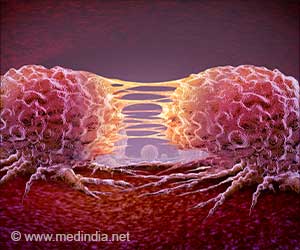
A better method is to create drugs that can first distinguish cancer cells from healthy cells and then, once those cells have been spotted, mark them for destruction; in other words, to produce molecules that diagnose cancer cells before eradicating them, said Price.
This type of therapy could do away with the side effects associated with conventional chemotherapy treatments. It also could be tailored on a molecular level to individual cancers, making it uniquely specific.

AIDS/HIV Related Cancer - Kaposi's sarcoma Lymphomahoma
AIDS defining malignancies are cancers that occur in patients with AIDS due to their low immunity.
AIDS defining malignancies are cancers that occur in patients with AIDS due to their low immunity.
The researchers' method involves the use of two different varieties of small conditional RNA. One is designed to be complementary to, and thus to bind to, an RNA sequence unique to a particular cancer cell-say, the cells of a glioblastoma, an aggressive brain tumour.
Advertisement

Prostate Cancer | Cancer of Prostate - Incidence, Prevention, Causes, Symptoms & Treatment
This cancer affects men over the age of 50 years and screening with rectal examination and PSA can help both in early detection and effective treatment
This cancer affects men over the age of 50 years and screening with rectal examination and PSA can help both in early detection and effective treatment
In this way, detection of the RNA cancer marker triggers the self-assembly of a long double-stranded RNA polymer.
Advertisement
Anal Cancer | Cancer of Anal - Causes, Symptoms, Staging, Treatment, Prognosis & Prevention
Cancer of the anus is rare however its incidence is increasing especially among the HIV positive patients and it is caused by human papilloma (HPV) virus.
Cancer of the anus is rare however its incidence is increasing especially among the HIV positive patients and it is caused by human papilloma (HPV) virus.
If PKR indeed detects long double-stranded RNA within a cell, the protein triggers a cell-death pathway to eliminate the cell.
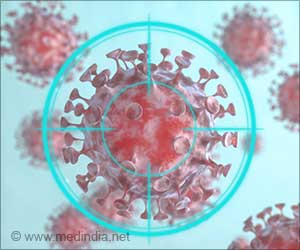
"The small conditional RNAs trick cancer cells into self-destructing by selectively forming long double-stranded RNA polymers that mimic viral RNA. There is, however, no virus.
"We used three different pairs of small conditional RNAs, with each pair designed to recognize a marker found in one of the three types of cancer.
"The molecules caused a 20- to 100-fold drop in the numbers of cancer cells containing the targeted RNA cancer markers, but no measurable reduction in cells lacking the markers," he said.
The findings appeared in the Proceedings of the National Academy of Sciences (PNAS).
Source-ANI