
Screening Tests for Thyroid Dysfunction
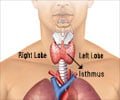
High or low thyroid stimulating hormone (TSH) level is indicative of a dysfunctional thyroid.
High or low thyroid stimulating hormone (TSH) level is indicative of a dysfunctional thyroid.
‘Up to 60% of those with thyroid disease are unaware of their condition. Women are five to eight times more likely than men to have thyroid problems.
’
Tweet it Now
The thyroid gland is a hormone factory. Under normal conditions, the factory foreman -- the molecule calling the shots -- is the aptly named thyroid-stimulating hormone. Called TSH for short, this hormone attaches to a receptor on the thyroid cell surface, triggering a series of signals that provoke the gland to pump out thyroid hormones. However, sometimes autoantibodies, essentially posing as TSH, attach to the receptor and trick the thyroid into flooding the body with more hormones than are needed. In addition, sometimes the receptor itself has an inherited or acquired mutation that triggers production of too many or too few hormones.
Torsten Schöneberg of the University of Leipzig in Germany, who led the study reported in the JBC, says it was curious that the legitimate activator hormone, autoantibodies and mutations all were able to provoke thyroid hormone production. So his team set out to identify a common thread among them.

Hyperthyroidism (Overactive Thyroid) - Causes - Symptoms - Diagnosis - Treatment
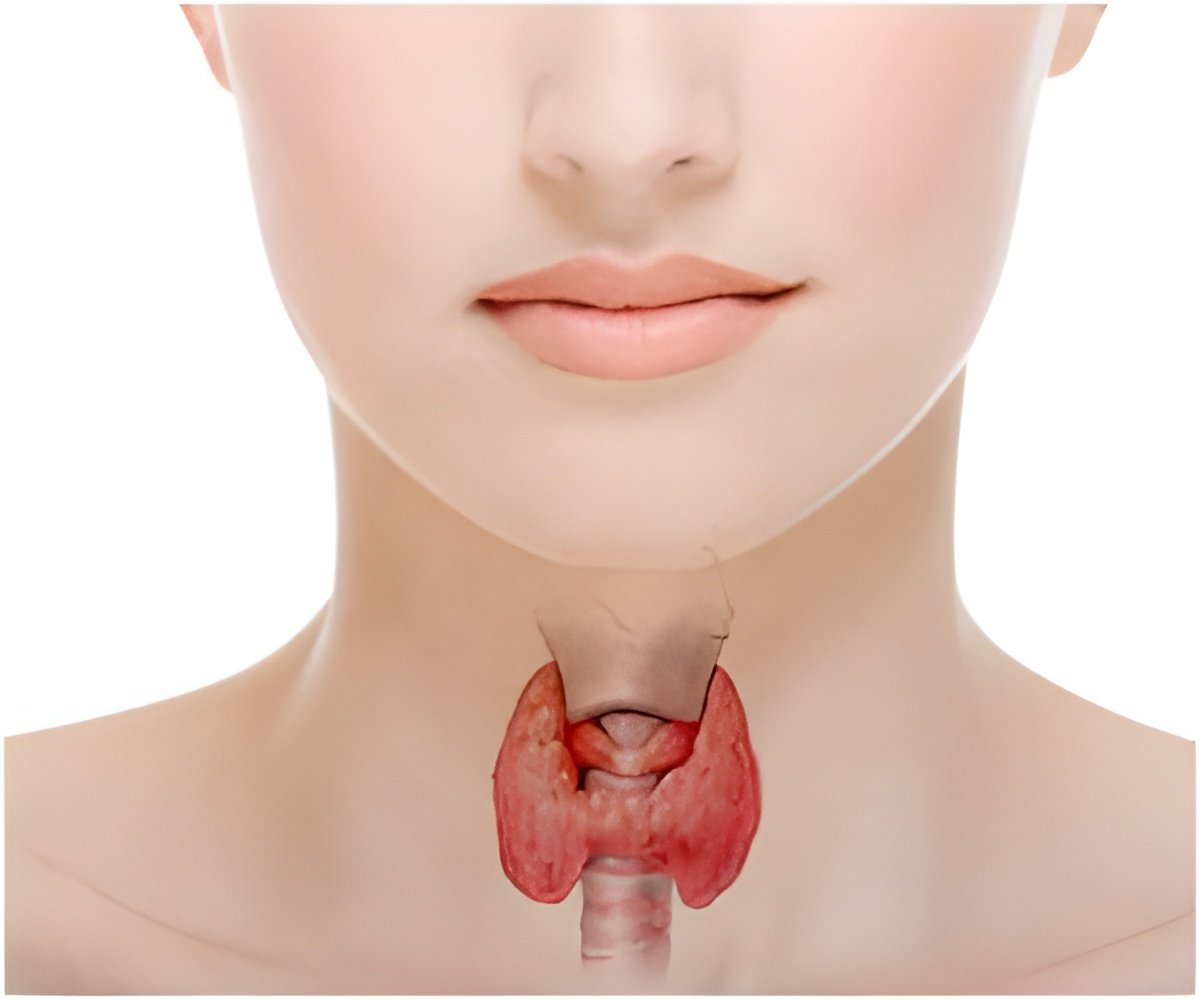
Hyperthyroidism is a condition in which the thyroid gland makes excessive thyroid hormone. Grave’s disease is the most common cause of hyperthyroidism.
Hyperthyroidism is a condition in which the thyroid gland makes excessive thyroid hormone. Grave’s disease is the most common cause of hyperthyroidism.
"We discovered a small amino acid sequence - we call it p10 because it is 10 amino acids long -- within the TSH receptor protein," Schöneberg explains. This sequence "functions as activator of the receptor upon binding of the hormone or autoantibodies."
Advertisement

Hypothyroidism - Causes - Symptoms - Diagnosis - Treatment - FAQs
Symptoms of hypothyroidism are often general, unspecific changes in the body. Lethargy, weight gain, stiffness and cramping of muscles are some of the symptoms of hypothyroidism.
Symptoms of hypothyroidism are often general, unspecific changes in the body. Lethargy, weight gain, stiffness and cramping of muscles are some of the symptoms of hypothyroidism.
"In most other hormone-receptor systems, the hormone directly activates the receptor protein," says Antje Brüser, first author of the study and junior scientist of the group, offering the example of how adrenalin activates the ß adrenergic receptor. "In the case of glycoprotein hormone receptors, the family of proteins that includes the thyroid receptor, upon binding of the extracellular hormone, the intramolecular activator (p10) induces structural changes of the receptor protein, triggering activation of the intracellular signaling cascade."
Advertisement
Maharashtra�s First Successful Minimal Invasive Procedure To Remove Thyroid Nodule
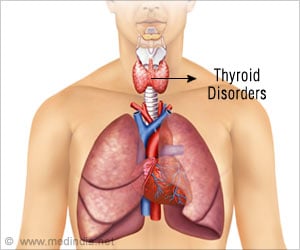
Swelling in the thyroid gland was removed by a small incision in the armpit of a patient. Unlike in conventional surgery, it does not leave a scar in the neck.
Swelling in the thyroid gland was removed by a small incision in the armpit of a patient. Unlike in conventional surgery, it does not leave a scar in the neck.
Source-Eurekalert