Development of a treatment for lymphoma, or cancer of the lymph nodes, could be possible in the near future.
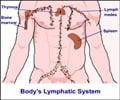
Hodgkins Lymphoma - Incidence Causes Diagnosis Types Treatment FAQs
Hodgkins lymphoma or Hodgkins disease has the distinction of being the first cancer to be cured by chemotherapy or by radiotherapy.
Hodgkins lymphoma or Hodgkins disease has the distinction of being the first cancer to be cured by chemotherapy or by radiotherapy.
The Myc family of oncoproteins (c-Myc, N-Myc, and L-Myc) regulate critical pathways that contribute to tumors; c-Myc expression, which is activated in human Burkitt lymphoma, is sufficient to induce the growth of several tumor types in animal models.
In the new study, the scientists focused on precancerous and malignant Myc-expressing B cells, part of the immune system affected in human lymphoma. Using transgenic animal models, Cleveland and his team, led by the efforts of senior postdoctoral fellow Robert Rounbehler, showed that Myc-directed repression of a protein called tristetraprolin (TTP/ZFP36) was important for both the development and maintenance of cancer. The suppression of TTP is a hallmark of human cancers with MYC involvement, Cleveland noted.
Non-Hodgkins Lymphoma
Non Hodgkins Lymphoma is a cancer that affects the lymph tissues. It is made up of a wide array of subtypes.
Non Hodgkins Lymphoma is a cancer that affects the lymph tissues. It is made up of a wide array of subtypes.
The authors showed that Myc regulates hundreds of genes that contain adenylate-uridylate-rich elements (AU-rich elements), which play an important role in RNA stability and are found in many messenger RNAs (mRNAs) that code for oncogenes, nuclear transcription factors, and cytokines. AU-rich elements direct the mRNA for degradation; they are thought to be vital for controlling expression during cell growth.
Advertisement
Chemotherapy - History, Principles, Aim, Types, Side Effcts, Pros & Cons
'Chemo' means medicine or 'drug', 'therapy' means 'treatment'. Chemotherapy refers to the use of cytotoxic drugs in the treatment of cancer.
'Chemo' means medicine or 'drug', 'therapy' means 'treatment'. Chemotherapy refers to the use of cytotoxic drugs in the treatment of cancer.
Advertisement
About Chemotherapy Drugs
Chemotherapy drugs perform like ‘magic bullets’ to destroy cancer cells in the body.
Chemotherapy drugs perform like ‘magic bullets’ to destroy cancer cells in the body.