
Heart Attack - Overview
Heart attack is the death of the heart muscle due to loss of blood supply. Heart disease is the leading cause of death in the United States. Other names for heart attack include acute myocardial infarction, coronary thrombosis, and coronary occlusion.
Heart attack is the death of the heart muscle due to loss of blood supply. Heart disease is the leading cause of death in the United States. Other names for heart attack include acute myocardial infarction, coronary thrombosis, and coronary occlusion.
Following one initial case of a fractured filter, William Nicholson, M.D., of York Hospital, York, Penn., and colleagues evaluated all 189 patients who received either a Bard Recovery or a Bard G2 vena cava filter at that institution between April 2004 and January 2009. Of these, one patient was pregnant, 35 had died and 10 had already had their filter removed. A total of 80 patients underwent fluoroscopy to assess the integrity of the filter, and those whose filter was fragmented also underwent echocardiography and cardiac computed tomography.
A total of 13 of 80 patients (16 percent) had at least one arm or strut fracture from their filter. This included seven of 28 (25 percent) filters that fractured and embolized (i.e., the fractured piece traveled within the vein) among patients with the first-generation Bard Recovery filter. In five of these seven cases (71 percent), at least one fragment traveled to the heart; three of these patients experienced life-threatening symptoms of rapid heartbeat or fluid buildup around the heart and one experienced sudden death at home.

Diet, Lifestyle and Heart Disease
The correlation between diet, lifestyle and heart disease. The importance of balanced diet life style and exercise for controlling heart disease.
The correlation between diet, lifestyle and heart disease. The importance of balanced diet life style and exercise for controlling heart disease.
"These data initially suggest that the fracture rate for the Bard G2 filter is approximately half that of the Bard Recovery filter. However, on further analysis, this conclusion may not be accurate," the authors write. The average time since filter implantation was about 50 months for patients with the Bard Recovery filter and 24 months for the Bard G2 filter. "The average time intervals in patients where fracture was observed in the Bard Recovery and Bard G2 groups were nearly identical to those of all patients in those respective groups."
Advertisement

Congenital Heart Disease – Septal Defects
Heart diseases that are present at birth are called “ Congenital heart diseases”.
Heart diseases that are present at birth are called “ Congenital heart diseases”.
Source-Eurekalert
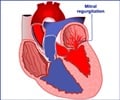
Mitral Regurgitation
Mitral Regurgitation [MR] is the abnormal back flow or leaking of blood from the left ventricle to the left atrium through the mitral valve.
Mitral Regurgitation [MR] is the abnormal back flow or leaking of blood from the left ventricle to the left atrium through the mitral valve.