
COVID-19 Vaccination in India: Issues and Challenges
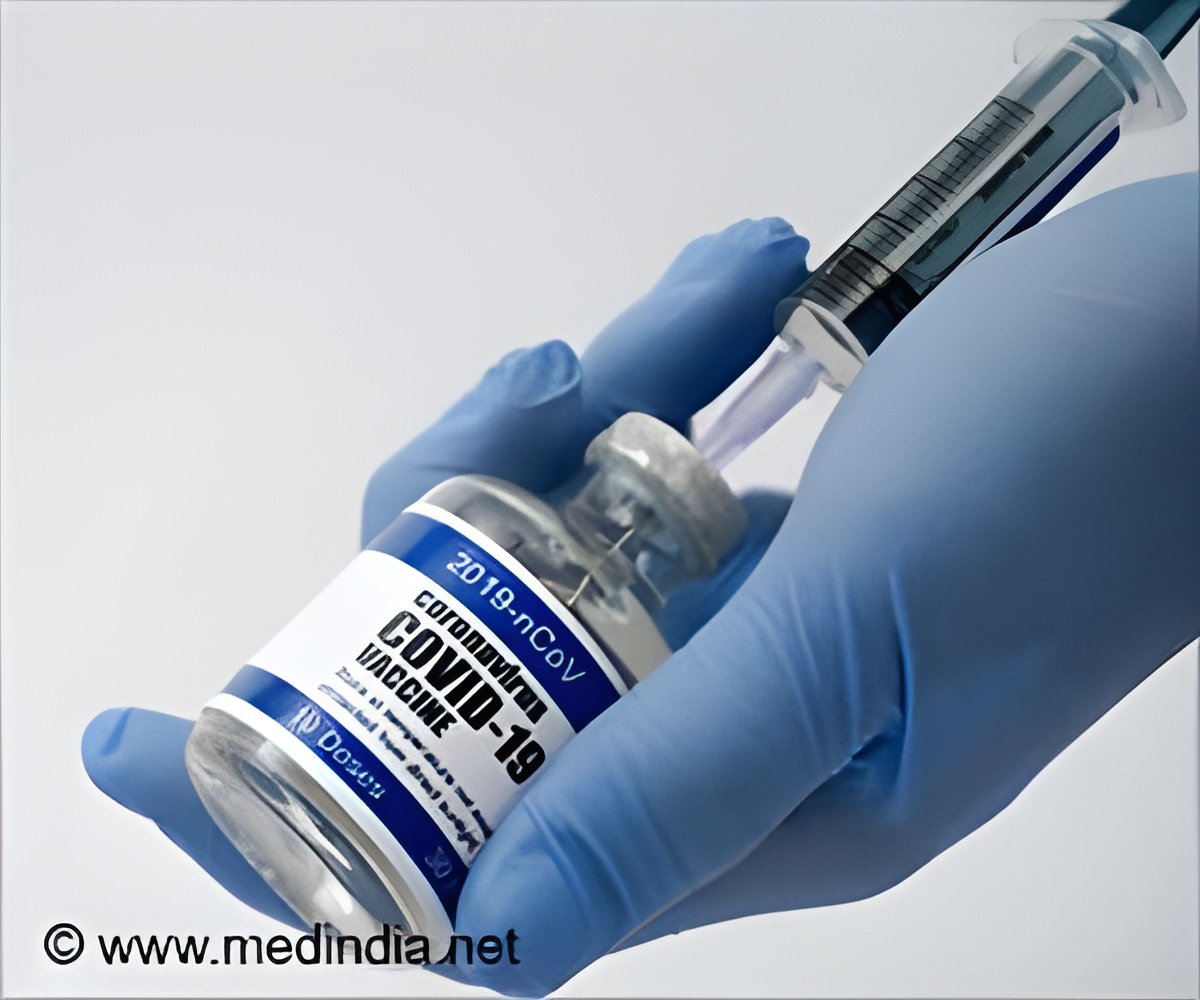
India’s COVID-19 vaccination program has been launched. It currently uses the vaccines Covishield and Covaxin. There are some issues and challenges that need to be overcome in order to vaccinate all Indians.
India’s COVID-19 vaccination program has been launched. It currently uses the vaccines Covishield and Covaxin. There are some issues and challenges that need to be overcome in order to vaccinate all Indians.
‘The study supports current plans to reduce the dose gap between vaccines since they found that after just one dose of the Pfizer-BioNTech vaccine, people are less likely to develop antibody levels against the Delta variant as high as those seen against the previously dominant Alpha (B117) variant. ’
Tweet it Now
The results also show that levels of these antibodies are lower with increasing age and that levels decline over time, while no correlation was observed for sex or body mass index. Although laboratory results such as these are needed to provide a guide as to how the virus might be evolving to escape the first generation of vaccines, levels of antibodies alone do not predict vaccine effectiveness and prospective population studies are also needed. Lower neutralising antibody levels may still be associated with protection against Covid-19, said researchers from the Francis Crick Institute and the National Institute for Health Research (NIHR) UCLH Biomedical Research Centre in the UK.
"This virus will likely be around for some time to come, so we need to remain agile and vigilant. Our study is designed to be responsive to shifts in the pandemic so that we can quickly provide evidence on changing risk and protection," said Emma Wall, UCLH Infectious Diseases consultant.
Canada Approves Pfizer Vaccine for Adolescents
Canada announced its approval of administering the Pfizer-BioNTech COVID-19 vaccine to children ages 12 to 15 on Wednesday.
Canada announced its approval of administering the Pfizer-BioNTech COVID-19 vaccine to children ages 12 to 15 on Wednesday.
For the study, the team analysed antibodies in the blood of 250 healthy people who received either one or two doses of the Pfizer-BioNTech Covid-19 vaccine, up to three months after their first dose.
Advertisement
Pfizer Vaccine 97% Effective In Symptomatic COVID-19 Cases
The COVID-19 vaccine from Pfizer-BioNtech offers at least 97% effectiveness in symptomatic coronavirus cases.
The COVID-19 vaccine from Pfizer-BioNtech offers at least 97% effectiveness in symptomatic coronavirus cases.
The study will be extended to participants vaccinated with the Oxford/AstraZeneca vaccine.
Advertisement
MHRA Issues An Allergy Warning on Pfizer Vaccine After Allergies Were Reported
Any person with a history of anaphylaxis to a medicine or food should not be vaccinated with Pfizer-BioNTech COVID-19 vaccine states MHRA. Pfizer states allergic reactions had not been a feature of Pfizer’s clinical trials and was excluded.
Any person with a history of anaphylaxis to a medicine or food should not be vaccinated with Pfizer-BioNTech COVID-19 vaccine states MHRA. Pfizer states allergic reactions had not been a feature of Pfizer’s clinical trials and was excluded.
Source-IANS