
New York Couple Detect Pregnancy With Fitbit's Fitness Tracker
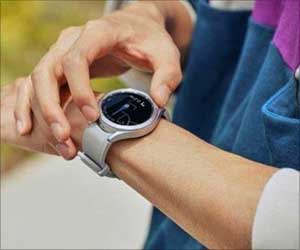
The couple noticed consistent increased heart rate and felt that the device needs replacement but finally found that they were pregnant.
The couple noticed consistent increased heart rate and felt that the device needs replacement but finally found that they were pregnant.
‘The patient's activity tracker helped the emergency physicians to identify when the patient's normal heart rate of 70 jumped up to 190.
’
Tweet it Now
"Using the patient's activity tracker - in this case, a Fitbit® - we were able to pinpoint exactly when the patient's normal heart rate of 70 jumped up to 190," said corresponding study author Alfred Sacchetti, MD, FACEP of Our Lady of Lourdes Medical Center in Camden, N.J. "The device told us that the patient's atrial fibrillation was present for only a few hours. That was well within the 48-hour window needed to consider him for rhythm conversion, so we cardioverted him and sent him home." A 42-year-old patient with a history of seizures but no history of cardiac disease or prior episodes of atrial fibrillation came to the emergency department following a seizure. He had an irregular heart rate ranging between 130 and 190 beats per minute. He was medicated with oxcarbazepine and diltiazem. His heart rate returned to normal (between 80 and 100 beats per minute) but the atrial fibrillation remained.
The treatment of recent onset atrial fibrillation is electrical cardioversion in any patient who can reliably relate an arrhythmia onset time of within the previous 48 hours. Because the patient was asymptomatic during his current episode of atrial fibrillation, it was not possible to assign an onset time for his arrhythmia.
Now, Smartphone can be Your New Fitness Tracker
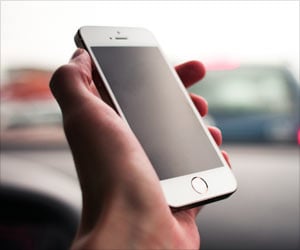
Experts developed a new system called BioPhone that can take your heart rate, breathing and other physiological measurements while it sits in your pocket.
Experts developed a new system called BioPhone that can take your heart rate, breathing and other physiological measurements while it sits in your pocket.
"Not all activity trackers measure heart rates, but this is the function of most value to medical providers," said Dr. Sacchetti. "Dizziness with a heart rate of 180 would be approached very differently from the same complaint with a heart rate of 30. At present, activity trackers are not considered approved medical devices, and use of their information to make medical decisions is at the clinician's own discretion. However, the increased use of these devices has the potential to provide emergency physicians with objective clinical information prior to the patient's arrival at the emergency department."
Advertisement

Fitness Trackers' Provide Estimate of Calories Burned, but Not Totally Reliable
The BodyMedia Core was found to be the top performer with a rate of error of 15.3%, while the Misfit Shine was the least accurate with a 30.4% error rate.
The BodyMedia Core was found to be the top performer with a rate of error of 15.3%, while the Misfit Shine was the least accurate with a 30.4% error rate.
Source-Eurekalert

Fitness Tracker for Kids Developed by Leapfrog
Leapfrog has developed a new fitness tracking device aimed at kids between four and seven years of age.
Leapfrog has developed a new fitness tracking device aimed at kids between four and seven years of age.