Health Effects of Global Warming/What is Global Warming?
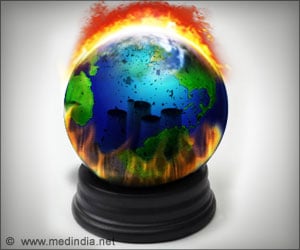
Greenhouse effect causes excessive heat to build up in the earth’s atmosphere causing global warming and affects the environment and health.
Greenhouse effect causes excessive heat to build up in the earth’s atmosphere causing global warming and affects the environment and health.
‘Global regulation and replacement of other environmentally harmful chemicals contributed to the increase of these compounds in the Arctic, illustrating that regulations can have important unanticipated consequences.’
Tweet it Now
But these replacement compounds, thought to be a better alternative, degrade into products that do not break down in the environment and have instead continually increased in the Arctic since about 1990. It is important to study these products of CFC replacement compounds, short-chain perfluoroalkyl carboxylic acids (scPFCAs), before more of them are phased in over the next few years as they can adversely impact human health and the environment. They are part of the perfluoroalkyl substances (PFAS) class of man-made chem icals used in commercial products and industrial processes that are currently receiving a lot of attention.
These scPFCAs are products of chemicals used in the fluoropolymer industry in automotive, electrical and electronic applications, industrial processing and construction.
Antarctic Sea Sponge: New Weapon to Fight Malaria
Sponge discovered from the Antarctic sea may hold the key to treating malaria, reveals a new study.
Sponge discovered from the Antarctic sea may hold the key to treating malaria, reveals a new study.
They can travel long distances in the atmosphere and often end up in lakes, rivers and wetlands causing irreversible contamination and affecting the health of freshwater invertebrates, including insects, crustaceans and worms.
Advertisement

Anesthesia Works in Antarctica
Commonly used anesthetic drugs still work, even after exposure to the extreme environmental conditions of the Antarctic, showed new study.
Commonly used anesthetic drugs still work, even after exposure to the extreme environmental conditions of the Antarctic, showed new study.
The researchers acknowledge the importance of the Montreal Protocol's positive impact on the ozone and climate but point out that even the best regulations can have unintended negative impacts on the environment.
Advertisement

Quiz on Global Warming
The International Conference on Global Warming (GCGW-2012) will be held in Istanbul, Turkey on July 8-12, 2012. Take this quiz to learn what causes global warming, how it can affect your health, and what can be your contribution to contain it.
The International Conference on Global Warming (GCGW-2012) will be held in Istanbul, Turkey on July 8-12, 2012. Take this quiz to learn what causes global warming, how it can affect your health, and what can be your contribution to contain it.
Source-Eurekalert