
How Do Prescription Opioids Like Fentanyl Affect Drug Users?
Prescription opioids like fentanyl are feared due to the drug overdose and are hard to avoid, finds a new study.
Prescription opioids like fentanyl are feared due to the drug overdose and are hard to avoid, finds a new study.
‘Prescription and illicit drug abuse has devastating impacts on public health, thus conventional tests using immunoassays fall short.’
Tweet it Now
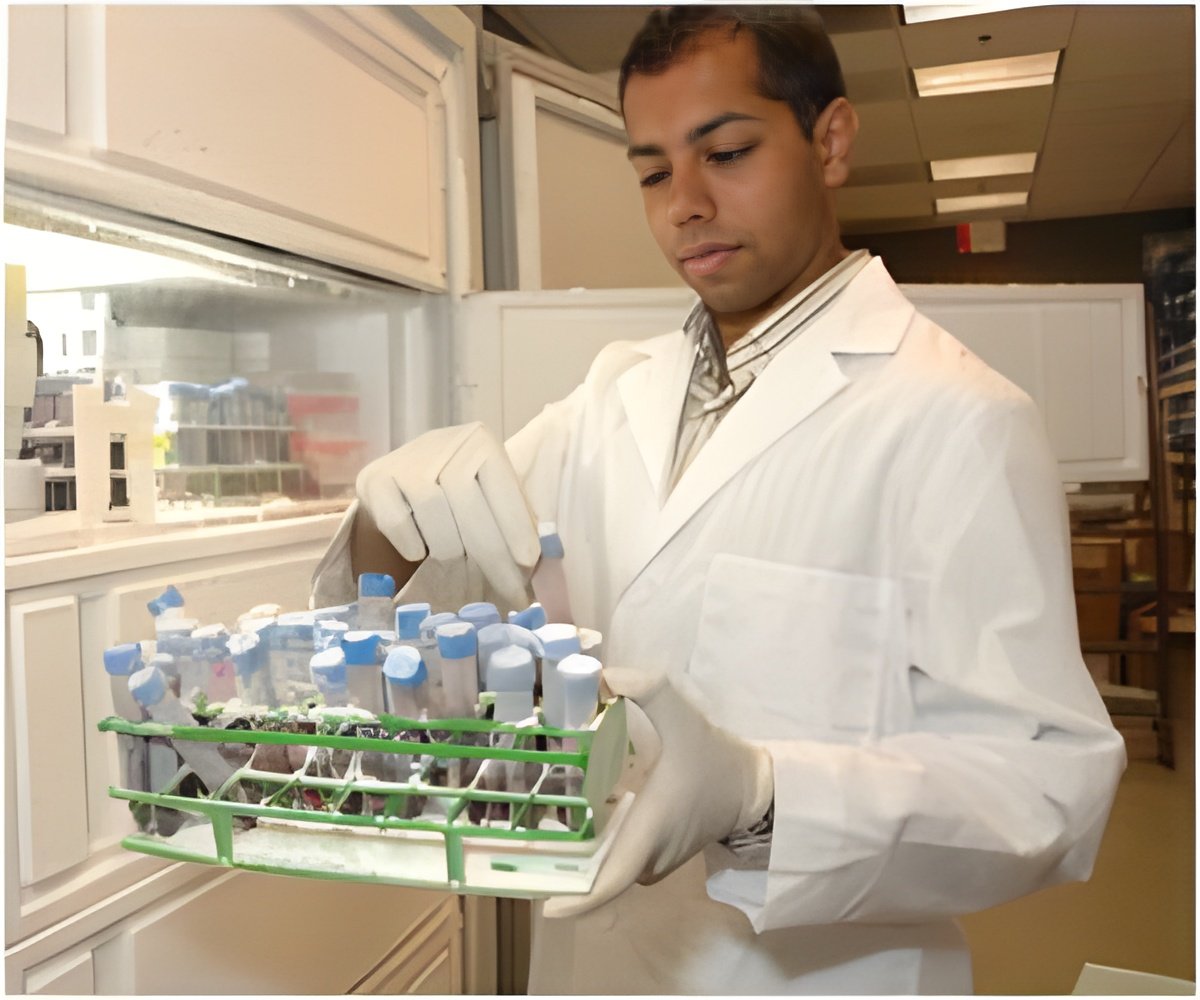
The new method would eliminate a two-stage process currently in use for drug monitoring by allowing technicians to run many tests at once in a high throughput manner -- dramatically cutting processing time while improving screening accuracy with quality assurance. Importantly, this mass spectrometric method can also screen for a wider range of drugs of abuse, as well as identify designer drugs that elude conventional tests. New technologies are urgently needed, given a worldwide epidemic of prescription and illicit drug abuse and its devastating impacts on public health. According to a recent report by the United Nations Office on Drugs and Crime, approximately 35 million people worldwide used opioid drugs in the year 2014. In 2016, the Public Health Agency of Canada reported an estimated 2,800 people died of opioid overdoses alone. It expects that number to rise to at least 3,000 in 2017.
Conventional tests using immunoassays fall short because they cannot detect the alarming assortment of drugs, which include synthetic opioids, tranquilizers, stimulants and anti-anxiety agents. Additional confirmation tests are also required due to a high rate of false positives and false negatives, which slows the process further.
Overdose Epidemic from Illegally Made Fentanyl in US
Substantial increases in fatal synthetic opioid involved overdoses, primarily driven by fentanyl-involved overdose deaths in multiple states since 2013.
Substantial increases in fatal synthetic opioid involved overdoses, primarily driven by fentanyl-involved overdose deaths in multiple states since 2013.
"Current technologies are not specific, accurate nor comprehensive enough, which impairs a physician's ability to properly care for patients, such as monitoring for drug compliance, potential substitution or polydrug usage," he says.
Advertisement
Geo-Mapping Helps Identify �Hot Spots� For Use of Fentanyl and Other Opiates
Geo-mapping technique is being used to identify hot spots for the use of fentanyl and other opiates in the neighbourhood.
Geo-mapping technique is being used to identify hot spots for the use of fentanyl and other opiates in the neighbourhood.
Researchers plan to validate the method relative to conventional screening tests for a broad spectrum of drugs of abuse on a cohort of in-patients, currently under physician care.
Advertisement

Fentanyl Overdose Deaths Increase Triggers a State of Emergency in Canada
The powerful painkiller was found to be responsible in 64 out of 201 illicit drug overdose deaths in the province in the first three months of 2016.
The powerful painkiller was found to be responsible in 64 out of 201 illicit drug overdose deaths in the province in the first three months of 2016.