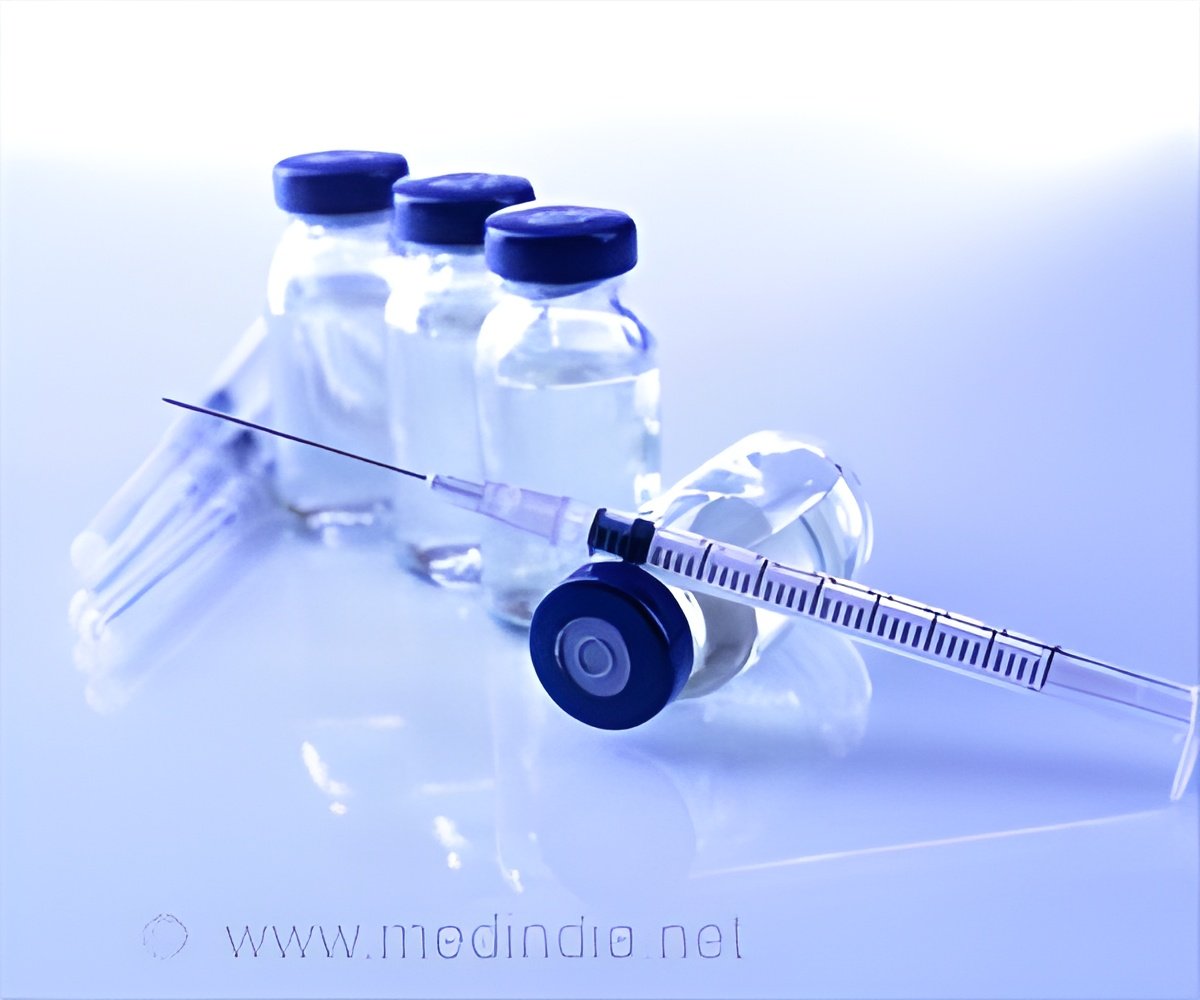
‘PH(1-110) helps to produce thermostable vaccines that generate a sufficient immune response without the need for an adjuvant, or refrigeration.’
Read More..Tweet it Now
Some vaccines also rely on additional pharmacological or immunological substances, called adjuvants, to boost their desired immune response, which may have unwanted side-effects, such as allergies. Read More..
Luis Vaca, at Universidad Nacional Autonoma de Mexico, the corresponding author said: "The vaccines that are currently available require constant cold storage, meaning they rely on a temperature-controlled supply chain, which constitutes over 80% of their cost.
Vaca and a team of researchers adapted a strategy used by insect viruses that allows them to survive outside of their host for extended periods of time. A key component of this strategy is a protein known as polyhedrin that forms crystals around the virus, protecting it from the environment.
Previous research by the authors showed that a short sequence of the first 110 amino acids that make up polyhedrin (PH(1-110)) maintains the ability of the full length protein to form crystals, even when other proteins, including viruses, are attached to it.
Combining part of porcine circovirus, which can cause disease in pigs, with PH(1-110) has been shown to prompt the production of antibodies in vaccinated pigs. However, the exact characteristics of the particles that form after combining PH(1-110) and a virus, including thermostability (the ability to withstand heat), have not been investigated, and neither has the strength of a possible immune response.
Advertisement
Top 10 Vaccine Myths Debunked
Childhood vaccination has saved many lives, yet lots more has to be done to increase awareness and eliminate myths regarding vaccines.
Childhood vaccination has saved many lives, yet lots more has to be done to increase awareness and eliminate myths regarding vaccines.
They found that mice injected with PH(1-110)GFP produced anti-GFP antibodies and showed a strong immune response, similar to one observed in mice injected with GFP and an adjuvant. As GFP on its own does not create a strong immune response, an adjuvant would normally be needed. Anti-GFP antibodies remained in the blood of vaccinated mice after 24 weeks, indicating the production of a lasting immune response.
Advertisement
Luis Vaca said: "As PH(1-110) could be paired with any protein, our technology opens up the possibility of reducing the cost of conservation and distribution of vaccines by about 80% - the cost of the temperature-controlled supply chain.
Pharmaceutical companies could maintain their profits, but the consumer would pay less, reducing the cost of vaccination in low-income countries significantly."
Source-Eurekalert