‘Patients who respond for leukemia treatment can be detected with high accuracy by a new clinical biomarker.’
Tweet it Now
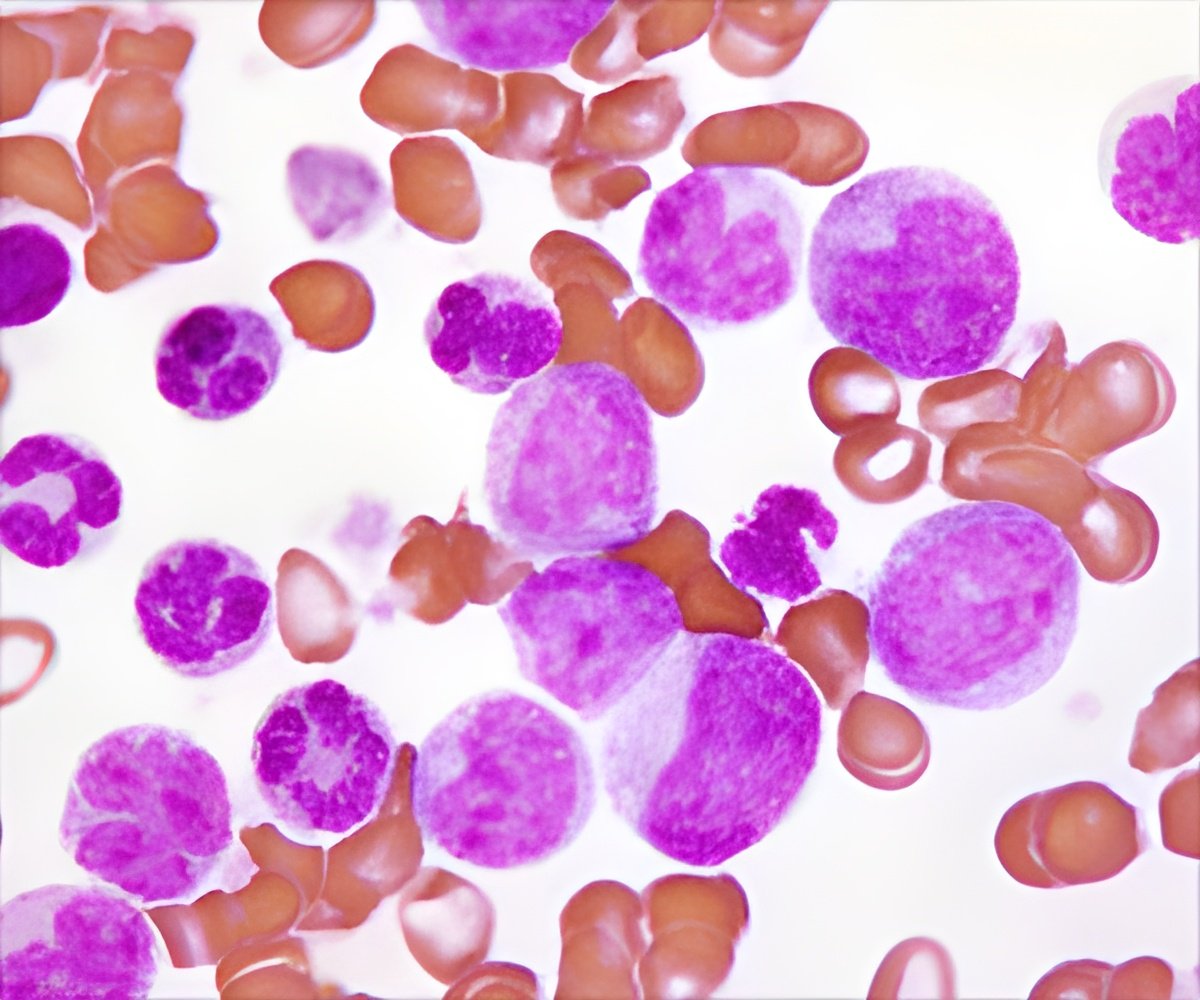
Acute myeloid leukemia (AML) is a cancer that leads to abnormal proliferation of white blood cells.The anti-cancer drug cytarabine provides the basis of chemotherapies directed against AML. Cytarabine needs to be activated in cancer cells by the addition of phosphate groups to exert its anti-cancer effects. Prof Jindrich Cinatl (Institut für Medizinische Virologie, Goethe-Universität, Acting Director: Prof Volkhard Kempf) investigated with his research group (funded by the Frankfurter Stiftung für krebskranke Kinder) cytarabine-resistant AML cells from the Resistant Cancer Cell Line (RCCL) collection that he runs together with Prof Martin Michaelis (University of Kent, Canterbury, UK).
Prof Cinatl discovered that the toxicity of cytarabine against AML cells correlates with the expression of the cellular enzyme SAMHD1, which enables to predict the sensitivity of AML cells to cytarabine.
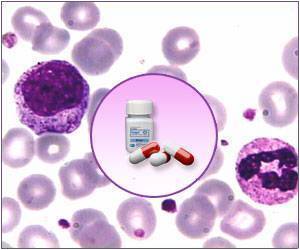
Nivolumab With Chemotherapy Benefits Acute Myeloid Leukemia (AML) Patients
Nivolumab along with standard chemotherapy was found to be effective in people with acute myeloid leukemia (AML).
Nivolumab along with standard chemotherapy was found to be effective in people with acute myeloid leukemia (AML).
In a cooperation with clinicians (led by Prof Hubert Serve, Medizinische Klinik II, Goethe-Universität) it was shown that SAMHD1 levels determined in leukaemia cells also enabled the prediction of the response of AML patients to cytarabine-based chemotherapies with high accuracy. This introduces SAMHD1 as clinical biomarker that can guide cytarabine-based chemotherapies only to such patients that are very likely to respond and spares patients who are unlikely to respond from toxic side effects.
Advertisement

New Therapy to Halt Lethal Childhood Leukemia
Study identifies new targeted molecular therapy to prevent the progression of aggressive pediatric mixed lineage leukemia.
Study identifies new targeted molecular therapy to prevent the progression of aggressive pediatric mixed lineage leukemia.
Advertisement
Acute Lymphoblastic Leukemia - Incidence Causes Symptoms Diagnosis Treatment Prognosis
Acute lymphoblastic leukemia (ALL) is the cancer of white blood cells characterized by excess lymphoblasts. It is the most common of all childhood cancers and can be fatal in weeks if left untreated.
Acute lymphoblastic leukemia (ALL) is the cancer of white blood cells characterized by excess lymphoblasts. It is the most common of all childhood cancers and can be fatal in weeks if left untreated.