
AIDS - Initial Theories and Disease Progression-Blood Test-Stages-FAQs
AIDS was first detected in early 1980s, among gays, Haitians and black Africans. HIV is a descendant of a Simian Immunodeficiency Virus.
AIDS was first detected in early 1980s, among gays, Haitians and black Africans. HIV is a descendant of a Simian Immunodeficiency Virus.
‘Recent scientific advances made in the new drug pipeline for HIV treatment promise lots of long-acting drugs under different stages of development currently. This could potentially have a very positive impact on advancing progress on ending AIDS.’
Tweet it Now
Although lots of lifesaving antiretroviral treatments have emerged, HIV to AIDS-related illnesses has cost the lives of 690,000 people in 2020. More than 10 million (27%) of the 37.6 million people are living with HIV and are not on treatment even today. Moreover, "we are getting signals of HIV drug resistance, which means we need to strengthen our surveillance efforts and continue to invest in long-acting prevention and treatment tools, in the absence of an HIV vaccine, and also remember that solutions we find may not be one size that fits all", says Dr. Adeeba Kamarulzaman, President of the International AIDS Society (IAS), during the closing session of the 11th International IAS Conference on HIV Science (IAS 2021).
Drug in the Pipeline

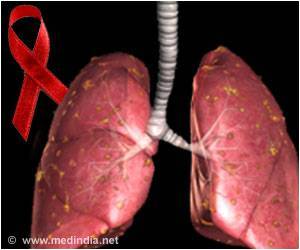
About AIDS/HIV - Prevention And Transmission
Encyclopedia section of medindia explains in brief about the prevention for AIDS/HIV
Encyclopedia section of medindia explains in brief about the prevention for AIDS/HIV
The long-acting drugs include 2-monthly injectable – Rilpivirine (a non-nucleoside reverse transcriptase inhibitor) and Cabotegravir (an integrase inhibitor) for maintenance of viral load suppression.
Advertisement

AIDS and Pregnancy - Treatment - Caring HIV Babies
The Acquired immune deficiency syndrome is brought about by the deadly human immunodeficiency virus. In the USA alone an estimate of 120,000 - 160,000 women are HIV- infected.
The Acquired immune deficiency syndrome is brought about by the deadly human immunodeficiency virus. In the USA alone an estimate of 120,000 - 160,000 women are HIV- infected.
It has already been approved and licensed for use in the European Union (EU) and the USA. However, due to the lack of clinical data for pregnant women, they are excluded from using these injectables.
Advertisement

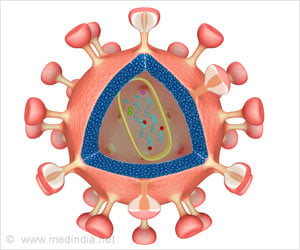
AIDS/HIV - Clinical Features Treatment FAQ Prevention & Transmission
"AIDS is an epidemic disease, a potentially preventable, deadly infection for which there is no cure, no vaccine, and it is not under control." - National Commission on AIDS, 1993.
"AIDS is an epidemic disease, a potentially preventable, deadly infection for which there is no cure, no vaccine, and it is not under control." - National Commission on AIDS, 1993.
The other drugs in the pipeline with potent efficacy include Lenacapavir (potent capsid protein inhibitor), the combination of Lenacapavir and Islatravir, and Maturation Inhibitors (GSK254 and GSK937).
The session also shared recent updates on various ongoing HIV vaccine efficacy studies that include Imbokodo Phase 2b (HVTN 705) and, Mosaico Phase 3 (HVTN 706) study.
Lot of long-acting treatment options for HIV are currently under different stages of development. This could potentially have a very positive impact on advancing progress on ending AIDS.
Source-Medindia