
Drug Delivery System
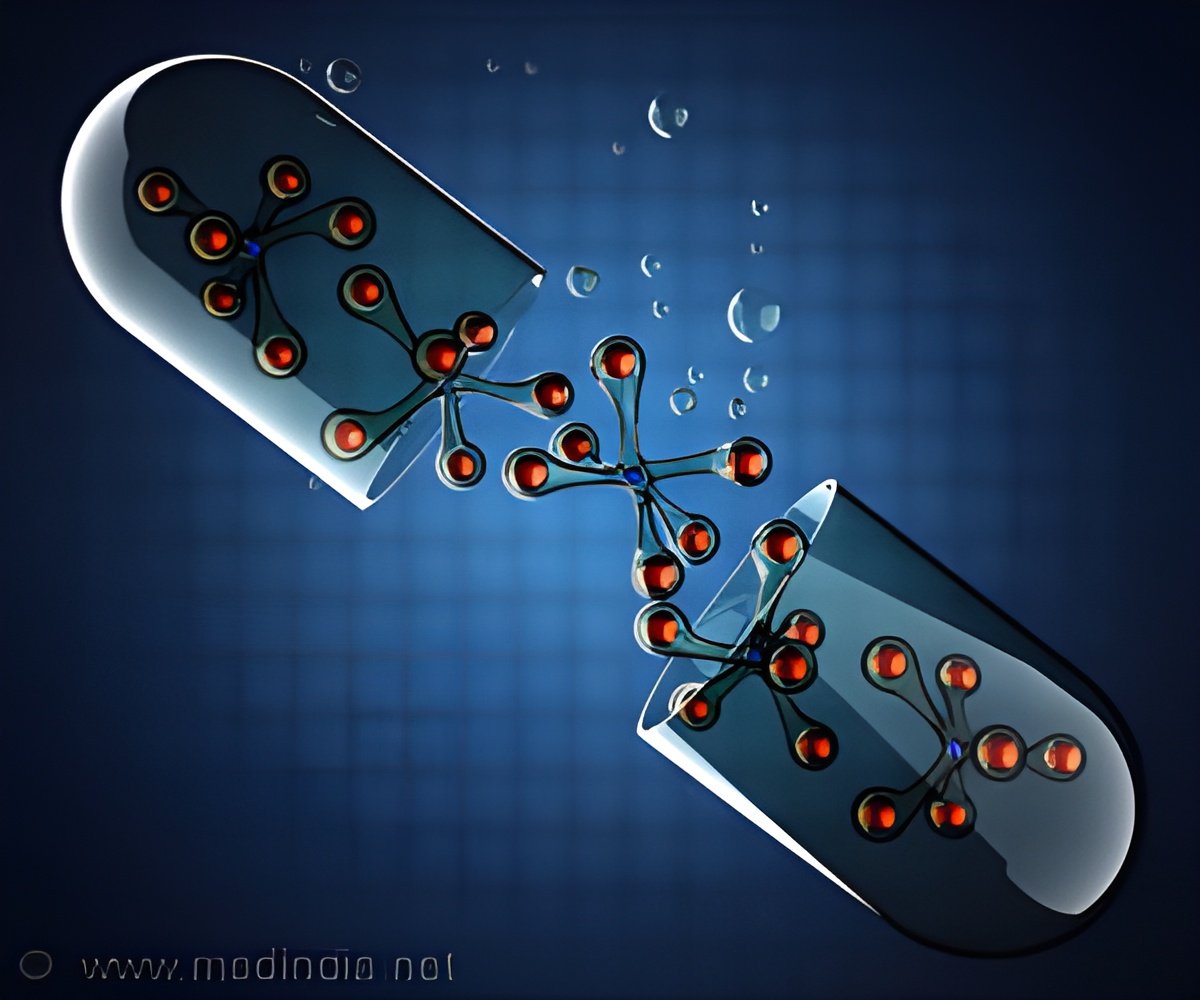
Drug delivery systems, is a technology using various chemicals to bind the target drugs, carry them to target organ, tissue or cell where the drug is released at a pre-determined rate.
Drug delivery systems, is a technology using various chemicals to bind the target drugs, carry them to target organ, tissue or cell where the drug is released at a pre-determined rate.
‘Superparamagnetic crystals could soon be zipping drugs around your body, taking them to diseased organs, revealed a study.’
Tweet it Now
In theory, superparamagnetic particles could be ideal for drug
delivery, as they can be directed to a tumor simply by using a magnetic
field. Their tiny size, however, has made them difficult to guide
precisely - until now.But now a team of Chinese researchers has found the solution, and their discovery has opened new applications that could use these crystals to improve - and perhaps even save - many lives.
Kezheng Chen and Ji Ma from Quingdou University of Science and Technology, Quingdou, China have published a method of producing superparamagnetic crystals that are much larger than any that have been made before. They recently published their findings in Physics Letters A.

Oncology Drug Delivery Systems
Drug delivery in oncology offers a localized, prolonged and protected drug interaction with the cancer cells and reduces the side effects.
Drug delivery in oncology offers a localized, prolonged and protected drug interaction with the cancer cells and reduces the side effects.
Chen and Ma explained that the high temperature and pressure under which the crystals form made tiny meteorite-like 'micro-particles' of magnetite escape from their surface. This caused the unusual pock-marked appearance of the crystal surfaces and induced a high degree of stress and strain into the lattice of the growing crystals.
Advertisement
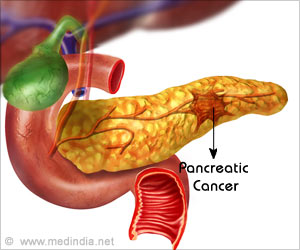
Implantable Device for Effective Drug Delivery in Pancreatic Tumours
The device that delivers chemotherapy was up to 12 times more effective than giving chemotherapy drugs by intravenous injection in mice.
The device that delivers chemotherapy was up to 12 times more effective than giving chemotherapy drugs by intravenous injection in mice.
Magnetite crystals of a similar size that are grown at a lower temperature and under normal pressure are only very weakly magnetic.
Advertisement

Effective Drug Delivery by Plant Virus Nanoparticle
Breast cancer tumors treated with nanoparticles carrying phenanthriplatin shrunk breast cancer tumors four times more than a common chemotherapy drug.
Breast cancer tumors treated with nanoparticles carrying phenanthriplatin shrunk breast cancer tumors four times more than a common chemotherapy drug.
And this is just the beginning. Chen's crystals might, for example, be useful in the many engineering projects that need "smart fluids" that change their properties when a magnetic field is applied. These can already be used to make vehicle suspension systems that automatically adjust as road conditions change, increasing comfort and safety, and to build more comfortable and realistic prosthetic limbs.
Now that superparamagnetism is no longer restricted to minute particles that are difficult to handle, researchers can start exploring in which ways this can contribute to improving our lives.
Source-Eurekalert