
Coronavirus Outbreak: Simple Safety Tips You Need to Know While Traveling Abroad
Coronavirus Outbreak: New Coronavirus (2019-nCoV) is spreading fast across boundaries to infect millions of people and animals. If you are traveling abroad, it is advisable to follow a few travel safety tips to keep this deadly China virus away.
Coronavirus Outbreak: New Coronavirus (2019-nCoV) is spreading fast across boundaries to infect millions of people and animals. If you are traveling abroad, it is advisable to follow a few travel safety tips to keep this deadly China virus away.
‘The Injection Molded Autoclavable, Scalable, Conformable system finds that the reusable mask can fit different face sizes and shapes.
’
Tweet it Now
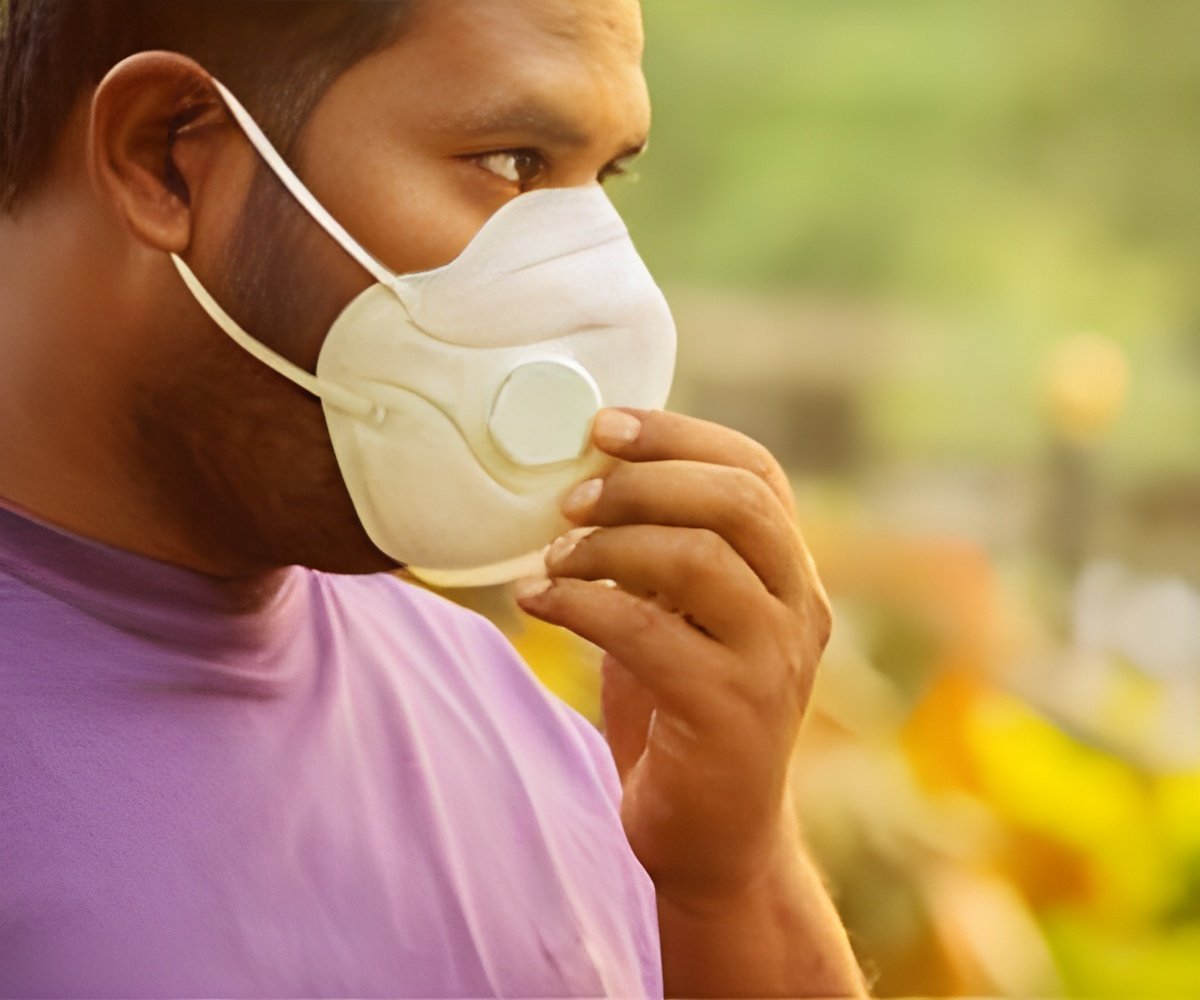
"Like many of our colleagues, when we heard about shortages in personal protective equipment, we wanted to help. We thought that an approach that could be helpful would be to develop a mask system that could be readily sterilized in many different ways and reused," said corresponding author Giovanni Traverso, MB, BChir, Ph.D., a gastroenterologist and biomedical engineer in the Division of Gastroenterology at the Brigham and Department of Mechanical Engineering at MIT.Traverso and his colleagues, including co-lead authors James Byrne, MD, Ph.D., and Adam Wentworth, MS, worked closely with the Massachusetts General Brigham COVID Center for Innovation on their project. The authors selected DOW Corning QP1-250 liquid silicone rubber (LSR) for their mask material. Silicone rubber can withstand the heat of up to 572 degrees Fahrenheit and is used in a wide variety of products, including silicone baking sheets, undergarments, medical implants, and medical devices such as respiratory masks used to deliver anesthesia. The team created the masks using injection molding a common manufacturing technique in which a liquid material is fed into a mold cavity to give it shape. Elastic straps secure the mask in place, and two replaceable filters keep out solid particles.
"From the beginning, we were thinking about scalability. We selected materials recognized to be sterilizable and comfortable and a manufacturing process designed to be scaled," said Byrne, a resident in the Department of Radiation Oncology at the Brigham and a postdoctoral fellow in the Traverso lab.

More Use of Face Masks to Curb COVID-19
WHO advised people aged 60 years or over, or those with underlying conditions, to wear a medical mask in situations where physical distancing is not possible.
WHO advised people aged 60 years or over, or those with underlying conditions, to wear a medical mask in situations where physical distancing is not possible.
"We wanted to create a mask that could be easily sterilized and reused for several reasons. Not only is this important because of disruptions to the supply chain but also disposable masks, gloves, and other PPE can cause a tremendous amount of litter," said Wentworth, a research engineer in the Traverso lab.
Advertisement

Nanofiber Face Masks can Maintain Filtration Efficiency Even After Washing
Nanofiber filter facemask has better filtration efficiency than the N95 face mask. Hence, using the nanofiber filter mask can solve the current shortage of face masks and help fight against the coronavirus disease, reports a new study.
Nanofiber filter facemask has better filtration efficiency than the N95 face mask. Hence, using the nanofiber filter mask can solve the current shortage of face masks and help fight against the coronavirus disease, reports a new study.
- 60 percent would be willing to wear the iMASC system instead of a surgical mask while 20 percent had no preference;
- 25 percent would prefer the iMASC system instead of an N95 mask while 60 percent indicated no preference.
The authors acknowledge that their proof-of-concept study has several limitations. Fit testing and surveys were conducted among only a small number of people at a single institution. Modifications to the filter system and elastic straps would likely improve the fit and robustness of the mask. And large-scale production will require greater quality control of filter components.
Advertisement

Social Media Alert Users in US to Wear Face Masks
Facebook and Instagram will alert on top of the News Feed to encourage users to wear face masks in the US.
Facebook and Instagram will alert on top of the News Feed to encourage users to wear face masks in the US.
Source-Eurekalert