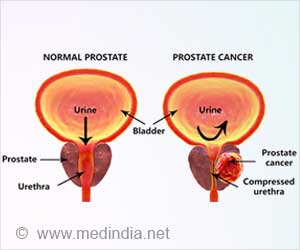
Aspirin is used extensively as a blood thinner to lower risk of heart attack. Interestingly a new study suggests that aspirin has another positive side effect- that of lowering risk of dying due to prostate cancer. In other words, prostate cancer progression to lethal state is lowered.
There was a 40% reduction in risk of death due to prostate cancer among patients who took aspirin, according to urologic Oncology Fellow and principal researcher Dr Christopher Allard. The results of the study were presented on January 4th 2016 at the American Society Of Clinical Oncology in San Francisco.
Can Aspirin be Prescribed for Prevention of Cancer?
Newer studies are being carried out to study the role of aspirin in cancer prevention and preventing cancer death.
Newer studies are being carried out to study the role of aspirin in cancer prevention and preventing cancer death.
‘Aspirin is used extensively as a blood thinner to lower risk of heart attack. New studies indicate that regular use of aspirin has additional benefit in prostate cancer patients, as it lowers the risk of developing lethal cancers in such patients. ’
Tweet it Now
This observational study based its
research findings by studying real life users of aspirin who also had prostate
cancer. This study found that prostate cancer patients who use aspirin for
cardiovascular benefits will now have added reasons to use it regularly. About the study:
The study began in 1982 to study the effect of aspirin and beta carotene on cancer.- 22,000 men were included in the study
- 3,400 developed prostate cancer
- 400 developed lethal prostate cancer
Further, it was found that
- Men who were not diagnosed with prostate cancer but who took aspirin at least thrice a week had a 24% lower risk of developing lethal prostate cancer
- Men who were diagnosed with prostate cancer and who regularly took aspirin had a 39% lower risk of developing lethal prostate cancer.

Aspirin Discontinuation Increases Stroke Risk
Discontinuation of low-dose aspirin therapy may increase the risk of stroke in patients with cardiovascular disease or cerebrovascular disease.
Discontinuation of low-dose aspirin therapy may increase the risk of stroke in patients with cardiovascular disease or cerebrovascular disease.
Other top research publication on aspirin and prostate cancer in 2015 that add substance to above conclusion includes -
Advertisement
An Aspirin A Day Increases Tumor Cell Death and Prevents Relapse of Cancer
During cancer treatment, initially the tumor shrinks but after a few years it bounces back making the tumor more aggressive.
During cancer treatment, initially the tumor shrinks but after a few years it bounces back making the tumor more aggressive.
2. “ Impact of aspirin on clinical outcomes for African American men with prostate cancer undergoing radiation” by Osborn VW, Chen SC, Weiner J, Schwartz D and Schreiber D. This study found that the use of aspirin improved biochemical outcomes as well as metastasis of African men with prostate cancer.
Advertisement
Aspirin Helps Prevent Heart Attacks And Strokes, But Did You Know It Could Prevent Dementia or Even Cancer?
When it comes to preventing heart attacks and strokes, aspirin is very useful, but now researchers believe the humble aspirin could also hold the key to warding off dementia and cancer.
When it comes to preventing heart attacks and strokes, aspirin is very useful, but now researchers believe the humble aspirin could also hold the key to warding off dementia and cancer.
References:
1. http://www.ncbi.nlm.nih.gov/pubmed/264296422. http://www.ncbi.nlm.nih.gov/pubmed/26704566
3. http://www.cancer.org/research/acsresearchupdates/cancerprevention/aspirin-and-cancer-prevention-what-the-research-really-shows
4. http://cebp.aacrjournals.org/content/11/10/1108.full.html
Source-Medindia




![Prostate Specific Antigen [PSA]](https://www.medindia.net/images/common/patientinfo/120_100/prostate-specific-antigen.jpg "Prostate Specific Antigen [PSA]")