Scientists Develop New Chemical Analysis Method to Detect Counterfeit Medicines
A new and improved chemical analysis method has been developed by a team of researchers that is faster and better in detecting counterfeit medicines that have skyrocketed in the past few years
A new and improved chemical analysis method has been developed by a team of researchers that is faster and better in detecting counterfeit medicines that have skyrocketed in the past few years
‘Nigeria reduced counterfeit medicines in its pharmaceuticals market from over 65 percent to 16 percent.’
Tweet it Now
"Our paper provides real-world application of well-respected criminology theory, which is typically unconventional for public health professionals," said John Spink, director of the College of Veterinary Medicine's Food Fraud Initiative, and lead author on the paper. "While there should be more research before reaching additional conclusions, a country's willingness to combat counterfeit and sub-standard medicines may be an indicator of modernization and the stabilizing of a country." Some countries currently deploy an approach of rapid intervention and response. However, even if the speed of policing increases, this tactic is not enough to prevent counterfeiting and protect the public, said Spink, who's also an assistant professor in the College of Veterinary Medicine.
Working with enforcement agencies in Nigeria, Spink and his team studied protocols for crime scene investigation and forensic science. What they learned is applicable to countries around the world that have experienced cases of fraud. Some examples provided by the World Health Organization include: In Niger in 1995, 50,000 were given fake meningitis vaccines, resulting in 2,500 meningitis related deaths. In 1995, nearly 90 children in Haiti and 30 infants in India died due to consuming cough syrup tainted with a toxic chemical found in antifreeze. In 2001, 38 percent of anti-malarial drugs in pharmacies in southeast Asia do not contain any active ingredients.
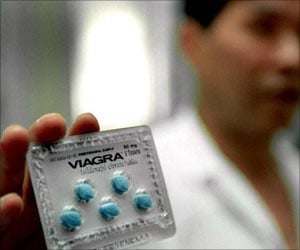
Counterfeit Medicines Like Viagra may Now be Detected Easier
A new chemical analysis method that is faster and more efficient at discovering counterfeit medications available in the market has now been developed by a team of researchers
A new chemical analysis method that is faster and more efficient at discovering counterfeit medications available in the market has now been developed by a team of researchers
"It is important to understand the different types of counterfeits, counterfeiters and counterfeiting organizations before selecting effective countermeasures," said Spink, whose team included MSU's College of Human Medicine's Dr. Douglas Moyer and Dr. Michael Rip. "The goal is to reduce the size of the triangle; increasing the understanding of how and why fraudsters circumvent laws, audits and certifications helps achieve that goal."
Advertisement
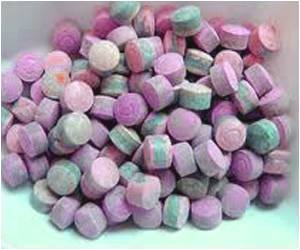
France Hauls Up Record Fake Drugs Labelled as Chinese Tea
French customs have seized millions of counterfeit medicines that were imported from China claiming to be Aspirin,and other drugs calling it as the biggest haul.
French customs have seized millions of counterfeit medicines that were imported from China claiming to be Aspirin,and other drugs calling it as the biggest haul.
"Let's be clear, though, launching or refinement in countermeasures or detection processes will be met with fraudsters' own countermeasures," he said. "An anti-counterfeit strategy should be dynamic and not be perceived as leading to ultimately fixing something. Preventing counterfeiting is more akin to managing a chronic disease such as diabetes rather than the one-time fix of an acute incident such as a broken leg."
Advertisement

Cheap Indian Generic Drugs are Not Fake: WHO
The World Health Organization (WHO) has denied reports saying that more than one-third of cheap generic medicines available in the Indian market are fake.
The World Health Organization (WHO) has denied reports saying that more than one-third of cheap generic medicines available in the Indian market are fake.
Source-Eurekalert