Age Related Macular Degeneration (AMD) - Causes, Symptoms, Diagnosis, Treatment & Prevention
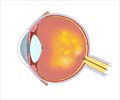
Age related macular degeneration is a disease of the elderly, wherein the macula or the central part of the retina gets affected, leading to loss of vision.
Age related macular degeneration is a disease of the elderly, wherein the macula or the central part of the retina gets affected, leading to loss of vision.
‘The team discovered that large calcified nodules in the retina are indicators of progression risk for late stages of AMD, because they were associated with degeneration of nearby retinal cells.’
Tweet it Now
The research, published today in the journal Science Translational Medicine, used clinical imaging in patients from ophthalmologists K. Bailey Freund, M.D., and Srinivas R. Sadda, M.D., and molecular analysis of eye samples from Curcio’s laboratory by co-first author Matthew Pilgrim, a Ph.D., student at University College London. The experts believe that, with further research and with early intervention, some patients could actually be offered simple measures such as modifying their diet. “By fully understanding the causes behind the changing environment in which these large, damaging nodules grow, we could design new ways to intervene with their growth earlier in the disease process than is currently possible,” Curcio said.
Curcio says the identification of these risks associated with disease progression in the eye, especially in the retina, could become a diagnostic tool for monitoring the progression of retinal degeneration with imaging.
New, Easy Treatment for Age Related Macular Degeneration Shows Promise
Patients with age-related macular degeneration may soon see their monthly injection become an annual refill, with potentially better results.
Patients with age-related macular degeneration may soon see their monthly injection become an annual refill, with potentially better results.
Treatment of AMD can be expensive, as are caregiving and institutional living. In the publication, researchers said that, based on the global burden of AMD, the cost is estimated to be more than $300 billion worldwide. Therefore, delaying progression of AMD or, better yet, minimizing or eliminating risk factors could lead to a substantial reduction in costs borne by health care payers, individuals and society.
Advertisement

Underdiagnosis of AMD Not Uncommon in Primary Eye Care
The reasons underlying age-related macular degeneration (AMD) underdiagnosis in primary eye care remain unclear.
The reasons underlying age-related macular degeneration (AMD) underdiagnosis in primary eye care remain unclear.
Curcio is the White-McKee Endowed Professor in Ophthalmology and director of the AMD Histopathology Lab.
Advertisement

Oxidative Stress Plays a Role in the Development of AMD
Oxidative stress occurs when reactive oxygen species (ROS) interact with protein and DNA to modify their functions.
Oxidative stress occurs when reactive oxygen species (ROS) interact with protein and DNA to modify their functions.