
Hyperthyroidism (Overactive Thyroid) - Causes - Symptoms - Diagnosis - Treatment
Hyperthyroidism is a condition in which the thyroid gland makes excessive thyroid hormone. Grave’s disease is the most common cause of hyperthyroidism.
Hyperthyroidism is a condition in which the thyroid gland makes excessive thyroid hormone. Grave’s disease is the most common cause of hyperthyroidism.
Researchers next used the potential of H3K4me1 to mark regulatory regions to identify functional AITD-associated single-nucleotide polymorphisms (SNPs). An AITD-associated SNPs, in thyroglobulin (TG) gene was marked by enrichment of H3K4me1. This same SNP was previously shown by us through bioinformatic analyses followed by ChIP, luciferase reporter, and siRNA assays to bind interferon regulatory factor-1 (IRF1) and to modulate TG promoter activity in an allele-dependent manner.
"It is well-established that autoimmune thyroid diseases result from interactions between genetic and environmental factors. However, until now, the complex interplay between genes and intra- and extra-cellular factors to trigger pathological autoimmune responses has remained undefined," said Douglas Forrest, PhD, of the National Institute of Diabetes and Digestive and Kidney Diseases, and Program Co-Chair of the ATA Annual Meeting.

Hypothyroidism - Causes - Symptoms - Diagnosis - Treatment - FAQs
Symptoms of hypothyroidism are often general, unspecific changes in the body. Lethargy, weight gain, stiffness and cramping of muscles are some of the symptoms of hypothyroidism.
Symptoms of hypothyroidism are often general, unspecific changes in the body. Lethargy, weight gain, stiffness and cramping of muscles are some of the symptoms of hypothyroidism.
The 82nd Annual Meeting of the American Thyroid Association is held Sept.19-23, in Québec City, Québec, Canada. This four-day creative and innovative scientific program, chaired by Elizabeth Pearce, MD, Boston Medical Center, and Douglas Forrest, PhD, National Institute of Diabetes and Digestive and Kidney Diseases, carefully balances clinical and basic science sessions on the latest advances in thyroidology. The ATA meeting is designed to offer continuing education for endocrinologists, internists, surgeons, basic scientists, nuclear medicine scientists, pathologists, endocrine fellows and nurses, physician assistants and other health care professionals. Visit www.thyroid.org for more information.
About the ATA 

The American Thyroid Association (ATA) is the leading worldwide organization dedicated to the advancement, understanding, prevention, diagnosis and treatment of thyroid disorders and thyroid cancer. ATA is an international individual membership organization with over 1,600 members from 43 countries around the world. Celebrating its 89th anniversary, ATA delivers its mission through several key endeavors: the publication of highly regarded monthly journals, THYROID, Clinical Thyroidology and Clinical Thyroidology for Patients; annual scientific meetings; biennial clinical and research symposia; research grant programs for young investigators, support of online professional, public and patient educational programs through www.thyroid.org; and the development of guidelines for clinical management of thyroid disease. Visit www.thyroid.org for more information.
Advertisement

Screening Tests for Thyroid Dysfunction
High or low thyroid stimulating hormone (TSH) level is indicative of a dysfunctional thyroid.
High or low thyroid stimulating hormone (TSH) level is indicative of a dysfunctional thyroid.
Source-Newswise
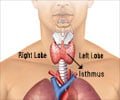
Thyroid Cancer – Symptoms - Risk Factors - Diagnosis - Treatment - Prevention
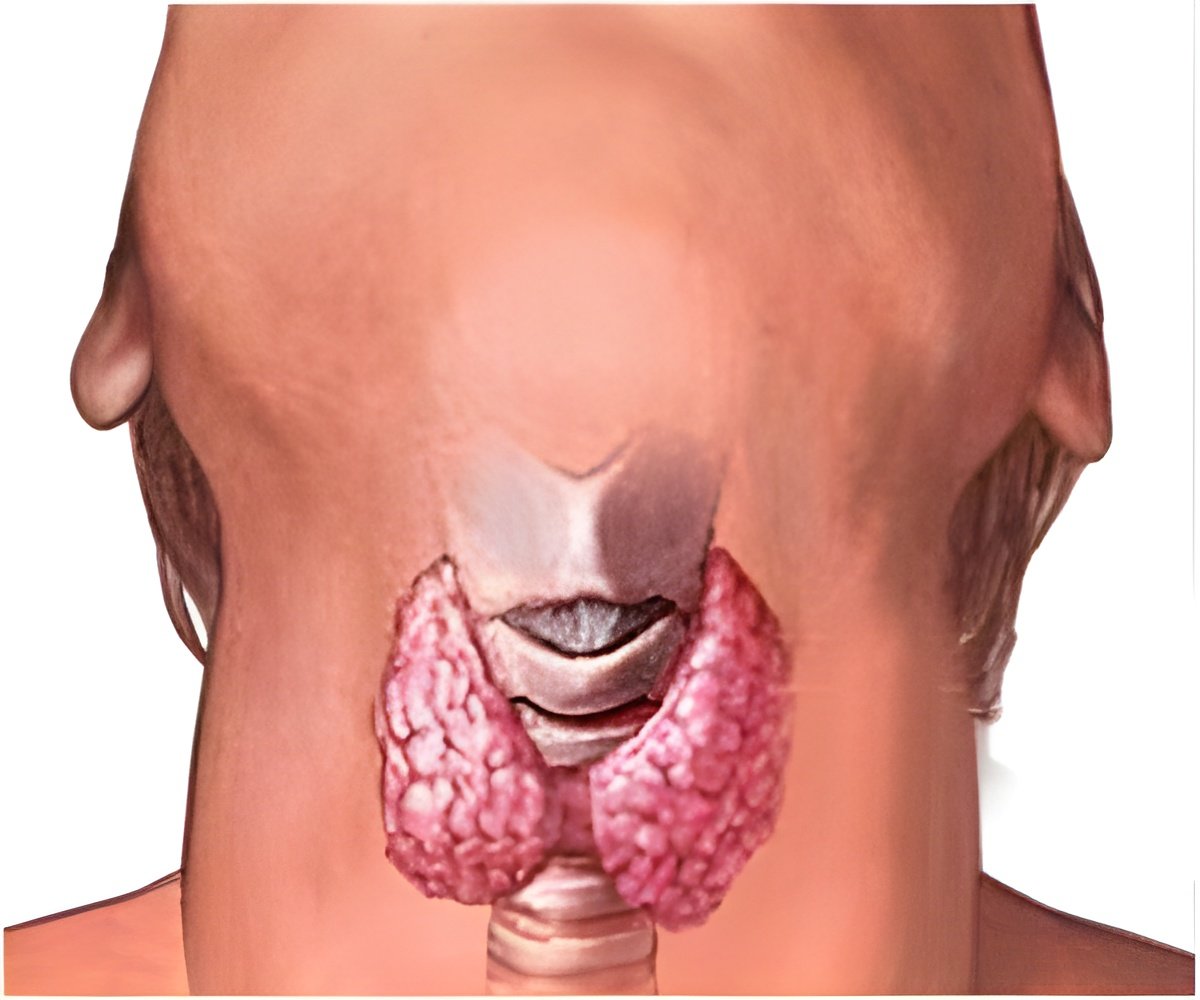
“Shaped like a butterfly she sits within the neck,” that’s what an anonymous poet wrote about the thyroid gland but it can become cancerous and spread to other parts.
“Shaped like a butterfly she sits within the neck,” that’s what an anonymous poet wrote about the thyroid gland but it can become cancerous and spread to other parts.