Diabetic Retinopathy - Risk Factors - Symptoms - Treatment - Diagnosis - FAQs
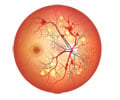
The term ‘diabetic retinopathy’ refers to changes in the retina which often occur in people with diabetes.
The term ‘diabetic retinopathy’ refers to changes in the retina which often occur in people with diabetes.
‘Proliferative diabetic retinopathy is a leading cause of vision loss in patients with diabetes mellitus and panretinal photocoagulation has been the standard treatment for more than 40 years.’
Tweet it Now
Researchers evaluated the efficacy of intravitreous ranibizumab compared with PRP for visual acuity. The anti- VEGF therapy is emerging as a newer treatment for DME. They followed more than 300 patients with proliferative diabetic retinopathy. Half of the patients were treated using laser and another half was given intravitreous ranibizumab and were tested every 4 weeks.They followed them for 5 years and the primary outcome was after 2 years. The results were found to be effective in the ranibizumab group than the PRP group. They found that there was less visual field loss and less chances of DME development or Vitrectomy.
“When used as treatment of DME, intravitreous anti-VEGF agents reduce the risk of diabetic retinopathy worsening and increase the chance of improvement, making these agents a potentially viable PDR treatment," said the researchers.

New approach for Treating and Preventing Diabetic Retinopathy
You can restore eyesight in patients with diabetic retinopathy by blocking a second blood vessel growth protein, along with one that is already well-known.
You can restore eyesight in patients with diabetic retinopathy by blocking a second blood vessel growth protein, along with one that is already well-known.
Reference: Adam R. Glassman, MS, Jaeb Center for Health Research, “Panretinal Photocoagulation vs Intravitreous Ranibizumab for Proliferative Diabetic Retinopathy A Randomized Clinical Trial,” JAMA, Published online November 13, 2015. doi:10.1001/jama.2015.15217
Advertisement

New Cloud-Based Diabetic Retinopathy Screening Solution - EyeArt - Receives CE Marking
It analyzes high-resolution images of the retina in just a few hours, and uses this information to automate detection of diabetic retinopathy.
It analyzes high-resolution images of the retina in just a few hours, and uses this information to automate detection of diabetic retinopathy.

Diabetic Retinopathy Screening For Children With Type 2 Diabetes Before Age 15 Is Unnecessary
Children with diabetes consistently show no signs for diabetic retinopathy. But, it is very important to have annual eye exams once the risk of vision loss develops.
Children with diabetes consistently show no signs for diabetic retinopathy. But, it is very important to have annual eye exams once the risk of vision loss develops.