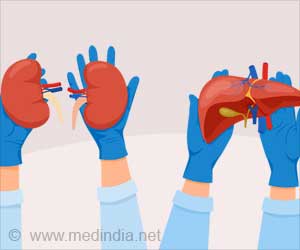
About Transplantation
Since the early times, the novel idea of transplanting tissues and other body parts from one organism to the other has captured the imagination of successive generations.
Since the early times, the novel idea of transplanting tissues and other body parts from one organism to the other has captured the imagination of successive generations.
Donors considered by the U.S. Centers for Disease Control and Prevention to be at high risk for infection include intravenous drug users, men who have sex with men and prostitutes. They comprise nearly 10 percent of organ donors in the U.S. and are tested for HIV and other infections before their organs are approved for transplantation. But, Segev says, the tests sometimes, as in the Chicago case, don''t find the infection.
Transplant experts believe the Chicago case occurred when the deceased donor''s HIV infection was too recent to show up on the screening tests administered before transplantation. Four patients at four different Chicago-area hospitals received contaminated organs and were later diagnosed with the virus.

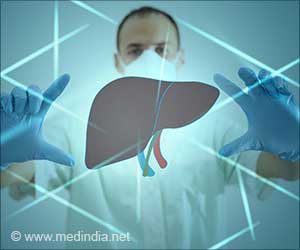
Liver Transplantation - Facts, Contraindications, Procedure, Follow up, Complications & Prognosis
Liver transplantation is a surgical option for the treatment of liver failure where the diseased liver is replaced with a healthy one.
Liver transplantation is a surgical option for the treatment of liver failure where the diseased liver is replaced with a healthy one.
Among the changes that came about after the Chicago episode, the survey found, was the use by some surgeons of new consent forms that explained the risks presented by high-risk donor organs or counseling sessions that emphasized the risk. For example, some consent forms now highlight the limitations of blood tests, which can''t catch every HIV infection, notably those that are recent.
Advertisement

He says surgeons may be backing off from use of high-risk organs because they are afraid of being sued or anticipate pressure from regulators. "The litigious and regulatory environment we''re currently in is not acting in the best interests of patients, and may actually harm patients," Segev says.
Advertisement
The Johns Hopkins Hospital performs NAT on organs from all high-risk donors. The hospital closely monitors recipients of such organs after transplant to start anti-viral therapy immediately in the unlikely event that an infection could occur, Segev says. He adds that NAT is not the national standard.
Other Johns Hopkins researchers who worked on this study include Lauren M. Kucirka, Sc.M.; R. Loris Ros, Sc.M.; Aruna K. Subramanian, M.D.; and Robert A. Montgomery, M.D., Ph.D.
For more information:
http://www.hopkinsmedicine.org/transplant/About/Segev.html
http://www.hopkinsmedicine.org/transplant/
Source-Newswise