Childhood Obesity - Criteria - Causes - Complications, Treatment
Childhood obesity is one of the most serious health challenges in the developing countries and needs to be understood and tackled effectively.
Childhood obesity is one of the most serious health challenges in the developing countries and needs to be understood and tackled effectively.
‘Does childhood obesity affect school performance? Childhood obesity can lead to poor school performance and coping skills for challenging situations.’
Read More..Tweet it Now
Researchers analyzed responses from 22,914 parents and caregivers of children aged 10-17 years who participated in the 2016 National Survey of Children's Health. The goal was to determine the independent association between body mass index (BMI) and five markers of "flourishing," or overall well-being as it relates to the development of positive psychosocial and coping skills.Read More..
"Childhood obesity is one of the biggest public health challenges we face today," said Natasha Gill, MD, FAAP, a Pediatric Emergency Medicine Fellow at the Alpert Medical School of Brown University and Hasbro Children's Hospital.
"We know that children with obesity are at a greater risk for long-term health conditions that can last into adulthood, and we wanted to see whether obesity affects a child's immediate well-being as it relates to the development of psychosocial skills and other signs of flourishing."

Mantra to Prevent Childhood Obesity � Vigorous Physical Activity
Being physically very active is the mantra to prevent pediatric obesity rather than concentrating efforts at restricting energy consumption.
Being physically very active is the mantra to prevent pediatric obesity rather than concentrating efforts at restricting energy consumption.
- "Shows interest and curiosity in learning new things"
- "Works to finish tasks he or she starts"
- "Stays calm and in control when faced with a challenge"
- "Cares about doing well in school"
- "Does all required homework"
Researchers found that only 27.5 percent of children with obesity, defined as a BMI at or above the 95th percentile for children and teens of the same age and sex, were reported to have all five flourishing markers. This compares with 36.5 percent of those in the overweight range, with BMI at or above the 85th percentile, and 39 percent of children with normal BMI.
Advertisement
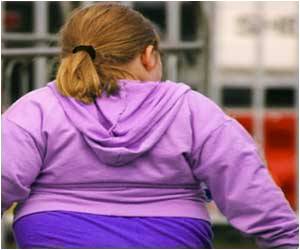
Urban Design may Reduce the Risk of Childhood Obesity
Urban design with pedestrian-friendly amenities helps children to engage in physical activity preventing the risk of childhood obesity. Convenience stores in the neighborhood can help in healthy food choices.
Urban design with pedestrian-friendly amenities helps children to engage in physical activity preventing the risk of childhood obesity. Convenience stores in the neighborhood can help in healthy food choices.
"Individual markers of flourishing have been shown to stay the same over time like a person's personality," she said, "so it may be important to monitor these markers in childhood to ensure optimal development into adulthood."
Advertisement

Strength-based Exercises Can Help Tackle Childhood Obesity
Strength training exercises for kids such as squats, push-ups, and lunges can help fight childhood obesity, suggests a new study.
Strength training exercises for kids such as squats, push-ups, and lunges can help fight childhood obesity, suggests a new study.
Source-Eurekalert