Cancer Immunotherapy
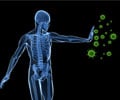
Cancer immunotherapy is a new advancement in cancer treatment that uses certain components of a person's immune system to fight against cancer cells.
Cancer immunotherapy is a new advancement in cancer treatment that uses certain components of a person's immune system to fight against cancer cells.
‘Lung cancer patients under immunotherapy were found to have an increased risk of adverse events after receiving seasonal influenza vaccination.’
Tweet it Now
"Use of immune checkpoint inhibitors is now standard clinical practice for many oncology patients, and these same patients -- particularly those with lung cancer -- also face increased risk for complications from influenza. Although routine influenza vaccination has long been recommended for cancer patients, there are concerns that it might trigger an exaggerated immune response in this subgroup receiving checkpoint inhibitors," he said, cautioning that these preliminary results must now be tested in a larger study.The prospective study included 23 patients (mean age 58.7 years) -- mostly with non-small-cell lung cancer (n=16), but also with renal cell carcinoma (n=4), and melanoma (n=3). A little more than half of the patients had received at least two previous lines of chemotherapy and all were currently receiving the PD-1/PD-L1 inhibitor nivolumab, except for one who was receiving pembrolizumab.
The patients were vaccinated with a trivalent influenza vaccination 2 between October and November 2015 and followed for safety, efficacy and frequency of immune-related adverse events (irAEs). A control group of 10 age-matched, healthy partners of the patients also received the same vaccine.

Occupation Affects Flu Vaccination Coverage
Increasing influenza vaccination can reduce the spread of influenza in the workplace. This is especially important for healthcare personnel.
Increasing influenza vaccination can reduce the spread of influenza in the workplace. This is especially important for healthcare personnel.
However, there was an unusual high frequency of irAEs (52.2%), with 6 patients (26.1%) experiencing severe grade 3 or 4 irAEs.
Advertisement
Easy Access to Asthma Medicines and Flu Vaccines Can Keep Children Healthy
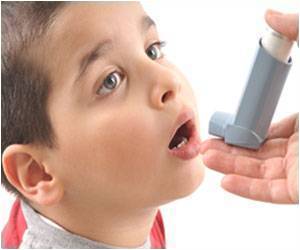
Asthma kids are benefited by the easy access to medicines and flu vaccines in school.
Asthma kids are benefited by the easy access to medicines and flu vaccines in school.
The most common immune-related adverse events reported were skin rashes and arthritis (13% each), followed by colitis and encephalitis (8.7% each), hypothyroidism, pneumonitis and neuropathy (4.3% each).
Advertisement

Low Uptake of Flu Vaccines During Pregnancy
Pregnant women are not administered flu vaccines by physicians and doctors despite life saving benefits, reveals study
Pregnant women are not administered flu vaccines by physicians and doctors despite life saving benefits, reveals study
No significant change in inflammatory chemokine levels was observed in either patients or controls during the early phase after vaccination.
"Although the observed rate of irAEs in our cohort is alarming, we believe that there is a particular concern for severe complications of an influenza infection including pneumonia and respiratory failure for patients with lung cancer under immunotherapy because of concomitant structural lung disorders 3," noted Rothschild.
"Some of these patients had prior resection of lung lobes or even a pneumonectomy and therefore had limited reserves due to small lung volume. When weighing benefit and potential risk of seasonal influenza vaccination for patients undergoing single-agent PD-1 or PD-L1 blockade - particularly those with lung cancer -- we currently advise a case-by-case decision until we have results from larger cohorts," he concluded.
Commenting on these results, Professor Egbert Smit, MD, PhD, from The Netherlands Cancer Institute in Amsterdam, said "This study shows how much we still have to learn about the optimal use of checkpoint inhibitors in lung cancer patients. The study is important as it is the first to investigate the impact of influenza vaccination in such patients and there is a hint that we actually put them at increased risk for serious toxicities including encephalitis. However, until we have data on a larger cohort, preferably in a controlled prospective study, in my institution, we advocate influenza vaccination irrespective of concurrent treatment with immune-checkpoint inhibitors."
Source-Eurekalert