About

Campylobacter jejuni is the most common cause of gastroenteritis and causes 5-14% of diarrhea cases that occur worldwide. The disease occurs more frequently in summer than winter. Campylobacteriosis usually lasts for 2 to 5 days but may be prolonged by relapses.
Infection occurs due to consumption of contaminated food, water or raw milk.
Campylobacteriosis produces an inflammatory, sometimes bloody diarrhea accompanied by abdominal cramps, fever and pain.
Treatment includes providing rehydration therapy and antibiotics are used in severe cases. Campylobacteriosis is usually a self-limiting disease without any mortality, if proper hydration is maintained. However, there is a possibility of complications like convulsions and arthritis.
Campylobacteriosis can be prevented by proper sanitation, personal and food hygiene as well as safe water supply.
Causes of Campylobacteriosis
Campylobacteriosis occurs due to consumption of contaminated food, water or raw milk.
Campylobacteriosis is a zoonotic disease i.e. it is passed to humans via animals or animal products.
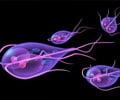
It is caused by a bacterium, usually Campylobacter jejuni or C. coli.
The bacteria are found worldwide in most warm-blooded domestic and wild animals. They are common in food animals like poultry, cattle, pigs, sheep, ostriches and shellfish and in pets including cats and dogs. The animals may not have any symptoms.
People are exposed to the bacteria by -
- Handling infected raw poultry, or infected human or animal feces
- Consumption of contaminated food such as undercooked meat, non-chlorinated water or raw milk.

Symptoms of Campylobacteriosis
Symptoms of campylobacteriosis include diarrhea accompanied by abdominal cramps, fever and pain.
Symptoms of campylobacteriosis include:
- Mild or severe diarrhea. It may be bloody
- Abdominal cramps and/or pain
- Malaise
- Fever
- Nausea
- Vomiting

- Rarely, some people develop arthritis
Treatment of Campylobacteriosis
Treatment includes providing rehydration therapy and antibiotics are used in severe cases.
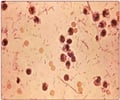
The healthcare provider can diagnose campylobacteriosis by identifying the bacteria in the stool.
The infection is usually self-limiting, and in most cases, liquid and electrolyte replacement is enough to treat human infections.
Antibiotics are required in severe cases. Erythromycin is the drug of choice in children, and tetracycline in adults.