Circadian Rhythm - Overview
Circadian rhythm (also known as the sleep/wake cycle or the body clock) is a biological process that follows an internal cycle of roughly 24 hours. The term circadian (Circa means "around" or "approximately" and diem meaning "day" in Latin).
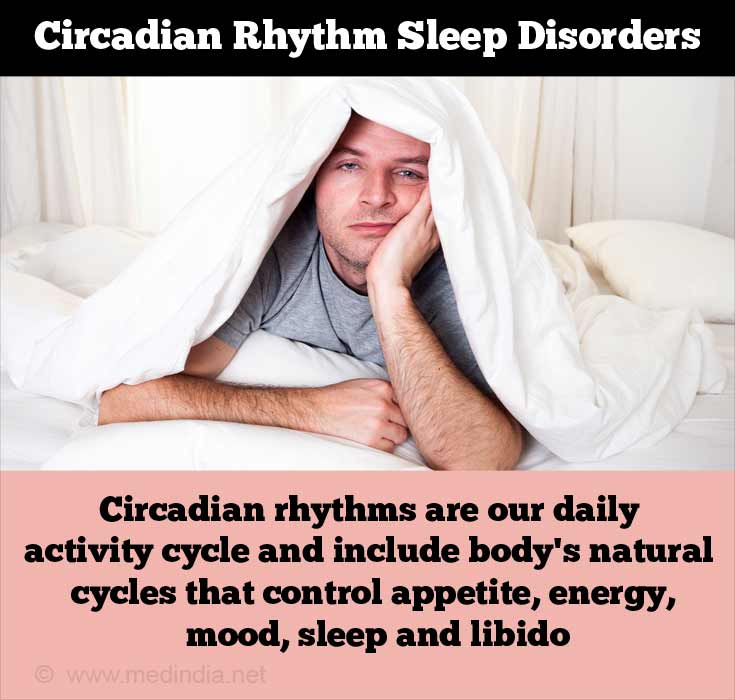
Circadian rhythms are our daily activity cycle and include body's natural cycles that control appetite, energy, mood, sleep and libido.
To be circadian in nature, the rhythm must be -
- Endogenous - The rhythm must persist in constant conditions without external periodic inputs
- Entrainable - The rhythm can be reset by exposure to external stimuli (zeitgebers) like light and heat.
- Exhibit Temperature Compensation - The rhythm must maintain a 24-hour clock despite the changes occurring in the body’s cells due to temperature fluctuations outside.
All living beings including cyanobacteria, plants, animals, birds and fungi, have a certain rhythm that regulates our internal clocks and life itself. The discovery of circadian rhythms in the early 80's led to a new science called 'chronobiology'.
These body rhythms are tied to the cycles and rhythms of nature. When functioning properly, the human circadian rhythm will respond to the morning light of a new day.
Light will stimulate the body to produce cortisol, serotonin, other hormones and neurotransmitters that get a person up and going and cause the blood pressure and body temperature to rise.
At sunset, the body receives another of nature’s cues and responds to dusk and ultimately the night’s darkness. As the sun goes down, the body will produce and secrete the hormone melatonin, and blood pressure will drop as the body prepares for and eventually falls off to sleep.
This rhythm controls the timing, quantity and quality of the hormones and neurotransmitters the body produces and eventually secretes. Hormones and neurotransmitters are the elements that determine how we feel, our sleep patterns, appetite, sex drive and other sleep and mood-related issues.
When functioning properly, our circadian rhythms create circadian balance. When out of balance, quantity, quality and timing of hormone and neurotransmitter secretion suffer and our bodies suffer from a circadian rhythm disorder (CRD). Almost all of us, at some stage in life fall out of balance and suffer from sleep, mood or anxiety disorders.
When circadian rhythm disorder affects sleep it is termed circadian rhythm sleep disorder (CRSD).
The field of chronobiology has revealed that the body undergoes more than just blood pressure variations. In fact, the body passes through significant changes throughout a day.
Types of Circadian Rhythm Disorders
The circadian rhythm disorder related to the sleep-wake cycle can be categorized predominantly into primary and secondary types.
1. Primary Circadian Rhythm Sleep Disorders
In these sleep disorders the changes in rhythm are not due to any known reason and become an established pattern.
The different patterns are
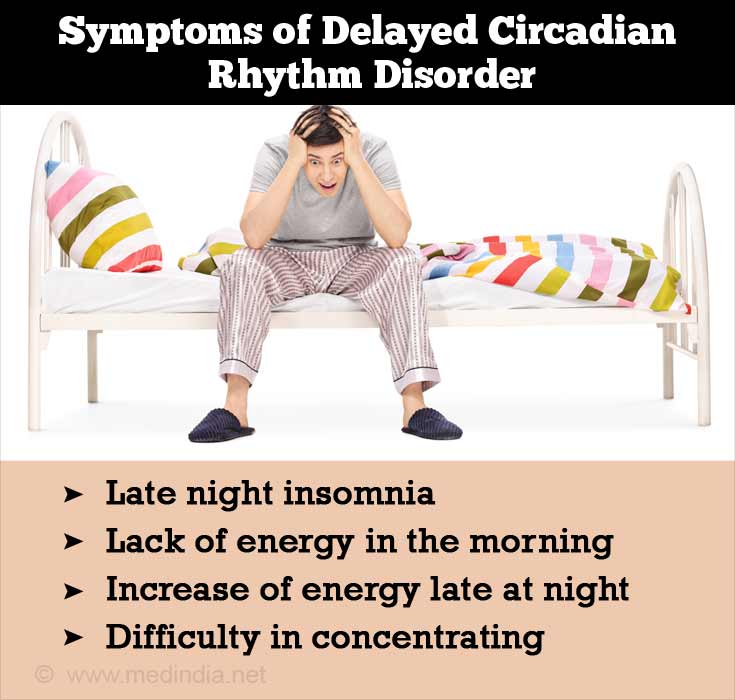
a. Delayed Circadian Rhythm Disorder (DCR)
People with this disorder are commonly referred to as “Night Owls”. It occurs mostly in young adults and adolescents where the body clocks run slower than a normal circadian rhythm (24-hour period). The pineal gland releases the nighttime hormone melatonin too late and the people tend to sleep late and 'wake up' later in the morning or day.
Symptoms include
- Difficulty falling and staying asleep, and or late night insomnia.
- Individuals with DCR fall asleep late and wake up late.
- An increase of energy/mood in the evening or late at night.
- Difficulty concentrating, being alert, or accomplishing tasks.
- Some DCR sufferers oversleep and have trouble getting up.
- A general lack of energy in the morning.
b. Advanced Circadian Rhythm Disorder (ACR)
People with this disorder are called “Morning Larks”. It occurs mostly in the elderly where the body clock is running faster than a normal 24-hour period making. Melatonin gets released prematurely. Hence, one feels tired earlier in the evening and they tend to sleep early and awaken early.
Symptoms include:
- Early morning awakening and/or early morning insomnia.
- ACR is characterized by a persistent early evening sleep onset time and an early morning wake-up time.
- Inconsistent sleep with one or more awake periods during the night.
- Lack of energy during the day, feeling tired in the early afternoon and/or evening.
- Alertness and ability to function may also be diminished.
- Some ACR sufferers may not notice a sleep problem but lose energy and feel tired or down in the afternoon or evening time.
c. Bimodal Circadian Rhythm Disorder (BCR) or Irregular Sleep/Wake Cycle
In this disorder, there is more than one sleep period, which is not sustained. This may be due to melatonin getting released irregularly during day cycle, causing one to feel tired at various times during the day. Since melatonin is released prematurely, the body clock can't sustain a complete sleep cycle.
Symptoms include
- Early morning insomnia, lack of energy during the day, feeling tired in the mid-day, early afternoon and/or evening.
- An irregular sleep-wake schedule features multiple sleep episodes without evidence of recognizable circadian features of sleep and wakefulness.
- Daily sleep logs demonstrate irregularity not only of sleep but also of daytime activities, including eating.
- Difficulty falling asleep, an inability of staying asleep, and awaken one or more times during the night.
- Alertness and ability to function may also be diminished.
d. Non-24 Hour Sleep/Wake Cycle (or Free-running Circadian Rhythm Disorder)
This disorder is most commonly found in blind people.
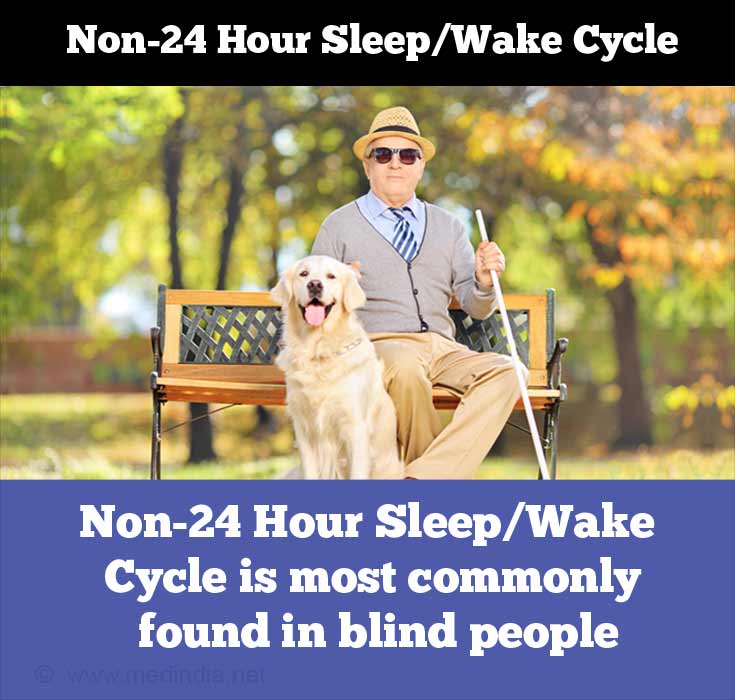
The person is not able to perceive the light or dark signal and hence has rhythms independent of a normal 24-hour day. So the body’s need to function is at odds with your rhythm. As a result the body is often producing the wrong withdrawal and sleep hormones when one needs to be active and energetic, and when one needs to sleep.
Symptoms include
- Cycling or inconsistent insomnia that occurs at different times every night.
- Periodic episodes every few weeks or during the month where sleep/wake pattern is in sync with 24-hour day.
- Lack of energy during the day, feeling tired in the mid-day, early afternoon and/or evening.
- Alertness and ability to function may also be diminished.
2. Secondary Circadian Rhythm Sleep Disorders
In these disorders there is a visible cause for the shift in circadian rhythms like:
a. Jet Lag
Jet lag occurs when the body's biological clock is out of sync with local time. When traveling to a new time zone, our bodies are slow to adjust, and remain on their original biological schedule for several days. The result is that we feel excessively sleepy during the day or stay wide awake at night. The severity of jet lag symptoms is directly related to the number of time zones crossed by a flight.
Symptoms include
- Daytime sleepiness
- Night time alertness (insomnia).
- Loss of appetite and gastrointestinal dysfunction.
- Mood disturbances.
- Difficulty concentrating or focusing.
b. Illness
A psychiatric or medical disorder can disrupt the rhythm and lead to disturbed sleep. The changes in sleep rhythm depend on the type and severity of illness. Sometimes the improvement in a psychiatric disease is gauged by the changing sleep patterns.
c. Shift Working
A shift worker is anyone who follows a work schedule that is outside of the typical "9 to 5" business day. As a result of untimely work schedules the shift workers have disturbed sleep rhythms and face frequent sleep disturbance and associated excessive sleepiness.
Symptoms include
- Excessive sleepiness is the main complaint for people with shift work sleep disorder.
- Insomnia.
- Disrupted sleep schedules.
- Reduced performance.
- Difficulties with personal relationships.
- Irritability/depressed mood.
Incidence of Circadian Rhythm
- The exact incidence and prevalence rates of circadian rhythm sleep disorders are not known.
- One fourth of all chronic sleep disorders are the result of a mismatch between the body’s internal clock and the external 24-hour schedule.
Women suffer from circadian rhythm sleep disorders 2 to 3 times more than men with girls in their teens being more prone to it. - Women’s body clocks speed up sooner than men, usually when in their early 40’s. Most men’s clocks don’t start speeding up or advancing until they reach their 60’s.
- The National Institute of Health estimates that over 35 million Americans suffer from circadian rhythm disorders.
- Delayed Circadian Rhythm Disorder (DCR): Approximately 7-10% of patients who complain of insomnia are diagnosed with DCR. The prevalence of DCR is probably higher than that because the total sleep time is typically normal in patients with DCR and because patients with DCR adjust their lifestyle to accommodate their sleep schedule and do not seek medical treatment. In adolescence, the prevalence is approximately 7%.
- Advanced Circadian Rhythm Disorder (ACR) probably is quite rare. However, an age-related phase advance is common in the elderly, who tend to go to sleep early and get up early.
- The prevalence of Bimodal Circadian Rhythm Disorder (BCR) has not been established but is said to be quite high. Irregular sleep-wake schedule is common in people with Alzheimer’s disease.
What are the Causes of Circadian Rhythm Disorders?
Our daily activity and sleep rhythms are regulated by a control center in the hypothalamus region of the brain called the Suprachiasmatic Nucleus (SCN) or in layman’s terms, the body clock. The body clock needs to receive signals to tell it when to shut down and prepare for sleep and when to produce the active waking hormones.
The pineal gland in the brain helps by secreting the hormone melatonin that slows us down and lets us sleep.
The most powerful signaler or ‘zeitgeber’ is bright light such as sunshine. Other zeitgebers are darkness, certain sounds, weather and mealtimes.
Altered or disrupted sensitivity to zeitgebers is probably the most common cause of the circadian rhythm disorder of the sleep-wake cycle.
Some examples for this breakdown may include the following:
- Disrupted Pacemaker Function: A dysfunction may be present in the internal coupling mechanisms of biological pacemakers, for example, the coupling of the sleep-wake cycle with the temperature cycle.
- Environment: Light, higher noise levels, and elevated room temperature are not conducive to good sleep and are important variables to consider in both shift and night workers.
- Travel: The severity of jet lag is related to the direction of travel and is more frequently seen in individuals traveling in an eastward direction. The number of time zones crossed also has an effect on the severity of jet lag, with most individuals experiencing jet lag if they cross 3 or more time zones. The rate of adjustment is 1.5 hours per day after a westward flight and 1 hour per day after an eastward flight.

- Neurological Disease: Alzheimer’s disease is one of the more common examples of neurological disease associated with a circadian rhythm disturbance; however, irregular sleep-wake cycles can also be seen in other neurodegenerative diseases. Sun downing, which is a common phenomenon in persons with Alzheimer’s disease, is characterized by sleep disruptions with awakenings and confusion.
- Shift Work: Rapid shift changes and shift changes in the counterclockwise direction are most likely to cause symptoms of a circadian rhythm disorder.
- Lifestyle and social pressure to stay up late can exacerbate a circadian rhythm disorder.
What are the Consequences of Circadian Rhythm Sleep Disorders?
The end result of a rhythm disorder is sleep deprivation.
Death and Circadian Rhythm Sleep Disorders:
Many deaths related to circadian rhythm disorders are the result of impaired performance secondary to sleep deprivation; therefore, many times, the deaths are categorized into different headings (e.g., motor vehicle accidents, heavy machinery accidents, other accidents). Sometimes, the deaths are a sequel to the use of hypnotics and/or alcohol to treat insomnia.
Health Risks Associated with Circadian Rhythm Sleep Disorders
- Shift workers have been found to have a 40% greater cardiovascular disease risk than non-shift workers. Frequency of gastrointestinal symptoms, other psychosomatic symptoms, and psychiatric symptoms increased in shift workers.
- Daytime sleepiness in students with DCR disorder has been correlated with negative mood and increased smoking and alcohol consumption.
Some of the features of depressive disorders, such as early morning awakening and decreased rapid eye movement (REM) latency, are suggestive of ACR disorder. Whether these changes are secondary to depression or actually cause it has not been established.
Diagnosis of Circadian Rhythm Sleep Disorders
An accurate history forms the basis for diagnosing these disorders. Obtaining a detailed account of the sleep habits, medical history and the medications used is necessary.
Sleep Diary: While not technically a laboratory test, this diary allows identification of sleep-wake cycles in the normal environment and allows subjective assessment of alertness over a 2-week time period. Sleep logs also can be used for self-monitoring and as an adjunct to behavioral treatment.
Epworth Sleepiness Scale (ESS): This scale is based on a set of eight questions and rate responses on a scale of 0 -3 based on whether the situation was likely to be associated with dozing behavior. It was designed to give an indication of daytime sleepiness.
Actigraphy: An Actigraph is a small motion-sensing device worn on the nondominant wrist, generally for 1 week. It is based on the premise that wrist motion is decreased during sleep. This allows a very gross measure of sleep-wake cycles over time.
An overnight sleep study called a polysomnogram is usually not needed to detect a CRSD. It may be done to rule out other sleep disorders.
Imaging studies, such as CT scan and MRI, may be done to evaluate for neurodegenerative diseases.
Treatment for Circadian Rhythm Sleep Disorders
Treatments for this disorder aim at helping the patient achieve one long sleep time at night and one long awake time during the day.
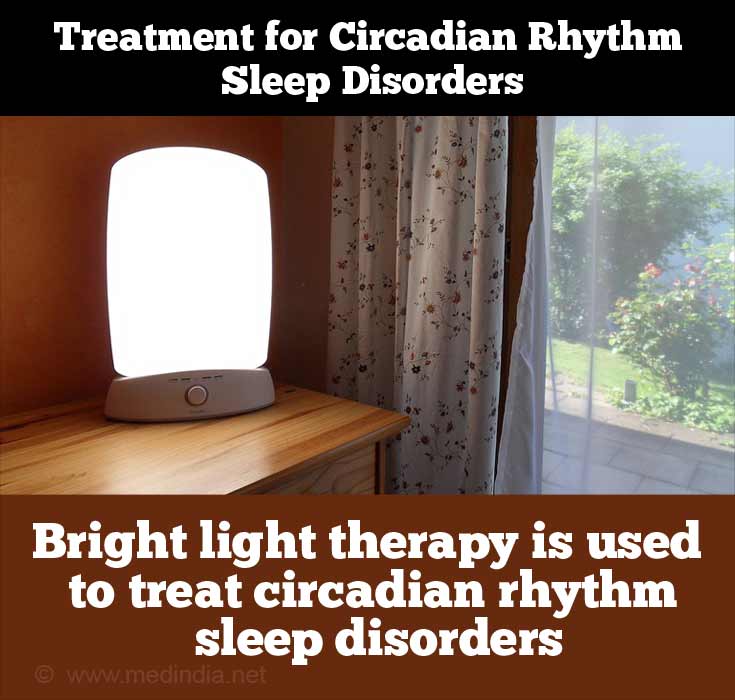
Bright light therapy, behavioral therapy and chronotherapy are the mainstays of treatment of circadian rhythm disturbances. Emphasize good sleep hygiene measures and discourages maladaptive behaviors.
1. Bright Light Therapy:
The principle of light therapy is to imitate bright sunlight and in turn tune the body clock. The light is provided through a bright light box.
This therapy helps a person maintain a consistent circadian rhythm by sending a properly timed signal of light through the retina of the eye to the brain's suprachiasmatic nucleus, or body clock in the hypothalamus Circadian rhythm disturbances respond very well to light therapy, especially bright light (>600 Lux). The timing of light therapy also is important as it affects the degree and direction of the rhythm shift. The modes of therapy for different disorders are:
Light therapy applied in the early evening and nighttime hours will delay the cycle for Advanced Circadian Rhythm Disorder (ACR)
- In the early morning light therapy will stimulate morning alertness and an earlier bedtime for Delayed Circadian Rhythm Disorder (DCR).
- Bimodal Circadian Rhythm Disorder (BCR) may cause a person to be awake during the night, so it is important to avoid light during the night. Use bright light in the mid-morning, afternoon, late afternoon and evening while avoiding bright morning light before 9:00 am.
- For sighted people, bright morning light should regulate Non-24 hour Sleep/Wake Cycle symptoms or a free running circadian rhythm
Light therapy should always be used within the proper limits for intensity and time. Minor side effects may include the following:
- Eye irritation and dryness
- Headache
- Nausea
- Dryness of skin
2. Chronotherapy
This behavioral treatment consists of a gradual shift in sleep time in accordance with the patient's tendency. The changes recommended for different disorders are:
- In Delayed Circadian Rhythm Disorder (DCR) a progressive delay of bedtime by 3 hours per day is prescribed, followed by strict maintenance of a regular
bedtime hour once the desired schedule is achieved. - In Advanced Circadian Rhythm Disorder (ACR) chronotherapy focuses on advancing bedtime by 2-3 hours per night over 1 week until a desired schedule is achieved.
- For Bimodal Circadian Rhythm Disorder (BCR) and Non-24 hour Sleep/Wake Cycle the therapy is initiated based on the sleep pattern.
3. Lifestyle and Behavioral Modifications
Lifestyle modifications like avoiding naps, caffeine and other stimulants can balance the rhythm and reset the clock for effective functioning. The following adaptations can help to modify the rhythm.
a. Shift Worker
A shift worker has to successfully balance his life and work. Tips for a successful balance would be:
Napping: The evening or night worker can take a nap before work to be refreshed. Studies show that napping at the workplace is especially effective for workers who need to maintain a high degree of alertness. In situations where the worker is working double shifts or longer, naps at the workplace are even more important.
Make Sleep a Priority: Go to sleep as soon as possible after work. Ensure to get adequate amount of sleep. Set the stage for sleep even though it might be broad daylight outside. Follow bedtime rituals and try to keep the same sleep schedule even on weekends.
Safety: Driving home after work can be risky for the shift worker, particularly since he has been awake all night and the body needs to sleep. If sleep is over-whelming than stop to nap, but do so inside the car in a well-lit area. Alternatively you can opt for public transport or car-pooling.
Alertness at Work: Take short breaks throughout the shift. Try to exercise during breaks. Don't leave the most tedious or boring tasks to the end of your shift when you are apt to feel the drowsiest
Work Place: Install bright lights in the work areas. A well-lit workplace signals the body that it is time to be awake and alert. The planning of shifts should allow sufficient breaks and days off, especially when workers are re-assigned to different shifts. Overtime should not be promoted among shift workers.
b. Jet Lag
The following steps can help minimize jet lag:
- Shift your sleep times before you travel. In the few days before traveling West, go to bed and wake up 1 hour later each day. In the few days before traveling East, go to bed and wake up 1 hour earlier each day.
- Regulate your light exposure before you travel. In the few days before traveling West, seek evening light and avoid morning light. In the few days before traveling East, seek morning light and avoid evening light. People can use a bright light box to get light, although people who experience migraines, mood disorders or have eye diseases should first consult with their physician before using one.
- Regulate your light exposure in your new time zone. If you traveled West, on arrival, seek morning light and avoid afternoon light. If you traveled East, on arrival seek evening light and avoid morning light. Weather conditions permitting, people can seek light by going outdoors and wearing only lightly tinted sunglasses. Do not look directly at the sun. Light can be avoided by staying indoors away from windows, wearing very dark sunglasses when outside and by sleeping.
- Avoid alcohol and caffeine for at least 3-6 hours before bedtime.
- Avoid heavy exercise close to bedtime.
- Bring earplugs and blindfolds to reduce noise and light while sleeping.
4. Medications
a. Melatonin – ‘Dracula of Hormones’
Melatonin is only released in the dark and prepares a person for sleep. Bright light inhibits the release of melatonin. It is not categorized as a drug, so synthetic melatonin is made in factories that are not regulated by the FDA.
Research indicates improved sleep when melatonin is taken at the appropriate time for jet lag and shift work. Evidence suggests that melatonin can reset the body clock.
- Melatonin might help shift workers on irregular shifts who need to adjust their schedules.
- When taken in low doses at the appropriate time, melatonin can help advance or delay the sleep-wake cycle.
- Melatonin can be effective for preventing or reducing jet lag, particularly for crossing five or more time zones and when traveling East.
Side effects such as fatigue and depression have occasionally been reported with use of melatonin. Questions have been raised as to the synthetic Melatonin’s dose and its safety, particularly with regard to its effect on the cardiovascular system and reproduction.
A melatonin agonist Tasimelteon was approved in the USA in 2014 solely for the treatment of non-24-hour sleep–wake disorder in totally blind people.
Other Medications for Circadian Rhythm Sleep Disorders
Benzodiazepines: Short-acting benzodiazepines like alprazolam are often chosen in the early treatment of a circadian rhythm disorder and are used in conjunction with behavioral therapy. Long-term use of these medications is not recommended due to potential side effects, such as the rebound phenomenon (the original problem returns at a higher level), and the risk of developing a dependence on these drugs.
Non-benzodiazepine Hypnotics: Medications like zolpidem, zaleplon are gaining popularity because they do not have a significant effect on the regular sleep cycle and are not associated with the rebound phenomenon seen with benzodiazepines.
5. Enhancing Environmental Cues
- This is a part of the treatment of circadian rhythm disorders once a regular pattern of sleep-wake cycle has been established. It is also very important to provide as many circadian signals or ‘zeitgebers’ as possible.
Patients are encouraged to keep a dark quiet room during sleep and a well-lit room upon awakening - Lower night time temperatures (8° lower than daytime temperature) darker evening and dark nights, with very bright morning and daytime light are all helpful
- Avoid bright light exposure in the evening
- Enforce regular mealtimes and other activities
Prognosis of Circadian Rhythm Sleep Disorders
Untreated disorders tend to become worse, not better. A mild disorder may progress towards a moderate or more acute disorder that becomes difficult to control.
A circadian rhythm disorder is likely to be due to production of melatonin at the wrong time of day, when one needs to be more active. Studies have also linked this maladaptation to higher cancer risks.
Circadian rhythm disorders may also contribute to stress and other health risks, since the body does not produce the hormones that are required for being active and energetic.
A recent study links higher mortality rates to insufficient sleep.
Conclusion of Circadian Rhythm Sleep Disorders
Life used to be a lot simpler. Just a few decades ago, we would get up and wind down with the sun. And we spent much more time outdoors than we do now. This was in sync with our internal clock and kept us healthy and free of stress. The clock of the body takes its cue from the sunlight and tells us when to be active and energetic, and when to sleep.
The fast-track current lifestyle and the modern inventions that cater to all our needs have changed all this. We no longer need to depend on sunlight to provide us light. Due to the influence of artificial light, the physiology of the internal milieu of our body slowly gets diseased.
The circadian related disorders are reaching epidemic proportions. For example, the rate of depression and related disorders has doubled over the last 50 years, and sleep disorders have tripled during the same time.
Circadian balance happens when we are in harmony with nature’s cues or signals. A clock that has worked perfectly for hundreds of generations, if meddled with, is producing new diseases that were unheard of in the past.
Tip for Better Sleep
Make Your Room Sleep Friendly - Create a sleep conducive environment in your room before you go to sleep. Your bedroom should be free of loud noises that can disturb your sleep. It is suggested that your bedroom temperature should be between 60 and 67 degrees Fahrenheit for optimal sleep. And, your bedroom should be free from any light. You can opt to drape your bedroom with blackout curtains, "white noise" machines, humidifiers, fans and other devices to achieve the best conditions for sleep.