Medindia » Consumer Health » Health Information » Latest Publication and Research on Diabetes - Self-Monitoring of Blood Glucose (SMBG)
Disease Info Index
Page Options

Diabetes - Self-Monitoring of Blood Glucose (SMBG)

Latest Publication and Research on Diabetes - Self-Monitoring of Blood Glucose (SMBG)

RSS Feeds   Text 
  2011 Dec 1  

Health-Related Quality of Life and Treatment Satisfaction in the Sensor-Augmented Pump Therapy for A1C Reduction 3 (STAR 3) Trial.

Rubin RR, Peyrot M

1 Department of Medicine, The Johns Hopkins University School of Medicine , Baltimore, Maryland.

Abstract Objective: This study assessed health-related quality of life (HRQOL) and treatment satisfaction in sensor-augmented pump therapy (SAPT) co... Read More

Source: PubMed
Vojnosanit Pregl    

Short-term use of continuous glucose monitoring system adds to glycemic control in young type 1 diabetes mellitus patients in the long run: a clinical trial.

Bukara-Radujkovic G, Zdravkovic D, Lakic S

Children's Hospital, Department for Endocrinology, Banja Luka, Bosnia and Herzegovina. gocabr@inecco.net

BACKGROUND/AIM: Balancing strict glycemic control with setting realistic goals for each individual child and family can optimize growth, ensure normal... Read More

Source: PubMed
  2011 Nov 21  

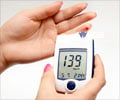
Perceptions of Caribbean type 2 diabetes patients on self-monitoring of blood glucose.

Ezenwaka CE, Olukoga A, Onuoha P, Worrell R, Skinner T, Mayers H, Martin E, Phillip C

The Diabetes & Metabolism Research Group, Faculty of Medical Sciences, The University of the West Indies , St Augustine Campus , Trinidad.

Context: The views of type 2 diabetes (T2DM) patients have not been considered in the debate on the role of self-monitoring of blood glucose (SMBG) in... Read More

Source: PubMed
  2011 Nov 18  

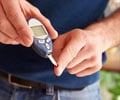
Short- and Long-Term Effects of Real-Time Continuous Glucose Monitoring in Patients With Type 2 Diabetes.

Vigersky RA, Fonda SJ, Chellappa M, Walker MS, Ehrhardt NM

Diabetes Institute, Department of Endocrinology and Metabolism, Walter Reed National Military Medical Center, Bethesda, Maryland.

OBJECTIVETo determine whether short-time, real-time continuous glucose monitoring (RT-CGM) has long-term salutary glycemic effects in patients with ty... Read More

Source: PubMed
Int. J. Clin. Pract.    

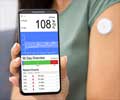
Diabetes technology and the human factor.

Liberman A, Buckingham B, Phillip M

Schneider Children's Medical Center of Israel, Petah Tikva, Israel. mosheph@post.tau.ac.il

When developing new technologies for human use the developer should take into consideration not only the efficacy and safety of the technology but als... Read More

Source: PubMed

Int. J. Clin. Pract.    

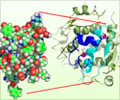
Diabetes technology and treatments in the paediatric age group.

Shalitin S, Peter Chase H

Institute of Endocrinology and Diabetes, Schneider Children's Medical Center of Israel. shalitin@netvision.net.il

Type 1 diabetes (T1D) is one of the most common chronic childhood diseases and its incidence has doubled during the last decade. The goals of intensiv... Read More

Source: PubMed
Int. J. Clin. Pract.    

Self-monitoring of blood glucose.

Garg SK, Hirsch IB

University of Colorado Health Science Center, Aurora, CO, USA. satish.garg@ucdenver.edu

Many would argue that the introduction of modern-day diabetes management started 30 years ago with the introduction of self-monitoring of blood glucos... Read More

Source: PubMed

  2011 Nov 2  

A Comparison of Average Daily Risk Range Scores for Young Children with Type 1 Diabetes Mellitus Using Continuous Glucose Monitoring and Self-Monitoring Data.

Patton SR, Midyett LK, Dolan LM, Powers SW

1 Department of Pediatrics, University of Kansas Medical Center , Kansas City, Kansas.

Abstract Background: Young children with type 1 diabetes are vulnerable to glycemic excursion. Continuous glucose monitoring (CGM), combined with va... Read More

Source: PubMed

Pol. Arch. Med. Wewn.    

Efficacy and safety comparison of continuous glucose monitoring and self-monitoring of blood glucose in type 1 diabetes: systematic review and meta-analysis.

Wojciechowski P, Rys P, Lipowska A, Gaweska M, Malecki MT

Self-monitoring of blood glucose (SMBG) is a crucial element of clinical care in type 1 diabetes, but it may not provide adequate glucose control. A n... Read More

Source: PubMed
  2011 Oct 20  

Telecare Provides Comparable Efficacy to Conventional Self-Monitored Blood Glucose in Patients with Type 2 Diabetes Titrating One Injection of Insulin Glulisine-the ELEONOR Study.

Prato SD, Nicolucci A, Lovagnini-Scher AC, Turco S, Leotta S, Vespasiani On Behalf Of The Eleonor Study Group G

1 Department of Endocrinology and Metabolism, University of Pisa , Pisa, Italy .

Abstract Background: We compared telecare and conventional self-monitored blood glucose (SMBG) programs for titrating the addition of one bolus inje... Read More

Source: PubMed

Vojnosanit Pregl    

Short-term use of continuous glucose monitoring system adds to glycemic control in young type 1 diabetes mellitus patients in the long run: a clinical trial.

Bukara-Radujkovic G, Zdravkovic D, Lakic S

Children's Hospital, Department for Endocrinology, Banja Luka, Bosnia and Herzegovina. gocabr@inecco.net

BACKGROUND/AIM: Balancing strict glycemic control with setting realistic goals for each individual child and family can optimize growth, ensure normal... Read More

Source: PubMed

  2011 Dec 1  

Health-Related Quality of Life and Treatment Satisfaction in the Sensor-Augmented Pump Therapy for A1C Reduction 3 (STAR 3) Trial.

Rubin RR, Peyrot M

1 Department of Medicine, The Johns Hopkins University School of Medicine , Baltimore, Maryland.

Abstract Objective: This study assessed health-related quality of life (HRQOL) and treatment satisfaction in sensor-augmented pump therapy (SAPT) co... Read More

Source: PubMed

  2011 Nov 21  

Perceptions of Caribbean type 2 diabetes patients on self-monitoring of blood glucose.

Ezenwaka CE, Olukoga A, Onuoha P, Worrell R, Skinner T, Mayers H, Martin E, Phillip C

The Diabetes & Metabolism Research Group, Faculty of Medical Sciences, The University of the West Indies , St Augustine Campus , Trinidad.

Context: The views of type 2 diabetes (T2DM) patients have not been considered in the debate on the role of self-monitoring of blood glucose (SMBG) in... Read More

Source: PubMed
  2011 Nov 18  

Short- and Long-Term Effects of Real-Time Continuous Glucose Monitoring in Patients With Type 2 Diabetes.

Vigersky RA, Fonda SJ, Chellappa M, Walker MS, Ehrhardt NM

Diabetes Institute, Department of Endocrinology and Metabolism, Walter Reed National Military Medical Center, Bethesda, Maryland.

OBJECTIVETo determine whether short-time, real-time continuous glucose monitoring (RT-CGM) has long-term salutary glycemic effects in patients with ty... Read More

Source: PubMed

Int. J. Clin. Pract.    

Diabetes technology and the human factor.

Liberman A, Buckingham B, Phillip M

Schneider Children's Medical Center of Israel, Petah Tikva, Israel. mosheph@post.tau.ac.il

When developing new technologies for human use the developer should take into consideration not only the efficacy and safety of the technology but als... Read More

Source: PubMed

Int. J. Clin. Pract.    

Diabetes technology and treatments in the paediatric age group.

Shalitin S, Peter Chase H

Institute of Endocrinology and Diabetes, Schneider Children's Medical Center of Israel. shalitin@netvision.net.il

Type 1 diabetes (T1D) is one of the most common chronic childhood diseases and its incidence has doubled during the last decade. The goals of intensiv... Read More

Source: PubMed

Int. J. Clin. Pract.    

Self-monitoring of blood glucose.

Garg SK, Hirsch IB

University of Colorado Health Science Center, Aurora, CO, USA. satish.garg@ucdenver.edu

Many would argue that the introduction of modern-day diabetes management started 30 years ago with the introduction of self-monitoring of blood glucos... Read More

Source: PubMed

  2011 Nov 2  

A Comparison of Average Daily Risk Range Scores for Young Children with Type 1 Diabetes Mellitus Using Continuous Glucose Monitoring and Self-Monitoring Data.

Patton SR, Midyett LK, Dolan LM, Powers SW

1 Department of Pediatrics, University of Kansas Medical Center , Kansas City, Kansas.

Abstract Background: Young children with type 1 diabetes are vulnerable to glycemic excursion. Continuous glucose monitoring (CGM), combined with va... Read More

Source: PubMed
Pol. Arch. Med. Wewn.    

Efficacy and safety comparison of continuous glucose monitoring and self-monitoring of blood glucose in type 1 diabetes: systematic review and meta-analysis.

Wojciechowski P, Rys P, Lipowska A, Gaweska M, Malecki MT

Self-monitoring of blood glucose (SMBG) is a crucial element of clinical care in type 1 diabetes, but it may not provide adequate glucose control. A n... Read More

Source: PubMed

  2011 Oct 20  

Telecare Provides Comparable Efficacy to Conventional Self-Monitored Blood Glucose in Patients with Type 2 Diabetes Titrating One Injection of Insulin Glulisine-the ELEONOR Study.

Prato SD, Nicolucci A, Lovagnini-Scher AC, Turco S, Leotta S, Vespasiani On Behalf Of The Eleonor Study Group G

1 Department of Endocrinology and Metabolism, University of Pisa , Pisa, Italy .

Abstract Background: We compared telecare and conventional self-monitored blood glucose (SMBG) programs for titrating the addition of one bolus inje... Read More

Source: PubMed


Share it!
Comment & Contribute
Comments should be on the topic and should not be abusive. Comments are normally moderated and are reviewed after they are posted.
* Your comment can be maximum of 2500 characters

Notify me when reply is posted
I agree to the terms and conditions
  
If you have a question about health related issues, you can now post it in our Ask An Expert section on our community website Medwonders.com and get answers from our panel of experts.
Posted by:  rjames  Posted on: 05/11/2012
after lunch I often work in the yard for l to 2 hrs and take my test when I come in. Does moving around after a meal increase the sugar in my blood more than sitting for the 2 hours?


Posted by:  mouna(Guest)  Posted on: 05/17/2012
any physical activity you perform will contribute to lowering your blood sugar level.


Posted by:  tafitz08(Guest)  Posted on: 03/02/2012
Where can I find a blank chart I can print off to keep track of my sugar levels?


Posted by:  naving(Guest)  Posted on: 11/20/2011
my blood sugar level before meal is below 100. do i have to chech post meal reading after 2 hrs to know whether i have diabetics or not. navin


Posted by:  michelledale(Guest)  Posted on: 02/12/2010
Can anyone please tell me what are the normal sugar levels in a type 2 diabetes, as my husband and I are having problems monitoring him.


Posted by:  guest  Posted on: 08/09/2010
When Target levels
Before meals 70 to 140
1 to 2 hours after the start of a meal below 180

you have to monitor BG level frequently.

Have you using Blood Glucose Meter for Monitoring?

Regards:
Rajesh Kumar
09569549707


Posted by:  Roses(Guest)  Posted on: 11/18/2008
How much time should pass from the time I check my blood sugar and the time that I administer my insulin? Do you have literature or references to share?
Please email me back at your earliest convenience.
Thank you


X
Related Links
Glycemic Index
Quiz on Diabetes
Gestational diabetes
Yoga and Diabetes-An Alternate Therapy
Diabetes - Essentials
Blood - Sugar Chart
Diabetic Retinopathy
Diabetic Diet
Diabetes and Exercise
Diabetes
Citing this Health Article
The information on Medindia is factual, unbiased and authentic. If you find the content useful - PLEASE INCLUDE A LINK TO THIS PAGE.

Highlight the text, right-click, and select “copy”. Paste the link into your website, email, or any other HTML document.

News on Diabetes - Self-Monitoring of Blood Glucose (SMBG)
Are you a member of Facebook? Become a fan of Medindia and get breaking news delivered to your Facebook page.