Medindia » Consumer Health » Health Information » Latest Publication and Research on Birth Defect - Genetic

Birth Defects - Genetic

Latest Publication and Research on Birth Defect - Genetic

RSS Feeds   Text 
  2011 Dec 3  

Using genomics for birth defects epidemiology: Can epigenetics cut the GxE gordian knot?

Friedman JM

Department of Medical Genetics, University of British Columbia, and Child and Family Research Institute, Vancouver, British Columbia, Canada. janfriedman@ubc.ca.

Most birth defects are etiologically complex disorders caused by combinations of genetic and environmental factors, but most studies of birth defect e... Read More

Source: PubMed


Novel perspectives for investigating congenital anomalies of the kidney and urinary tract (CAKUT).

Renkema KY, Winyard PJ, Skovorodkin IN, Levtchenko E, Hindryckx A, Jeanpierre C, Weber S, Salomon R, Antignac C, Vainio S, Schedl A, Schaefer F, Knoers NV, Bongers EM

Correspondence and offprint requests to: Nine V.A.M. Knoers; E-mail: V.V.A.Knoers@umcutrecht.nl.

Congenital anomalies of the kidney and urinary tract (CAKUT) are the commonest cause of chronic kidney disease in children. Structural anomalies withi... Read More

Source: PubMed

  2011 Nov 26  

The neurology of carbonic anhydrase type II deficiency syndrome.

Bosley TM, Salih MA, Alorainy IA, Islam MZ, Oystreck DT, Suliman OS, Malki SA, Suhaibani AH, Khiari H, Beckers S, van Wesenbeeck L, Perdu B, Aldrees A, Elmalik SA, Van Hul W, Abu-Amero KK

1 Department of Ophthalmology and Paediatrics, College of Medicine, King Saud University, Riyadh, Saudi Arabia.

Carbonic anhydrase type II deficiency syndrome is an uncommon autosomal recessive disease with cardinal features including osteopetrosis, renal tubula... Read More

Source: PubMed

Osaka City Med J    

Spectrum of glutamate dehydrogenase mutations in Japanese patients with congenital hyperinsulinism and hyperammonemia syndrome.

Aso K, Okano Y, Takeda T, Sakamoto O, Ban K, Iida K, Yamano T, Shintaku H

Department of Pediatrics, Osaka City University, Graduate School of Medicine, Japan.

Congenital hyperinsulinism and hyperammonemia (CHH) is caused by gain of function of glutamate dehydrogenase (GDH). The genetic abnormalities are know... Read More

Source: PubMed

  2011 Nov 21  

Microtia: Epidemiology and genetics.

Luquetti DV, Heike CL, Hing AV, Cunningham ML, Cox TC

Division of Craniofacial Medicine, Department of Pediatrics, University of Washington, Seattle, Washington. daniela.luquetti@seattlechildrens.org.

Microtia is a congenital anomaly of the ear that ranges in severity from mild structural abnormalities to complete absence of the ear, and can occur a... Read More

Source: PubMed

  2011 Nov 19  

[New X linked mental retardation syndrome.]

Rodríguez Criado G

Hospital Infantil Universitario Virgen del Rocío, Sevilla, España.

INTRODUCTION: Researching inherited mental retardation, from a diagnostic and aetiological point of view, is a great challenge. A particular type of m... Read More

Source: PubMed


GENES AS INSTRUMENTS FOR STUDYING RISK BEHAVIOR EFFECTS: AN APPLICATION TO MATERNAL SMOKING AND OROFACIAL CLEFTS.

Wehby G, Jugessur A, Murray JC, Moreno L, Wilcox A, Lie RT

Assistant Professor, Dept. of Health Management and Policy, College of Public Health, University of Iowa, 200 Hawkins Drive, E205 GH, Iowa City, IA 52242 USA, ;

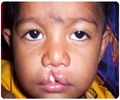
This study uses instrumental variable (IV) models with genetic instruments to assess the effects of maternal smoking on the child's risk of orofacial ... Read More

Source: PubMed

  2011 Dec 3  

Using genomics for birth defects epidemiology: Can epigenetics cut the GxE gordian knot?

Friedman JM

Department of Medical Genetics, University of British Columbia, and Child and Family Research Institute, Vancouver, British Columbia, Canada. janfriedman@ubc.ca.

Most birth defects are etiologically complex disorders caused by combinations of genetic and environmental factors, but most studies of birth defect e... Read More

Source: PubMed

  2011 Nov 30  

Fibrodysplasia ossificans progressiva: Middle-age onset of heterotopic ossification from a unique missense mutation (c.974G?>?C, p.G325A) in ACVR1.

Whyte MP, Wenkert D, Demertzis JL, Dicarlo EF, Westenberg E, Mumm S

Center for Metabolic Bone Disease and Molecular Research, Shriners Hospital for Children; St. Louis, Missouri, USA, 63131; Division of Bone and Mineral Diseases, Washington University School of Medicine at Barnes-Jewish Hospital; St. Louis, Missouri, USA, 63110. mwhyte@shrinenet.org.

Fibrodysplasia ossificans progressiva (FOP) is the rare mendelian disease characterized by congenital malformation of the great toes preceding heterot... Read More

Source: PubMed

  2011 Nov 28  

Genetic Disease in the Children of Danish Survivors of Childhood and Adolescent Cancer.

Winther JF, Olsen JH, Wu H, Shyr Y, Mulvihill JJ, Stovall M, Nielsen A, Schmiegelow M, Boice JD

Jeanette F. Winther, Jørgen H. Olsen, and Annelise Nielsen, Institute of Cancer Epidemiology, Danish Cancer Society; Marianne Schmiegelow, Clinic of Pediatrics, Copenhagen, Denmark; Jørgen H. Olsen, Huiyun Wu, Yu Shyr, and John D. Boice Jr, Vanderbilt-Ingram Cancer Center, Vanderbilt University, Nashville, TN; John J. Mulvihill, University of Oklahoma, Oklahoma City, OK; Marilyn Stovall, The University of Texas MD Anderson Cancer Center, Houston, TX; and John D. Boice Jr, International Epidemiology Institute, Rockville, MD.

PURPOSEPreconception radiation and chemotherapy have the potential to produce germ cell mutations leading to genetic disease in the next generation. D... Read More

Source: PubMed

Pan Afr Med J    

Risk factors and birth prevalence of birth defects and inborn errors of metabolism in Al Ahsa, Saudi Arabia.

Al Bu Ali WH, Balaha MH, Al Moghannum MS, Hashim I

Dammam University, Saudi Arabia.

Birth defects and inborn errors of metabolism are related to variable poor perinatal and neonatal outcomes. Our aim was to explore the pattern and pre... Read More

Source: PubMed

Pan Afr Med J    

Risk factors and birth prevalence of birth defects and inborn errors of metabolism in Al Ahsa, Saudi Arabia.

Al Bu Ali WH, Balaha MH, Al Moghannum MS, Hashim I

Dammam University, Saudi Arabia.

Birth defects and inborn errors of metabolism are related to variable poor perinatal and neonatal outcomes. Our aim was to explore the pattern and pre... Read More

Source: PubMed
    

Novel perspectives for investigating congenital anomalies of the kidney and urinary tract (CAKUT).

Renkema KY, Winyard PJ, Skovorodkin IN, Levtchenko E, Hindryckx A, Jeanpierre C, Weber S, Salomon R, Antignac C, Vainio S, Schedl A, Schaefer F, Knoers NV, Bongers EM

Correspondence and offprint requests to: Nine V.A.M. Knoers; E-mail: V.V.A.Knoers@umcutrecht.nl.

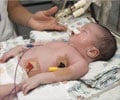
Congenital anomalies of the kidney and urinary tract (CAKUT) are the commonest cause of chronic kidney disease in children. Structural anomalies withi... Read More

Source: PubMed
  2011 Nov 26  

The neurology of carbonic anhydrase type II deficiency syndrome.

Bosley TM, Salih MA, Alorainy IA, Islam MZ, Oystreck DT, Suliman OS, Malki SA, Suhaibani AH, Khiari H, Beckers S, van Wesenbeeck L, Perdu B, Aldrees A, Elmalik SA, Van Hul W, Abu-Amero KK

1 Department of Ophthalmology and Paediatrics, College of Medicine, King Saud University, Riyadh, Saudi Arabia.

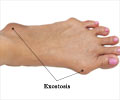
Carbonic anhydrase type II deficiency syndrome is an uncommon autosomal recessive disease with cardinal features including osteopetrosis, renal tubula... Read More

Source: PubMed

Osaka City Med J    

Spectrum of glutamate dehydrogenase mutations in Japanese patients with congenital hyperinsulinism and hyperammonemia syndrome.

Aso K, Okano Y, Takeda T, Sakamoto O, Ban K, Iida K, Yamano T, Shintaku H

Department of Pediatrics, Osaka City University, Graduate School of Medicine, Japan.

Congenital hyperinsulinism and hyperammonemia (CHH) is caused by gain of function of glutamate dehydrogenase (GDH). The genetic abnormalities are know... Read More

Source: PubMed

  2011 Nov 21  

Microtia: Epidemiology and genetics.

Luquetti DV, Heike CL, Hing AV, Cunningham ML, Cox TC

Division of Craniofacial Medicine, Department of Pediatrics, University of Washington, Seattle, Washington. daniela.luquetti@seattlechildrens.org.

Microtia is a congenital anomaly of the ear that ranges in severity from mild structural abnormalities to complete absence of the ear, and can occur a... Read More

Source: PubMed

  2011 Nov 19  

[New X linked mental retardation syndrome.]

Rodríguez Criado G

Hospital Infantil Universitario Virgen del Rocío, Sevilla, España.

INTRODUCTION: Researching inherited mental retardation, from a diagnostic and aetiological point of view, is a great challenge. A particular type of m... Read More

Source: PubMed


GENES AS INSTRUMENTS FOR STUDYING RISK BEHAVIOR EFFECTS: AN APPLICATION TO MATERNAL SMOKING AND OROFACIAL CLEFTS.

Wehby G, Jugessur A, Murray JC, Moreno L, Wilcox A, Lie RT

Assistant Professor, Dept. of Health Management and Policy, College of Public Health, University of Iowa, 200 Hawkins Drive, E205 GH, Iowa City, IA 52242 USA, ;

This study uses instrumental variable (IV) models with genetic instruments to assess the effects of maternal smoking on the child's risk of orofacial ... Read More

Source: PubMed

  2011 Nov 30  

Fibrodysplasia ossificans progressiva: Middle-age onset of heterotopic ossification from a unique missense mutation (c.974G?>?C, p.G325A) in ACVR1.

Whyte MP, Wenkert D, Demertzis JL, Dicarlo EF, Westenberg E, Mumm S

Center for Metabolic Bone Disease and Molecular Research, Shriners Hospital for Children; St. Louis, Missouri, USA, 63131; Division of Bone and Mineral Diseases, Washington University School of Medicine at Barnes-Jewish Hospital; St. Louis, Missouri, USA, 63110. mwhyte@shrinenet.org.

Fibrodysplasia ossificans progressiva (FOP) is the rare mendelian disease characterized by congenital malformation of the great toes preceding heterot... Read More

Source: PubMed
  2011 Nov 28  

Genetic Disease in the Children of Danish Survivors of Childhood and Adolescent Cancer.

Winther JF, Olsen JH, Wu H, Shyr Y, Mulvihill JJ, Stovall M, Nielsen A, Schmiegelow M, Boice JD

Jeanette F. Winther, Jørgen H. Olsen, and Annelise Nielsen, Institute of Cancer Epidemiology, Danish Cancer Society; Marianne Schmiegelow, Clinic of Pediatrics, Copenhagen, Denmark; Jørgen H. Olsen, Huiyun Wu, Yu Shyr, and John D. Boice Jr, Vanderbilt-Ingram Cancer Center, Vanderbilt University, Nashville, TN; John J. Mulvihill, University of Oklahoma, Oklahoma City, OK; Marilyn Stovall, The University of Texas MD Anderson Cancer Center, Houston, TX; and John D. Boice Jr, International Epidemiology Institute, Rockville, MD.

PURPOSEPreconception radiation and chemotherapy have the potential to produce germ cell mutations leading to genetic disease in the next generation. D... Read More

Source: PubMed

Share it!
Comment & Contribute
Comments should be on the topic and should not be abusive. Comments are normally moderated and are reviewed after they are posted.
* Your comment can be maximum of 2500 characters

Notify me when reply is posted
I agree to the terms and conditions
  
If you have a question about health related issues, you can now post it in our Ask An Expert section on our community website Medwonders.com and get answers from our panel of experts.
Posted by:  honnet  Posted on: 03/16/2011
The Content/ remarks were helpful. From http://www.hyderabadonnet.com


Posted by:  CrystalDivine(Guest)  Posted on: 06/26/2010
Women can have Hemophilia as well as men. It is very rare but, It is possible.


Posted by:  paschar  Posted on: 02/15/2010
We found no mention of the G380R mutation factor in FGFR3 and other related conditions i.e. spinal stenosis, Kartagener`s Syndrome. Paschar


X
Related Links
Von Recklinghausen’s Disease
Epigenetics
Down Syndrome
Amniocentesis
Multiple Sclerosis
Genetic Counseling
Turners Syndrome
Klinefelter's Syndrome
Amniocentesis - Animation
Multifactorial - Birth Defects
Environmental - Birth Defects
Metabolic Defects
Drug-Induced Birth Defects
Birth Defects - Structural Defects
Birth Defects - Infections
Birth Defects-Introduction
Citing this Health Article
The information on Medindia is factual, unbiased and authentic. If you find the content useful - PLEASE INCLUDE A LINK TO THIS PAGE.

Highlight the text, right-click, and select “copy”. Paste the link into your website, email, or any other HTML document.

News on Birth Defect - Genetic
Are you a member of Facebook? Become a fan of Medindia and get breaking news delivered to your Facebook page.