Biopsy Techniques
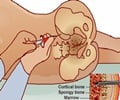
Excisional Biopsy
A whole organ or a whole lump is removed. Some types of tumors (such as lymphoma, a cancer of the lymphocyte blood cells) have to be examined by excision of the whole organ (eg. Lymph nodes in case of Lymphoma) to allow an accurate diagnosis, enlarged
Excisional biopsy of the whole breast lumps is encouraged by doctors to ensure diagnostic accuracy. Some organs, such as the spleen, are dangerous if removed partly, as they are very vascular organ and found to bleed excessively hence, whole organ is removed.
Incisional Biopsy
Only a portion of the lump is removed surgically. This type of biopsy is most commonly used for tumors of the soft tissues (muscle, fat, connective tissue) to distinguish benign conditions from malignant soft tissue tumors, called sarcomas.
Endoscopic Biopsy
This is probably the most commonly performed type of biopsy.
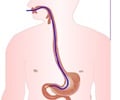
It is done with the help of a fiber-optic endoscope (light, flexible tube) which the doctor inserts into the gastrointestinal tract (alimentary tract endoscopy), urinary bladder (cystoscopy), abdominal cavity (laparoscopy), joint cavity (arthroscopy), mid-portion of the chest (mediastinoscopy), or trachea and bronchial system (laryngoscopy and bronchoscopy), either through a natural body orifice or a small surgical incision.
The doctor can directly visualize an abnormal area on the lining of the organ which is diseased and cut it into tiny bits of tissue with forceps attached to a long cable that runs inside the endoscope.
Colposcopic Biopsy
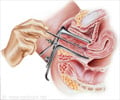
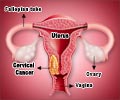
A colposcopy-directed biopsy uses a colposcope, which is a special microscope used for examining the cervix. The cervix is the lower part of the uterus that connects to the vagina;
This is a gynecological procedure that typically is used to evaluate a patient who has had an abnormal Pap Smear.
Stereotactic Biopsy
Stereotactic biopsy is used when abnormal tissue is present at a depth which cannot be seen or felt directly, the technique uses 3D effects and depth usually seen by the use of special X-ray such as CT scan.
It is often used when abnormalities are found on X-ray tests, mammography or a CT scan.
Fine Needle Aspiration
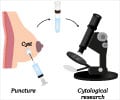
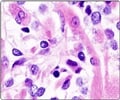
This is an extremely simple technique. A syringe with 22 gauge needle which is used to give routine injections is inserted into a lump (tumor), and a few tens to thousands of cells are drawn up (aspirated) into a syringe. The cells are smeared on a slide, stained, and examined under a microscope by the pathologist.
Tumors of deep, hard-to-get-to structures (pancreas, lung, and liver, for instance) are especially good candidates for FNAC, as the only other way to sample them is with major surgery.
Such FNAC procedures are typically done by a surgeon or radiologist under guidance using ultrasound or computed tomography (CT scan) and require no anesthesia, sometimes local anesthesia.
Thyroid lumps are also excellent candidates for FNAC diagnosis. A diagnosis can often be rendered in a few minutes.
Punch Biopsy
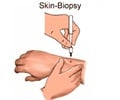
This technique is typically used by dermatologists to sample skin rashes and small masses.
After a local anesthetic is injected, a biopsy punch, which is basically a small size cutter (3 or 4 mm in diameter), is used to cut out a cylindrical piece of skin.
The hole is closed with a suture and heals with minimal scarring.
Imaging Techinques
Computed Tomography - Guided Biopsy
Computed tomography (CT) is a process that images anatomic information from a cross-sectional plane of the body by placing the patient into the CT scanner.
As mentioned under Stereotactic biopsy, CT scan is a good X-ray device to take biopsies from tissue depths. CT is used in order to guide the needle to the site of the biopsy and to provide rapid and precise localization of the needle.
This procedure enables the physician to see the target area clearly and help to ensure that the tissue being removed is from the target lesion. CT can also help in characterize the tumor and aid in the estimation of malignancy.
The yield of positive and accurate tissue biopsy is much higher from CT scan compared to X-rays.
Magnetic Resonance - Guided Biopsy
Like CT scan, Magnetic Resonance imaging helps the doctor to place the core needle accurately in suspicious area to remove the small, cylindrical-shaped tissue sample.
The procedure requires only topical anesthetic application and it leaves little to no scaring.
Taking a breast biopsy guided in real-time by magnetic resonance (MR) imaging is the latest development and an important advance in diagnosing breast cancer.
MR-guided breast biopsy is usually a preferred alternative to surgical biopsy. This streamlines the diagnostic process and in some cases makes it possible to biopsy suspicious tissue that would otherwise have been very difficult to target.
It is used when ultrasound or mammogram (stereotactic) guided biopsy is not appropriate because the area of concern is not well seen by mammogram or ultrasound.