- University of Maryland Medical Center - (https://www.umms.org/ummc)
- Family doctor - (https://familydoctor.org/)
- The Annie Appleseed Project - (http://www.annieappleseedproject.org/)
- Talk about Sleep - (https://www.talkaboutsleep.com/)
- Priory Medical Journals - (http://priory.com)
- Society for Light Treatment and Biological Rhythms - (https://sltbr.org/)
About
Melatonin is the body’s master hormone with several significant functions, including the monitoring of other hormones and regulating the sleep-wake cycle. It has been used in recent times to treat several disorders and health conditions.
Melatonin, chemically N-acetyl-5 methoxytryptamine, is a derivative of serotonin and is a naturally - occurring hormone.
Melatonin is referred by some as the ‘master hormone’ due to the vital role it plays in carrying out several body functions. Secreted by the brain’s pineal gland and released directly intothe bloodstream, this hormone helps normalize the production and functioning of other hormones in the body.
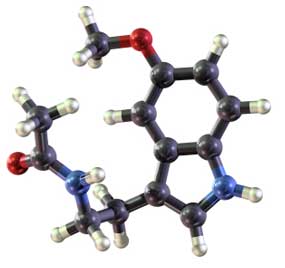
Melatonin
Melatonin has two other significant functions. Thefirst is to regulate our eating cycle,and the second, to monitor the circadianrhythm. Otherwise termed the 24-hour ‘biological’ clock, the circadianrhythm oversees the sleep-wake cycle. Melatonin is responsible for ‘timing’ this clock in response to external cues like darkness and light. To elaborate,the absence of light stimulates the pineal production of melatonin, while itspresence suppresses it.
Advertisement
In recent times, the advantages of this hormone have diversified. It has now also proved useful in the treatment of sleep disturbances, osteoporosis, and even cancer.
Mealtonin intake has several side effects too especially if the dosage is incorrect or if the usage is long- term. Several side effects are yet to be understood.