- Coronary Artery Bypass Graft - (https://pubmed.ncbi.nlm.nih.gov/29939613/)
- Perspective on coronary interventions & cardiac surgeries in India - (https://www.ncbi.nlm.nih.gov/pmc/articles/PMC3028952/)
- Cardiac Surgery - (https://www.ncbi.nlm.nih.gov/books/NBK532935/)
- Coronary Artery Disease - (https://www.ncbi.nlm.nih.gov/books/NBK564304/)
- Aspirin and platelets: the antiplatelet action of aspirin and its role in thrombosis treatment and prophylaxis - (https://pubmed.ncbi.nlm.nih.gov/9263351/)
- Percutaneous Transluminal Coronary Angioplasty - (https://www.ncbi.nlm.nih.gov/books/NBK535417/)
- Indications for coronary artery bypass graft surgery - (https://pubmed.ncbi.nlm.nih.gov/3315416/)
- Memento for Rene Favaloro - (https://pubmed.ncbi.nlm.nih.gov/15061628/)
- Coronary Artery Surgery - (https://www.ncbi.nlm.nih.gov/books/NBK562187/)
- Coronary artery bypass without use of the heart-lung-machine - (https://pubmed.ncbi.nlm.nih.gov/11228802/)
- Pulmonary Rehabilitation in COVID-19 patients: A scoping review of current practice and its application during the pandemic - (https://www.ncbi.nlm.nih.gov/pmc/articles/PMC7756838/)
- A novel model of exercise walking training in patients after coronary artery bypass grafting - (https://pubmed.ncbi.nlm.nih.gov/25179479/)
- Dietary education among patients following coronary artery bypass surgery - a necessity or an unnecessary luxury? - (https://pubmed.ncbi.nlm.nih.gov/26336386/)
- Smoking behavior after coronary artery bypass surgery: Quit, relapse, continuing - (https://pubmed.ncbi.nlm.nih.gov/33938833/)
- Cardiac rehabilitation outcomes following a 6-week program of PCI and CABG Patients - (https://www.ncbi.nlm.nih.gov/pmc/articles/PMC3812547/)
- Reducing family stress during and after coronary artery bypass surgery - (https://pubmed.ncbi.nlm.nih.gov/6608097/)
- The influence of gender on the outcome of coronary artery bypass surgery - (https://pubmed.ncbi.nlm.nih.gov/11016313/)
- Prevalence of Dementia 7.5 Years after Coronary Artery Bypass Graft Surgery - (https://pubmed.ncbi.nlm.nih.gov/27127919/)
- Prevent Heart Disease - (https://www.cdc.gov/heartdisease/prevention.htm)
- Biomaterials for vascular tissue engineering - (https://www.ncbi.nlm.nih.gov/pmc/articles/PMC2822541/)
- Overview of therapies for prevention of restenosis after coronary interventions - (https://pubmed.ncbi.nlm.nih.gov/11916536/)
About Coronary Artery Bypass Grafting (CABG)
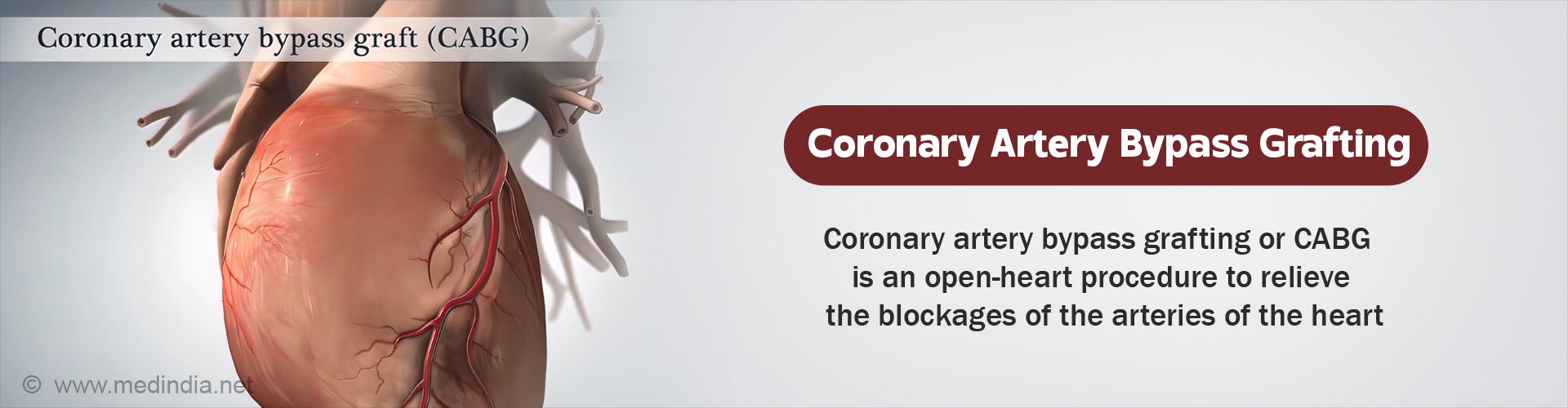
Coronary artery bypass grafting or CABG is an open-heart procedure to relieve the blockages of the arteries of the heart.
In angina or after a heart attack (myocardial infarction), certain areas of the heart do not receive adequate blood supply and these areas are starved of oxygen and nutrients and this result in areas of the heart that are ischemic(1✔ ✔Trusted Source
Coronary Artery Bypass Graft
Go to source).
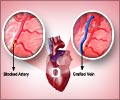
By performing a surgical operation like CABG these areas are re-perfused using 'free vein or arterial bypass' that connect the normal areas of the arteries to less perfused areas and 'bypass' the blocked arteries. The bypass sections of the arteries or veins are harvested from elsewhere from the body like the leg or the arm or from within the chest itself.
Lifestyle modifications and rapid urbanization has led to an epidemic of cardiac disease in India. The incidence of coronary artery disease ranges from 14.8 to 65.4 per 1000 population. Cardiac surgeries and are now spanning into sophisticated technologies, where innovative methods are introduced to provide distinctive care even for high-risk surgeries.
Report from 2005 shows that out of 60,000 open heart surgeries done every year majority are CABGs and Valve replacements(2✔ ✔Trusted Source
Perspective on coronary interventions & cardiac surgeries in India
Go to source).
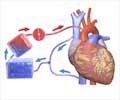
Success of every surgery is teamwork and cardiac surgery is no exception. A team of surgeons, anesthesiologist, perfusionist, nurses and technicians are involved during the procedure. Bypass operation is done under general anesthesia. To access the heart the chest has to be cut wide open. A special heart-lung machine is used to bypass the blood when the heart is stopped to perform the surgery. The heart lung machine oxidizes the impure blood and sends it back to the body. Vein from legs or arteries from the chest wall or forearm are harvested depending on the number of blocks and the age of the patient. They are then cleaned and sutured to the arteries above and below the plaque creating a bypass for the blood flow, reinstating oxygen supply to the myocardium (heart muscle). The chest layers are then sutured and patient is transported to the Intensive care unit or post-surgical care unit.
Surgery on the heart can also be performed when it is still beating or pumping blood and this is called Off-pump Coronary Bypass (OPCAB) Surgery. This procedure can be done in a majority of the patients. However, patients with certain unfavorable conditions such as unstable hemodynamics or blockage in the vessels that is less accessible when the heart's beating require the use of the heart-lung machine.
Advertisement
Minimally Invasive Direct Coronary Artery Bypass (MIDCAB) is done without the use of the perfusion pump. As the name suggests, the incision is made relatively smaller and on the left side of the chest, closer to the heart. A small portion of the rib is removed to access the heart. This can be performed only on patients who need just one or two grafts on the arteries that are in close proximity to the incision(3✔ ✔Trusted Source
Cardiac Surgery
Go to source).
The surgery lasts about 3 to 6 hours.
The total hospital stay depends on individual progress and may vary anywhere between 7 days or more in case of complications.
The cost of CABG is about Rs.150,000-200,000 (US$4000-5000).
Coronary Artery Disease
Risk factors such as age, diabetes, hypertension, smoking, high blood cholesterol levels and family history can cause lipid (fatty) materials to clog these small diameter coronary arteries and form what are known as plaques (little humps of fatty material with some calcium deposits making them hard) on the inside lumen the artery. As the size of the plaque increases, the arteries start to narrow or stenose.
Coronary artery disease is a common heart condition that involves atherosclerotic plaque formation in the vessel lumen. When one or more of these arteries get blocked the blood supply is reduced to the area of the heart muscle resulting in lack of nutrients and oxygen supply especially during exercise or exertion. This is often called "Coronary Artery Disease" (CAD) or "Atherosclerotic Heart Disease". Quadruple bypass surgery or bypass quadraple means that four of the arteries feeding the heart are blocked. Deaths due to Coronary Artery Disease peaked in the mid-1960s and then decreased. However, it still is the leading cause of death worldwide(4✔ ✔Trusted Source
Coronary Artery Disease
Go to source).
Advertisement
Most people start experiencing chest pains or other symptoms like fatigue or shortness of breath when the block is over 50%. As the block gets narrower, symptoms increase either in intensity or frequency or both.
Heart attack or Myocardial Infarction occurs when the artery is completely occluded and the muscles die.
ECG, Treadmill, Echocardiogram will be done to diagnose CAD. Angiogram is done to show the accurate percentage of blocks in each artery.
Medical Management of Coronary Artery Disease (CAD)
Initially Coronary Artery Disease (CAD) can be treated with tablets that can increase blood supply to the heart muscles either by dilating the blood vessels or making the heart pump the blood slowly but with more force. Aspirin or Anti-platelet therapy is given to keep the blood thin and prevent thrombosis(5✔ ✔Trusted Source
Aspirin and platelets: the antiplatelet action of aspirin and its role in thrombosis treatment and prophylaxis
Go to source). Medications are also given to reduce cholesterol/lipid levels in the blood and control diabetes and hypertension.
Angioplasty is an alternate invasive procedure to CABG, where the blocked arteries are opened up using a balloon catheter followed usually by metal ring like stent (resembles a coiled spring) to keep the opening from closing up again.
Patients with left main coronary artery stenosis or severe triple vessel disease (where all the 3 main coronary arteries have plaques) may not be eligible for a Percutaneous Transluminal Coronary Angioplasty (PTCA).
Patients on high dose medications who continue to experience symptoms create a need for surgical intervention to remove or by-pass the blockages. In certain situation as described above the patient may not be fit for PTCA due to the nature of the disease and it is then that CABG is recommended(6✔ ✔Trusted Source
Percutaneous Transluminal Coronary Angioplasty
Go to source).
Advertisement
Indications for Coronary Artery Bypass Grafting
Indications for Coronary Artery Bypass Grafting (CABG) depend on various factors, mainly on the individual's symptoms and severity of disease. Some of these include -
- Left main artery disease or equivalent.
- Triple vessel disease.
- Abnormal Left Ventricular function.
- Failed PTCA.
- Immediately after Myocardial Infarction (to help perfusion of the viable myocardium).
- Life threatening arrhythmias caused by a previous myocardial infarction.
- Occlusion of grafts from previous CABGs(7✔ ✔Trusted Source
Indications for coronary artery bypass graft surgery
Go to source).
Bypass grafting may be contraindicated in patients, for e.g., absent viable myocardium or the artery that needs grafting is too small.
An Argentinean cardiac surgeon called Rene Favaloro in 1960's first pioneered CABG and today over 500,000 CABGs are done every year in United States alone. In India where there is a rising incidence of heart disease the number of CABG surgeries is showing an increasing trend.
Rene G. Favaloro moved to the Cleveland Clinic in 1962 and with him came a wind of change that was to reshape cardiac surgery forever. With his cherished colleagues, Effler, Sones, Proudfit, Groves, Sheldon, and countless others, he contributed to the double internal mammary artery-myocardial implantation by the Vineberg method, and, subsequently, in May 1967, he reconstructed the right coronary artery by saphenous vein graft interposition. These milestones set the stage for aortocoronary saphenous vein bypass grafting in October 1967(8✔ ✔Trusted Source
Memento for Rene Favaloro
Go to source).
Before CABG Surgery
We encourage you to talk to your cardiologists and surgeons and discuss about the need and outcome of the surgery and at the same time understand its benefits and risks.
You should talk to them about what medications can be taken on the day of the surgery, what pills need to be stopped and when. You will be hospitalized one or two days before the surgery giving enough time to have all the required pre-operative tests.
Laboratory tests (Blood and Urine analysis), Chest X-Ray, Electrocardiogram, Echocardiogram and breathing test (spirometry) will be done. Recent angiogram will always be required before having bypass surgery.
It is normal for anyone to be nervous and anxious before surgery. An anesthesiologist usually visits you the day before the procedure. He will discuss the plan and the postoperative pain management. He might prescribe an anti-anxiety medication as a part of the hospital's routine procedure. You will not be able to eat or drink anything from the evening or midnight before surgery. This is called "NPO" or nil per oral. You can take your medications with sips of water.
Prior to the procedure all personal belongings will be removed and handed over to your family members. Hair from chest and legs will be shaved off and you may be asked to shower with antiseptic soap to reduce the risk of infection. You will have intravenous lines in one or both hands and one arterial line will be added in the operation room.
Inside the Operation Room
Once the anesthesia is administered, a tube will be inserted into your windpipe through your mouth, which will be connected to a ventilator to assist your breathing. The general anesthesia helps you fall into deep sleep so that you feel no pain during surgery. The nurse then cleans the chest and the graft site (from where the vein or artery will be removed) with spirit and iodine. You will be completely covered with sterile drapes, exposing only the chest and the graft site (legs in case of vein graft).
The number of grafts that you will need depends on the number of blockages or bstructions in the coronary arteries. One of the branches of the left main artery called as the "Left anterior descending" artery is usually grafted with an artery called "Left Internal Mammary artery". Another artery graft that can be used for CABG is the "Radial artery". The "Ulnar artery" maintains the blood supply to the forearm when the radial artery is removed.
Artery supplying to the stomach "Gastroepiploic artery" and the abdominal wall “Inferior epigastric artery” are less commonly used. However, the most commonly used vessel is not an artery but a vein called the “Saphenous vein” from the thigh. This vein is usually removed from the groin to the knee or feet, in one or both legs depending on the number of grafts required(9✔ ✔Trusted Source
Coronary Artery Surgery
Go to source).
Bypass Surgery Procedure
The surgeon or an assistant surgeon removes the graft from legs or hands, ensuring the other ends are ligated properly. He then cleans the unwanted fat and other tissues attached to the graft. Injects saline to ensure that all branches are properly ligated or clipped. Nowadays saphenous vein can be harvested with minimal incision to avoid scarring and delay in healing.
Meanwhile, the chest layers are cut open right in the middle almost on top of the sternum. When the sternum is reached, the bone is sawed and the ribcage is retracted to expose the heart. The patient is connected to a heart lung machine by diverting blood from the systemic circulation through sterile plastic tubes.
The blood is oxygenized and filtered in the machine and sent back to the aorta thereby maintaining oxygen and nutrient supply to other vital organs. When the heart stops working, the surgeon identifies the block and makes an incision (small cut) below the block. He then sutures the graft to that incision. Then the top end of the graft is sutured to the aorta. The left internal mammary artery that comes as a branch from aorta is left connected to its origin, however the distal or far end of the artery is divided for connection to the diseased coronary artery.
When all the grafts are in place and sutured, the heart is allowed to fill with blood and the heart lung machine is slowly weaned off. The surgeons make sure that there are no leaks in the connection between the graft and the aorta. Once the heart regains its function the pacing wires and drainage tubes are placed in the chest cavity to drain any fluid that normally collects after the procedure. The ribs are usually brought together and closed together with sternal wires and the rest of the muscles are closed in layers. The graft-harvested area is also sutured or closed in layers.
Following the surgery, the chest wound is cleaned of the blood marks and dressed. The leg wound is dressed and bandaged with pressure to prevent swelling or limb edema.
Throughout the procedure an anesthesiologist will monitor the blood pressure, oxygen saturation and body temperature. Few blood tests may be repeated in intervals, especially when the patient is connected to the bypass machine.
Off-Pump Coronary Artery Bypass (OPCAB) Surgery - The same procedure can be performed without the use of the heart lung machine. It is often called as OPCAB or Off-Pump coronary artery bypass. This procedure can be performed when the heart is still beating(10✔ ✔Trusted Source
Coronary artery bypass without use of the heart-lung-machine
Go to source).
Exposure of the heart is done by cutting the sternum open. Then a stabilizing device is used to hold and stabilize pertinent regions of the myocardium or heart muscle. Beating heart has to be handled very carefully, hence the lesions present on the front or anterior side is easier to graft as opposed to the ones on the lateral or posterior sides. Similar restrictions can be found in minimally invasive procedure, where the incision is made on the left side of the chest. A part of the ribcage is removed making the anterior part of the heart accessible. Patients with single vessel disease, who need one or two grafts, can be opted for OPCAB procedures.
Bypass Surgery Care
After the surgery you will be moved to the Intensive care unit and monitored closely. You will be still connected to the ventilator, until the anesthesia wears off and you start breathing on your own. Ventilator will be slowly weaned off in less than a day but this can take longer and varies from one case to another. You may still be able to communicate through hands and gestures. Nurses will have sign charts to ease the communication process. Chest tubes will be removed when drainage stops along with the pacing wires in about 1-2 days. Urinary catheter placed before the surgery will be used to measure your urinary output in the ICU and will be removed after a day or two.
Along with your regular medications, pain medications will be prescribed to alleviate the discomfort or pain in your chest where the incision has been made.
One or two members of your family will be allowed to visit you for a short while once or twice a day in the ICU. This however, usually depends on the rules of the hospital. You can check this before surgery from the staff in the wards.
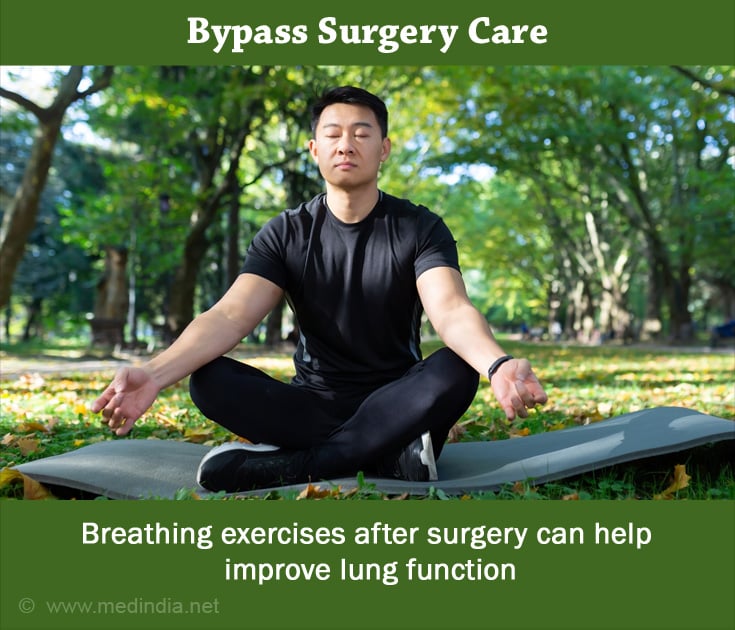
- Breathing exercises and cardio-pulmonary rehabilitation procedures will help in speedy recovery(11✔ ✔Trusted Source
Pulmonary Rehabilitation in COVID-19 patients: A scoping review of current practice and its application during the pandemic
Go to source). - You will be given liquid diets after the ventilator is removed, slowly progressing to solid foods.
- Sponge baths will be given and only when your incision is clean and dry, you can use soap and water to clean the chest.
- Changing positions in your bed helps you to recover quicker.
- A pillow is usually given to you to support your chest during coughing.
- Duration of Hospital stay purely depends upon the individual’s progress and may vary from a week or two.
Home Care Instructions
CABG does not cure the underlying disease, only creates an alternate pathway for the diseased arteries. When you leave the hospital, talk to your doctors, nurses, physiotherapists and dietitians about all the do and don'ts'.
On your discharge, you might have mixed feelings about leaving the hospital. Although you may be anxious leaving the security of immediate medical care but you may at the same time be relieved thinking about your home and wanting to be back with relatives and friends. Complete recovery from surgery is a gradual process and you should take it one day at a time. These are some of the do's and don'ts -
- Wear comfortable clothes at all times.
- Walking is considered to be the most useful and common of everyday activities.Take periodic walks and slowly increase the duration of exercise(12✔ ✔Trusted Source
A novel model of exercise walking training in patients after coronary artery bypass grafting
Go to source). - Follow the diet prescribed by your dietician(13✔ ✔Trusted Source
Dietary education among patients following coronary artery bypass surgery - a necessity or an unnecessary luxury?
Go to source). - Do not fail to take all your medications on time.
- Quit smoking(14✔ ✔Trusted Source
Smoking behavior after coronary artery bypass surgery: Quit, relapse, continuing
Go to source). - Participate in a cardiac rehabilitation program if possible(15✔ ✔Trusted Source
Cardiac rehabilitation outcomes following a 6-week program of PCI and CABG Patients
Go to source). - Maintain caution to avoid any bump or direct injury to your chest. Your scar might take one to two months to heal completely.
- Control your anger and stress(16✔ ✔Trusted Source
Reducing family stress during and after coronary artery bypass surgery
Go to source). - Follow up with your doctor(s) as instructed.
Some itching, numbness or redness in the incision site may be a normal process of healing. Contact the doctor immediately if there is a sign of infection (fever, pus or gaping of wound etc.).
Prognosis, Risks and Complications of Coronary Artery Bypass Surgery
CABG has known to have significant improvements in the patients. Chest pain disappears in almost all of the patients, increasing the quality of life.
Studies have shown that only 3-4% of the patients come back in one year’s time with recurrent symptoms. Also 40% patients are symptom free for almost 10 years. The symptoms are usually of less intensity compared to before surgery. Also, the recurrence of chest pain is more in women than men(17✔ ✔Trusted Source
The influence of gender on the outcome of coronary artery bypass surgery
Go to source).
When patients are in need of redoing bypass surgery, the success rate is lower than it is for first operation.
Coronary Artery Bypass Surgery is a major surgical procedure and it carries some risks and complications. These complications are higher in patients who are heavy smokers or if they have a major problem with other vital organs such as kidneys or lungs or have reduced blood supply to the brain.
Infection and bleeding are examples of risks and complications any surgery may present.
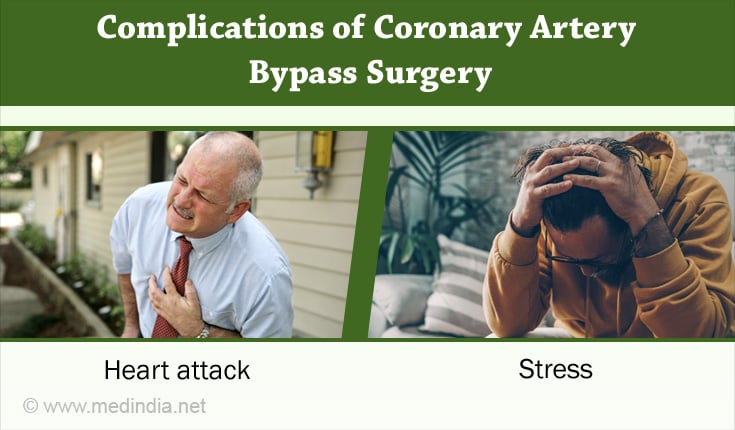
Some of these complications may be uncommon. Complications after surgery include -
- Ankle swelling
- Heart Attack
- Stroke
- Emboli
- Arrhythmias
- Vein graft occlusion
- Kidney failure or temporary shutdown
- Death
- Stress and Depression- which could be long-term problem.
Some patients may lose some of their cognitive ability, especially older women, however most will regain it within six to 12 months. Usually bypass surgery will not cause dementia however it may worsen this condition if is s present prior to surgery(18✔ ✔Trusted Source
Prevalence of Dementia 7.5 Years after Coronary Artery Bypass Graft Surgery
Go to source).
The risk of death from CABG is approximately 1%. The main reason of death is heart attacks occurring during or immediately after surgery. Heart attacks occurs in about 5% of the patients.
Neurological complications are minimal and occur more in women than men, especially when older. Incidence of stroke is about 1-2 %.
Long term studies show that exercise reduces mortality rate by 20%.
'Healthy heart' after Surgery
Prevention strategies can go a long way in improving the healthcare of a society. In India the increasing trend of heart disease is due to the increase in the incidence of hypertension and diabetes especially in the urban areas. Lifestyle that helps maintain a 'healthy heart' is even more important after your surgery. Remember the following instructions to help your heart serve you better in the years following surgery -
"Don't eat your heart out". Eat healthy to avoid or control hypertension, weight, diabetes and cholesterol issues.
- Walk at least 30 minutes a day.
- Join a regular exercise program
- Quit smoking, avoid secondary smoke whenever possible.
- Reduce your stress level.
- Continue your medications as prescribed.
- Follow up with your doctor on a regular basis or immediately when symptoms recur.
- Discuss with your doctor about your work, if it includes manual labor(19✔ ✔Trusted Source
Prevent Heart Disease
Go to source).
Current Research
- Artificial blood vessels are developed as an alternate source of grafts by using tissue engineering(20✔ ✔Trusted Source
Biomaterials for vascular tissue engineering
Go to source). - During closure of the chest or legs after surgery, surgical clips have been tried to staple skin instead of sutures. Research shows that the outcome of the wound is better with subcuticular sutures as compared to clips and is also cost effective.
- First heart surgery using robots were performed in 2001 to repair a mitral valve. Robotic Surgery Institute is researching new treatment options for patients with coronary artery disease. In robotic surgery a surgeon operates the robot for more precise cuts and vessel anastomosis.
- Studies show that restricting blood supply to the arm prior to surgery reduces the release of a chemical called ‘Troponin T’giving a better outcome.
- In April 2007, an infant underwent bypass surgery on a beating heart in India. He was born with a heart condition (severe narrowing of the left main coronary artery), which gave him a massive heart attack when he was just a year old. With his heart function very low, he was showing symptoms of heart failure. His heart muscles were not dead and the doctors decided to try and resupply the muscle instead of waiting for a heart transplant. The 3-hour procedure on this 15 month old was a success.
Studies are being undertaken to prevent and cure restenosis of the coronary arteries(21✔ ✔Trusted Source
Overview of therapies for prevention of restenosis after coronary interventions
Go to source). - Transmyocardial revascularization using excimer laser can be an alternative to CABG or Angioplasty in patients with severe coronary artery disease. This method currently uses CO2 laser creating pathways from ventricles to myocardium that needs blood supply. Using excimer laser can be of advantage because studies show that it can cause less stroke/air emboli, increase the term of channel potency and decreases scarring and faster healing.