- “Mushrooms, crimini” The Worlds Healthiest Foods
- Wani et al “Nutritional and medicinal importance of mushrooms” Journal of Medicinal Plants Research Vol. 4(24), pp. 2598-2604, 18 December, 2010
- Dr Peter Roupas, Mushrooms & Health 2010: Mushroom Varieties – Effects on Health, CSIRO
About
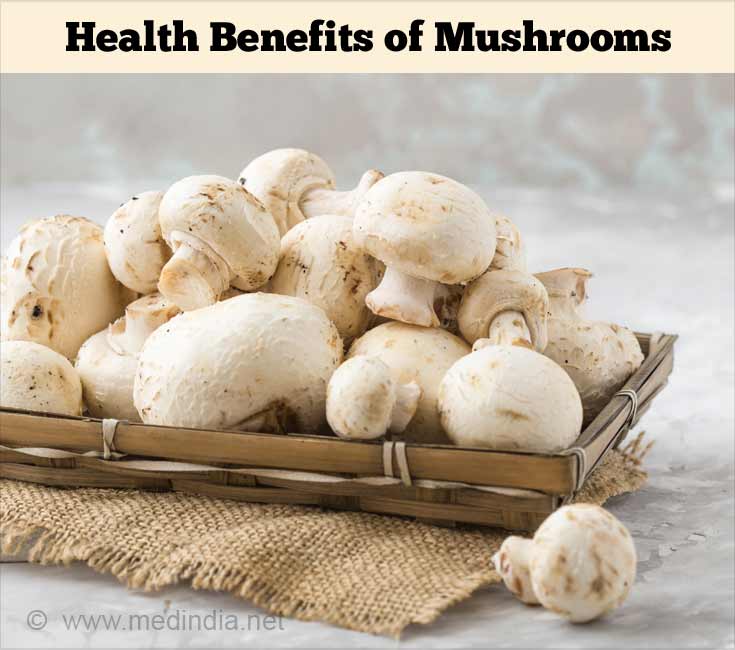
Mushrooms are true wonder foods. They are basically the fruiting bodies of certain fungi. Not all mushrooms are edible, however. There are also those mushrooms that are poisonous.
Edible mushrooms are gradually gaining popularity worldwide due to their high content of certain essential protective nutrients. Fresh mushrooms need to be consumed quickly as they have limited shelf life whereas canned mushrooms have a greater shelf life.
Mushrooms were initially grown and eaten by the poor people of Himachal Pradesh region before they became known to the research experts and the common man. It was observed that these fungi needed only waste twigs, fresh waste disposal and cow dug to grow. Since then, the cultivation and research on mushroom varieties and benefits have a come a long way.
Recent researches highlight that out of several thousand mushroom species known worldwide, only around 2000 are considered edible, and about 20 are cultivated commercially with only 4 to 5 under industrial production.
Advertisement
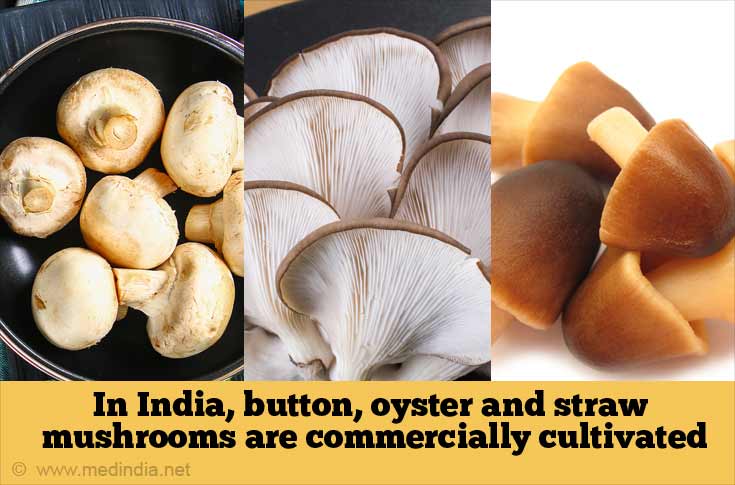
In India mainly three types of mushrooms, namely, button, oyster and straw mushrooms are commercially cultivated. Button mushrooms accounts for 90 percent of the production of mushrooms. This tiny umbrella shaped vegetable is rich in protein, fiber, B vitamins, and minerals.
Mushrooms have medicinal properties as well. Three species namely maitake, shiitake, and reishi have healing potential. These medicinal mushrooms help to:
- Improve heart health
- Lower risk of cancer
- Enhance immunity
- Balance blood sugar levels
- Treat nutritional deficiencies and liver ailments.
- Prevent or reduce obesity – mushrooms are low caloric foods and therefore a great substitute for high fat foods like red meat.

Experts say that modern pharmacological research confirms large parts of traditional knowledge regarding the antifungal, antibacterial, antioxidant and antiviral properties of mushrooms, besides being used as functional foods. Hence, mushrooms offer tremendous applications as they can be used as food and medicine. According to the experts “They represent one of the world’s greatest untapped resources of nutrition and palatable food of the future.”
Advertisement
Mushroom health supplements are marketed in the form of powders, capsules or tablets made of dried fruiting bodies, extracts of mycelium with substrate, biomass or extract from liquid fermentation.
The following table highlights the nutrient content of mushroom:
| Nutrient | Content per 87g Uncooked Button/Crimini Mushroom | Remarks with the Recommended Amounts to be Consumed per day (NIN Values) |
| Calories | 19 K Cal | Extremely low in calories |
| Protein | 3 (on an average) | High compared to other vegetables. Mushrooms are seen to have higher protein content than most vegetables. They also contain some essential amino acids. (50 to 60 grams per day ) |
| Vitamins: | They are rich in B vitamins | |
| Folate (Vitamin B9) | 12 to 16 mcg | Fair source (Folate: 200mcg per day ) |
| Niacin (B3) | 3.31mg | Good source (B3: 16mg per day ) |
| Riboflavin (B2) | 0.43mg | Good source (B2: 1.4mg per day ) |
| Thiamin (B1) | 0.08mg | Good source (B1: 1.2mg per day ) |
| Vitamin B6 | 0.1mg | Good source (B6 : 2mg per day ) |
| Minerals | The mineral proportions vary according to the species, age and the diameter of the fruiting body | |
| Selenium | 22.62mcg | Excellent source (Selenium : 36mcg per day ) |
| Copper | 0.43mg | Excellent source (1.35mg per day ) |
| Potassium | 390mg | Excellent source (3750mg /day ) |
| Phosphorous | 104mg | Excellent source (600mg /day ) |
| Zinc | 1mg | Fair source (12mg /day ) |
| Vitamin D | 27 IU per 100g | Good Source (200 IU / day ) |
| Source: ESHA Foods Database, USA | ||