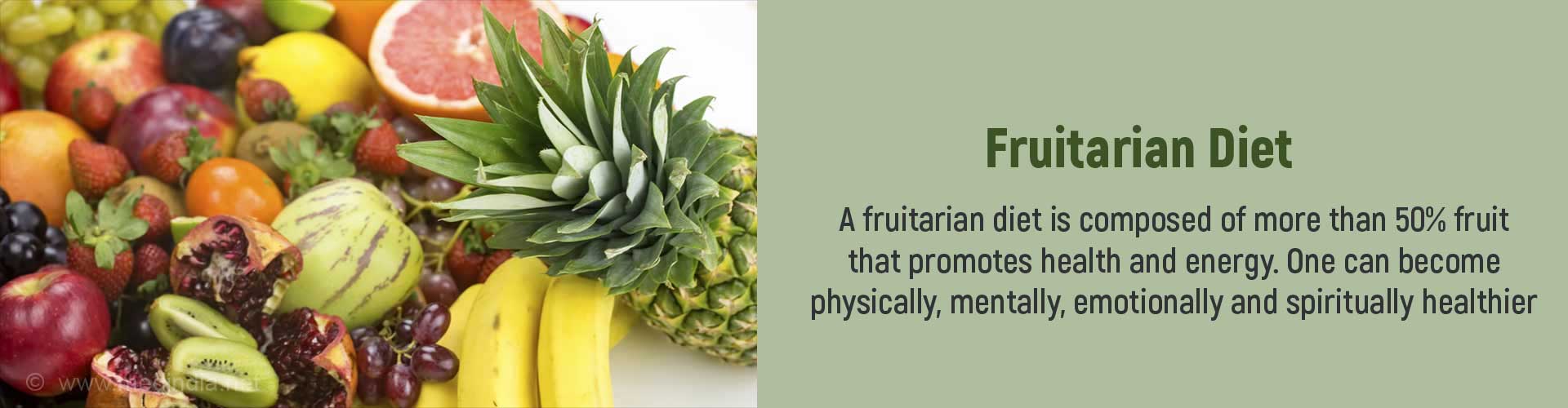
Drawback and Risk Factors
Very little protein, calcium, B vitamins, iron, zinc can be obtained from the diet as fruits are devoid of these nutrients. It is advisable to include seeds, nuts, greens and beans in the diet too.
Still, it is very difficult to fulfill the energy, protein, calcium and iron requirements, especially for children (who need these nutrients for physical and mental development), teens and young adults with a decent exercise routine and women who are pregnant or nursing. It is not at all recommended for them to follow such a diet.
This type of diet is most suited for adults, carrying an unhealthy lipid profile and those wanting to lose weight (though a good amount of beans needs to be included in the fruitarian diet to bring about a healthy weight loss).
A person whose diet is 75 percent fruit is likely to have more health issues than a person on a diet consisting of 50 percent fruit. It is a risk for diabetics to adopt this diet as fruits have high sugar content. There are risks of serious nutritional deficiencies, including vitamin B, calcium, iron, zinc, omega-3 and omega-6, amino acids, and protein. There is also the risk of unhealthy weight loss (muscle loss over the fat loss). It can be highly devastating for a pregnant or lactating mother to follow such a diet. Over a period of time, people on a fruitarian diet are also prone to develop health problems, including emaciation, constant hunger, weakness, and fatigue.
There is very little scientific research that supports fruitarianism as a healthy lifestyle, especially over long-term, unless foods such as beans, green vegetables, soy, and whole grains are included in the diet, keeping the fruit intake to a maximum of 50 percent of the total diet.