- Dosha: Wikipedia - (https://en.wikipedia.org/wiki/Dosha)
- Dosha Body Types - (http://whisperingworlds.com/ayurveda/dosha_body_types.php)
What is Ayurveda and What are Body Types?
Behind the scenes:
The word ‘Ayurveda’ comes from ‘ayus’ meaning life and ‘veda’ meaning knowledge. The earliest Ayurvedic texts are over 2000 years old and are now developed and modified to include new information and wisdom gathered through the time.
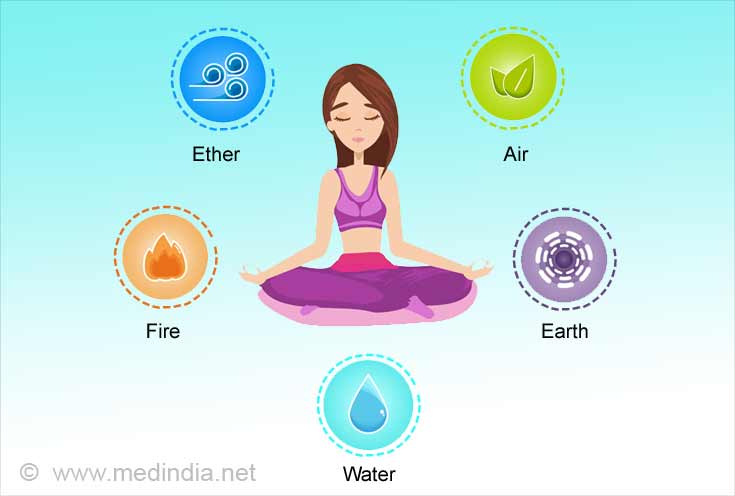
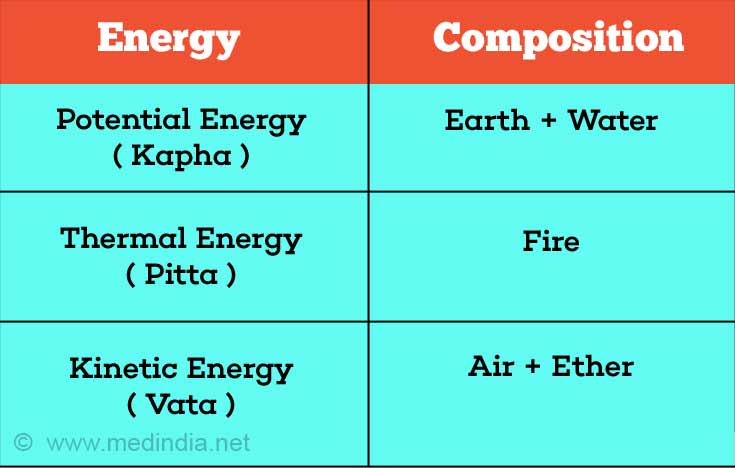
The ayurvedic theory identifies man as an individual, to be a mini-universe, where the physical and mental states both play an equally important role when it comes to well-being. Ayurvedic texts state that man is made up of the 5 constituent elements namely ether (akasha), air (vayu), water (jala), fire (Agni) and earth (prithvi). These are called the panchamahabhutas, which combine to form 3 main constituent types or humors.
Each person has either of the 3 humors-pitta (bile), vata (wind) or kapha (phlegm) as the dominant dosha. These humors, also known as doshas, have their special qualities that present themselves in different ways to determine your prakriti (type), which helps you understand better which kind of diseases your body is more inclined to. For example, a person of the kapha dosha is more susceptible to diseases like cough, cold and other disorders involving phlegm. Similarly, pitta dosha people should be aware of their diet, since they are more at the risk of problems involving ulcers and regurgitation.
Checking your type:
Determining your predominant type is easy, though some people do have more than one predominant type. Assess yourself with the table given below. In the last column, write down the table number corresponding to each situation you find yourself most suited to.
| Table 1 | Table 2 | Table 3 |
| I find it hard to gain weight | I am of a medium built and muscular | I have a large built and put on weight |
| I have dry and rough skin | I have oily skin | I have pale skin |
| I often forget things | I am often red-faced and flushed | I find it easy to sleep and take naps |
| I feel tired when I wake up | I am hyperactive | I am very laid-back |
| I suffer from digestive problems | I have a fast metabolism with loose stools | I have slow digestion |
| I have an irregular appetite | I have a good appetite | I have a steady appetite |
| I lack regularity and often feel stressed | I find it hard to go to sleep and often wake up at night | I feel lethargic and dislike exercises |
If your answers are mostly table 1, you have a predominant vata type constitution. Table 2 and table 3 correspond to pitta and kapha type constitutions.
Decoding the doshas:
People with a vata constitution are always on the go. They are busy people, and hence more prone to stress, anxiety and related digestive ailments like irritable bowel syndrome.
Pitta people have dynamic personalities. They are fiery, intelligent and quick people and are most susceptible to headaches and digestive problems.
Individuals with a kapha constitution are practical and down to earth people. They most commonly suffer from fatigue, water retention, bloating and sugar cravings. These people also tend to be more slow and lethargic than others.
Advertisement
Diagnosis-The Ayurvedic Way:
Ayurvedic remedies work by incorporating many different modes of treatment, including dietary and lifestyle changes, use of herbal medicines, avoiding indulgences and implementing a positive outlook.
The foods that we eat everyday have either cooling or warming effects on our bodies, which makes it necessary to detect the foods suitable to a particular individual depending on the dosha of the person.
| Dosha / Type | Avoid | Okay to eat/ drink |
| Vata | Raw, cold, frozen and fried foods and foods that are pungent, bitter and strong. E.g. coffee, garlic | Warm, cooked foods that are steamed or grilled, dairy produce in moderation, root vegetables like radish, garlic, onions and dried fruits |
| Pitta | Hot, spicy, fried, pungent and salty foods like pickles, curries with sour taste, salted nuts etc. | Lightly steamed, cool and raw foods, sweet and bitter vegetables and light foods like tofu, oats, mushrooms, figs, rice, salads, lentils and clarified butter. |
| kapha | Sweet, sour, salty and phlegm producing foods like confectionary, salted crisps and some dairy products. | Light, dry, spicy and easily digestible foods like fennel, brinjal, pulses, apples, chickpeas, lentils and natural diuretics. |