
Alzheimer’s disease - Causes, Symptoms, Diagnosis, Stages, Types, Prevention, Prognosis & Treatment
Alzheimer's disease is a progressive neurodegenerative disease affecting memory and thinking and making the person increasingly dependent on others.
Alzheimer's disease is a progressive neurodegenerative disease affecting memory and thinking and making the person increasingly dependent on others.
"Let's proceed with caution," said Robert Vassar, professor of cell and molecular biology at Northwestern University Feinberg School of Medicine. "We have to keep our eyes open for potential side effects of these drugs." Ironically, he says, the drugs could impair memory.
The drugs are designed to inhibit BACE1, the enzyme Vassar originally discovered that promotes the development of the clumps of plaque that are a hallmark of Alzheimer's. BACE1 acts as a molecular scissors, cutting up and releasing proteins that form the plaques. Thus, drug developers believed blocking the enzyme might slow the disease.

Diseases Related to Old Age
Ageing is referred to the accumulation of changes that brings a person closer to death.
Ageing is referred to the accumulation of changes that brings a person closer to death.
Working with mice from which BACE1 was genetically removed, Vassar discovered the animals' olfactory system – used for the sense of smell -- was incorrectly wired. The axons of the olfactory neurons were not wired properly to the olfactory bulb of the brain. The findings show the key role of BACE1 in axonal guidance.
Advertisement

Daily Vit B Pill Can Help to Keep Alzheimer's Disease at Bay
A daily dose of vitamin B could greatly slow the onset of dementia and guard against Alzheimer's disease.
A daily dose of vitamin B could greatly slow the onset of dementia and guard against Alzheimer's disease.
The olfactory system is a good model for axonal guidance or wiring. If the axons aren't being properly connected in the olfactory system, Vassar said, the problem likely exists elsewhere in the brain and nervous system. The hippocampus could be particularly vulnerable to BACE1 blockers, he noted, because its population of neurons is continually being reborn, which may play a role in forming new memories. The neurons need to grow new axons that in turn must connect them with new targets. Axonal guidance is a continuous need.
Advertisement
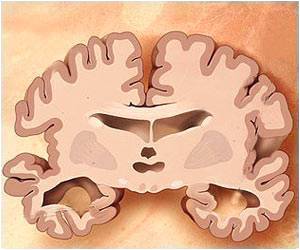
Mastinib as Add-on Treatment Improves Patients With Alzheimer's Disease
Masitinib has proved to be highly beneficial in treating mild to moderate Alzheimer’s disease. The prognosis was found to be better with masitinib as compared to placebo administration.
Masitinib has proved to be highly beneficial in treating mild to moderate Alzheimer’s disease. The prognosis was found to be better with masitinib as compared to placebo administration.
Source-Eurekalert