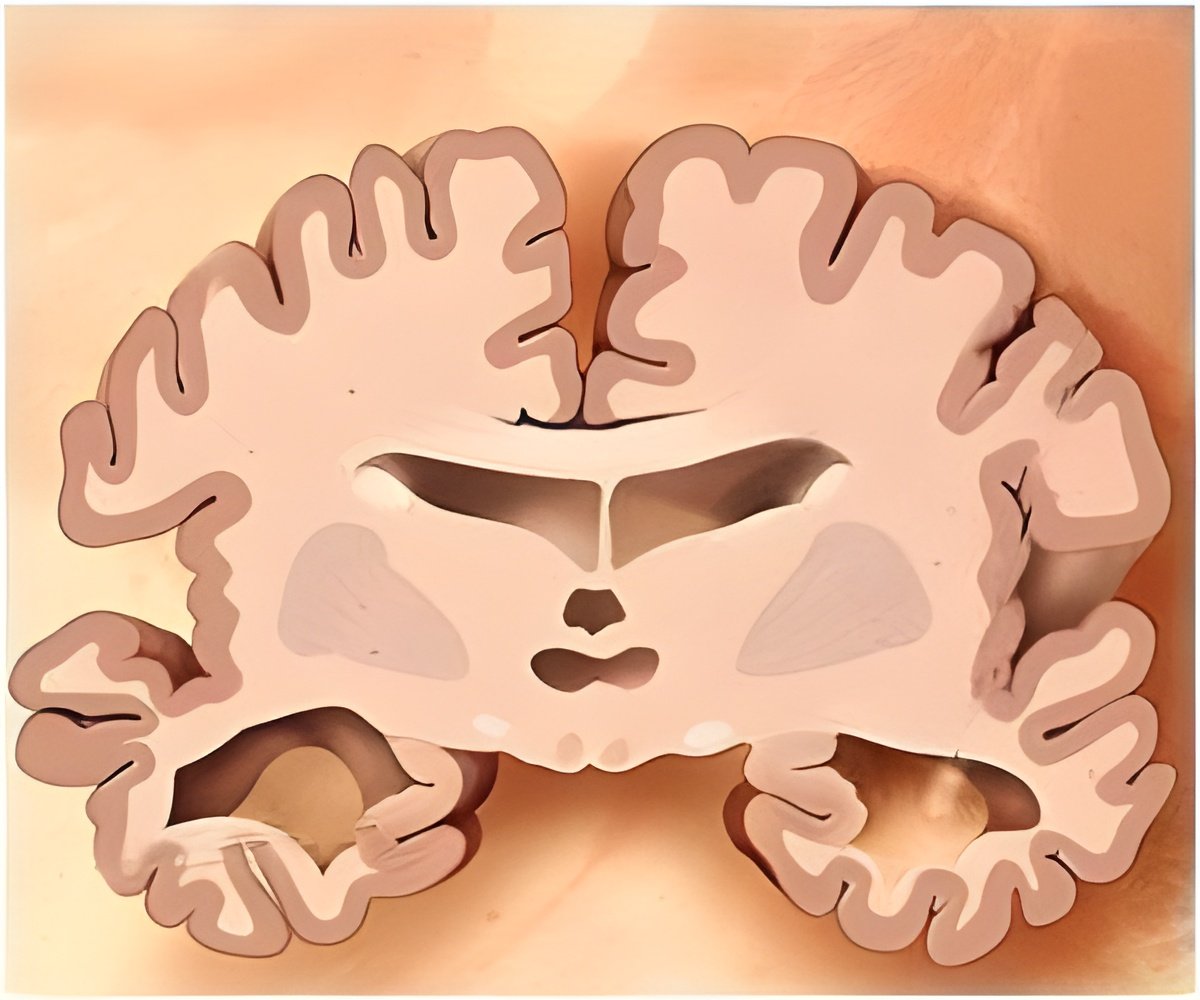

Rhode Island Hospital Researcher Identifies Link Between Brain Insulin Resistance and Alzheimer's Disease


Advertisement
by Kathy Jones on  June 28, 2012 at 9:47 PM Research News
PrintEmailComments Facebook Twitter StumbleUpon Digg Reddit Delicius RSS Feeds   Text 
A link between brain insulin resistance and two key mediators of neuronal injury which aid in propagation of Alzheimer's disease have been identified by Rhode Island Hospital researcher Suzanne de la Monte.
 Rhode Island Hospital Researcher Identifies Link Between Brain Insulin Resistance and Alzheimer's Disease

The research found that once AD is established, therapeutic efforts must also work to reduce toxin production in the brain. The study, Dysfunctional Pro-Ceramide, ER Stress, and Insulin/IGF Signaling Networks with Progression of Alzheimer's Disease, is published in the June 22, 2012, supplement of the Journal of Alzheimer's Disease.

Alzheimer's disease is one of the most common degenerative dementias, and more than 115 million new cases are projected worldwide in the next 40 years. There is clinical and experimental evidence that treatment with insulin or insulin sensitizer agents can enhance cognitive function and in some circumstances help slow the rate of cognitive decline in AD. Alzheimer's and other neurodegenerative diseases destroy the brain until the patients finally succumb. In order to effectively halt the process of neurodegeneration, the forces that advance and perpetuate the disease, particularly with regard to the progressive worsening of brain insulin/IGF resistance, must be understood.

"Brain insulin resistance (diabetes) is very much like regular diabetes," de la Monte said. "Since the underlying problems continue to be just about the same, we believe that the development of new therapies would be applicable for all types of diabetes, including Alzheimer's disease, which we refer to as Type III diabetes."

She continued, "This study points out that once AD is established, therapeutic efforts should target several different pathways—not just one. The reason is that a positive feedback loop gets going, making AD progress. We have to break the vicious cycle. Restoring insulin responsiveness and insulin depletion will help, but we need to reduce brain stress and repair the metabolic problems that cause the brain to produce toxins."

Ultimately, these findings will help to expand ways to both detect and treat AD.

Growing evidence supports the concept that AD is fundamentally a metabolic syndrome that leads to abnormalities linked to brain insulin and insulin-like growth factor (IGF) resistance. In AD, brain insulin and IGF resistance and deficiencies begin early and worsen with severity of the disease. The rationale behind the progression of the disease is that insulin-resistance dysregulates lipid metabolism and promotes ceramide accumulation, thereby increasing inflammation and lipid metabolism, causing toxic ceramides to accumulate in the brain. The end result is increased stress that threatens the survival and function of neurons in the brain.

The present study was designed to gain a better understanding of how brain insulin resistance becomes progressive and contributes to the neurodegeneration in AD, focusing on the roles of ceramides and stress. The researchers studied the same brain samples used previously to demonstrate progressive impairments in brain insulin/IGF signaling with increasing severity of AD.


Source-Eurekalert
Do you like this Report?
0

 Email Email  RSS Feeds RSS Feeds  Print this page Print  Save this page Save  Link Link  Syndicate Syndicate  Comments Comments 
 
Comment & Contribute
Comments should be on the topic and should not be abusive. Comments are normally moderated and are reviewed after they are posted.
* Your comment can be maximum of 2500 characters

Notify me when reply is posted
I agree to the terms and conditions
  
If you have a question about health related issues, you can now post it in our Ask An Expert section on our community website Medwonders.com and get answers from our panel of experts.
X

Related Links

Research Related News

  • Health News Index
A B C D E F G H I J K L M N O P Q R S T U V W X Y Z
News Archive
Date :
Category :
Keyword :
Quiz on Brain
Feeling bad, sad, silly or glad? Find out what is responsible by taking part in our brain quiz.
  • News Quick Links
News Central Health Watch
Latest Health News Health In Focus
News Category (500+) Breaking Health News
Popular News Celebrating Life
Health News and Press Release Medindia - Exclusive
News Photo Gallery India Special
News Video Gallery Lifestyle and Wellness
News From Other Resources
Insulin
Complete Medindia Resources
News Categories:  
Vision Health Center