"Music hath charms to soothe the savage breast,
To soften rocks, or bend a knotted oak."
-William Congreve
From infants to the infirm, music’s appeal is universal and nonpareil, wafting its way to the heart!
Dan Ellsey, a 33 year old cerebral palsy patient couldn’t agree with this more, for him music has become a novel way of expression. On his specially designed computer program called hyper score, Ellsey breaks into a composition to convey the innermost feelings in his heart. Just like Ellsey and for a many others, the repertoire of musical notes has helped convey a myriad of emotions, which words often fail to do.
The quintessence of communication, sound, is evident right from the instant of birth. A baby’s cry is endowed with a certain rhythm, pitch, intensity and purpose, to attract an appropriate response from the parents.
Our hearts beat to an internal rhythm. It is further believed that sounds influence the complete human energy system, increasing our response to them, which is perhaps one good reason why we are also called ‘musical beings’.
Music Therapy is "the prescribed use of music by a qualified person to effect positive changes in the psychological, physical, cognitive, or social functioning of individuals with health or educational problems" (American Music Therapy Association 1999).
Sound of Music in Medicine
The connection between music and healing dates back to the time of Plato and Aristotle when vibrations of sounds were employed to alleviate physical pain and relieve psychosomatic disorders.
Music therapy rose to prominence during World War I and World War II; at that time musicians were employed to render appropriate musical notes to alleviate mental trauma and physical pain to veterans of war. The response was so good that many hospitals began to employ musicians.
With the increasing popularity of music in medicine, the need for formal training in music therapy was felt. Thus, the first music therapy degree program was created in 1944 in Michigan State University. Many numbers of colleges have grown since then which enable degree programs in music therapy.
During the 1960’s, in Scandinavia and Britain, musical vibrations were used to heal. Popularly called as music baths, clients in Norway were bathed in sound and music.
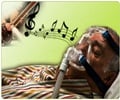
The more recent form of music therapy called as vibroacoustic therapy, is an extension of music baths, where sound is transferred directly from the air into the body of the patient. Certain medical conditions like cerebral palsy, asthma, constipation, abdominal pain, and sleeplessness have responded well to the treatment.
Music therapy involves the methodical application of music by a qualified music therapist to treat psychological and physiological aspects of illnesses. It also lends itself as a diagnostic tool in locating developmental delays and psychological issues in children. Further, music therapy supports other forms of medical treatment.
Broadly music therapy is used to alleviate pain, control stress, build communication, assist in physical rehabilitation, enhance memory, and aid expression. The services of music therapists’ are sought in hospitals, mental health departments’ nursing homes, psychiatric rehabilitation centers, and schools.
Music learning is known to give an impetus to communication skills, so the services of music therapists are sought in schools for helping special learners. It also helps people with mental health problems understand their feelings better, and leads to positive changes in their mood, enabling better control over their lives.
Music also provides the background support for physical exercise and takes away boredom while performing routine chores. It can be employed for reducing stress even among healthy people.
Music therapists initially make an assessment of the person against a set of parameters which includes – cognitive skills, physical health, emotional health, and communicative abilities. The therapists tailor music to meet the specific health needs of the individuals, which also involves periodical evaluation and follow up.
Body Tunes into Melody
Wondered why a baby sleeps peacefully hearing a lullaby?
Human behavior is profoundly influenced by music, according to the book ‘Biomedical Foundations of Music as Therapy’ by Dale B. Taylor. According to Dale, the brain is absolutely captivated by music and this positive influence is transmitted to the rest of the body.
"Musicophilia”, a book by neurologist Dr. Oliver Sacks, tries to delve into a deeper understanding of the brain’s responses to music. Offering an explanation he says, “It’s unclear why humans are so uniquely sensitive to music - certainly music shares many features with spoken language, and our brains are particularly developed to process the rapid tones and segments of sound that are common to both."
It is said that the moment we hear a tune, deep breathing increases, which is a good way to beat stress. Music also reduces heart rate, and regulates the body temperature appropriate for relaxation to set in. Further, the body secretes more of serotonin, in response to music. This is perhaps why a lullaby calms the baby, soothing it to sleep.
Research Sings Paeans
"Music washes away from the soul the dust of everyday life." -Red Auerbach
The state of ‘happiness’ while listening to a favorite number shows up in brain scans as evidence of positive response to music, report Scientists from the Montreal Neurological Institute. Appealing music is thought to titillate certain regions in the cortex of the brain, importantly regions associated with ‘thinking’. There have been many scientific studies that have enumerated the benefits of music therapy. Results of some of these are enlisted below:

Depression - Types, Causes, Symptoms, Diagnosis, Treatment
Depression is one of the most common mental disorders affecting approximately 340 million people in the world. No one is immune from depression - it occurs in people of all social classes, all countries and all cultural settings.
Depression is one of the most common mental disorders affecting approximately 340 million people in the world. No one is immune from depression - it occurs in people of all social classes, all countries and all cultural settings.
• A 2007 endeavor by Cochrane Collaboration, studied the data from 51 ‘pain’ studies and it showed that music helped reduce pain and the requirement for narcotic drugs.
• Cochrane Collaboration also found the immense benefits of music therapy in the improvement of certain mental conditions, for instance schizophrenia.
• Premature infants who listened to lullabies were found to be quick in learning the art of ‘sucking’ which helped them gain weight faster, compared to preemies not exposed to the benefits of music therapy.
Depression Screening Test
Online Depression Screening Test tells if you have mild or chronic depression based on your depression symptoms. Learn how to deal with depression by using this self-assessment calculator.
Online Depression Screening Test tells if you have mild or chronic depression based on your depression symptoms. Learn how to deal with depression by using this self-assessment calculator.
• Paralysis and Music Therapy to regain gait: Music therapy has helped patients suffering partial paralysis to regain their gait, according to research from the Center for Biomedical Research in Music at Colorado State University. Walking to the rhythms of music, patients retrain to walk much faster than patients who were not exposed to music therapy for rehabilitation.
Advertisement
Healing is undoubtedly a divine manifestation of music. From ‘touching a chord’ to ‘touching a cure’ the world of medicine is swaying to the boundless repertoire of music. ‘Without music, life is a journey through a desert’, Pat Conroy said, and medicine agrees to it wholeheartedly!
Advertisement
SAVITHA/L