Diabetes Type 1, Type 2 - Causes Symptoms Diagnosis and Treatment FAQs
A comprehensive article on diabetes - both Type 1 and Type 2 diabetes, including : causes, signs, symptoms, diagnosis, treatment, facts and a glossary on diabetes.
A comprehensive article on diabetes - both Type 1 and Type 2 diabetes, including : causes, signs, symptoms, diagnosis, treatment, facts and a glossary on diabetes.
"With this methodology, we have advanced methods for tracing metabolic pathways that are perturbed in disease," said senior author Fariba Assadi-Porter, a University of Wisconsin-Madison biochemist and scientist at the Nuclear Magnetic Resonance Facility at Madison.
"It's a cheaper, faster, and more sensitive method of diagnosis."
Diabetes Diet Plan
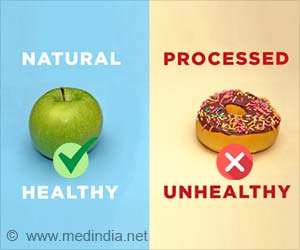
Diet plays a significant role in controlling diabetes. Most cases of diabetes are preventable with healthy lifestyle changes.
Diet plays a significant role in controlling diabetes. Most cases of diabetes are preventable with healthy lifestyle changes.
PCOS affects approximately 1 in 10 women but currently can only be diagnosed after puberty and by exclusion of all other likely diseases - a time-consuming and frustrating process for patients and doctors alike.
Advertisement

Diabetes and Exercise
Regular exercise especially in type II diabetes not only helps reduce the sugar but also reduces the demand for medication by 20% and helps you stay healthy.
Regular exercise especially in type II diabetes not only helps reduce the sugar but also reduces the demand for medication by 20% and helps you stay healthy.
The researchers were able to detect distinct metabolic changes in the mice by measuring the isotopic signatures of carbon-containing metabolic by-products in the blood or breath.
Advertisement
Diabetes Type 2 and Its Link to Sugar-Sweetened Beverages
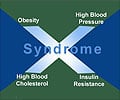
Sugar-sweetened beverages contribute to metabolic syndrome leading to higher risk for type-2 diabetes and cardiovascular disease.
Sugar-sweetened beverages contribute to metabolic syndrome leading to higher risk for type-2 diabetes and cardiovascular disease.
Within minutes, they could measure changes in the ratio of carbon-12 to carbon-13 in the carbon dioxide exhaled by the mice, said co-author Warren Porter, a UW-Madison professor of zoology.
One advantage of the approach is that it surveys the workings of the entire body with a single measure. In addition to simplifying diagnosis, it could also provide rapid feedback about the effectiveness of treatments.
"The pattern of these ratios in blood or breath is different for different diseases - for example cancer, diabetes, or obesity - which makes this applicable to a wide range of diseases," explained Assadi-Porter.
The technology relies on the fact that the body uses different sources to produce energy under different conditions.
"Your body changes its fuel source. When we're healthy we use the food that we eat," Porter said.
"When we get sick, the immune system takes over the body and starts tearing apart proteins to make antibodies and use them as an energy source."
That shift from sugars to proteins engages different biochemical pathways in the body, resulting in distinct changes in the carbon isotopes that show up in exhaled carbon dioxide.
If detected quickly, these changes may signal the earliest stages of disease.
The researchers found similar patterns using two independent assays - nuclear magnetic resonance spectroscopy on blood serum and cavity ring-down spectroscopy on exhaled breath.
The breath-based method is particularly exciting, they say, because it is non-invasive and even more sensitive than the blood-based assays.
In the mice, the techniques were sensitive enough to detect statistically significant differences between even very small populations of healthy and sick mice.
The current cavity ring-down spectroscopy analysis uses a machine about the size of a shoebox, but the researchers envision a small, hand-held "breathalyzer" that could easily be taken into rural or remote areas.
The study has been published online in the peer-reviewed journal Metabolism.
Source-ANI