
Sonography Centres Under Scanner in Rajasthan
Licenses of six sonography centres have been cancelled in Jaipur by the Rajasthan government.
Licenses of six sonography centres have been cancelled in Jaipur by the Rajasthan government.
Matthew Clarke, a former National Research Council-supported postdoctoral fellow in Hwang's group who is currently working in the National Gallery of Art in Washington, D.C., wrote new software for a device called a microarrayer, so named because it is capable of laying down hundreds of tiny sample droplets in specific places on a microscope slide's surface. Normally a microarrayer creates DNA arrays for genetic research, but the team remade it into an artistic tool, programming it to select chemicals of different hues and lay them down on the slide's surface.
The results, which look a bit like dot-matrix printing, can be used to calibrate medical HSI devices and image analysis algorithms. When combined with HSI in a medical imaging application, this effort could allow a surgeon to look for cells with a specific chemical makeup, as determined by the cells' color.
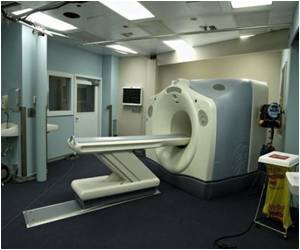
Study Says Scanners Could Reduce Number of Autopsies
Medical scanners could be used to investigate the causes of death, reducing the need for autopsies, reveals study published in The Lancet.
Medical scanners could be used to investigate the causes of death, reducing the need for autopsies, reveals study published in The Lancet.
Source-Eurekalert

UK Airports to Get Naked Body Scanners
After the European Commission (EU) declared them safe, 'naked' body scanners could soon be installed at UK airports.
After the European Commission (EU) declared them safe, 'naked' body scanners could soon be installed at UK airports.

Safety of Leftover Food Detected by Phone Scanner
The Daily Mail is reporting that a mobile phone that can detect whether leftovers in your fridge are safe to eat could be available soon.
The Daily Mail is reporting that a mobile phone that can detect whether leftovers in your fridge are safe to eat could be available soon.