Fracture - Types - Causes - Symptoms - Diagnosis - Treatment - FAQs
A fracture is a condition where the continuity of the bone is lost. Majority of bone fractures occur because of high force impact or stress on a bone.
A fracture is a condition where the continuity of the bone is lost. Majority of bone fractures occur because of high force impact or stress on a bone.
The study, conducted at Keller Army Hospital/West Point in West Point, N.Y., showed that cadets with a self-reported history of shoulder instability, who had no previous surgical procedure to correct it, were five times more likely than their peers without such a history to experience subsequent shoulder instability -- most within two years. All cadets were required to participate in vigorous physical education, competitive sports and military training activities.
"Our cadets, who are also college athletes, face demanding physical challenges and are susceptible to traumatic injuries that can cause shoulder instability," said Lt. Col. Brett D. Owens, M.D., a co-author of both studies and chief of Orthopedic Surgery Service at Keller Army Hospital/West Point.
Fracture of Knee Cap - Causes - Symptoms - Diagnosis - Treatment - FAQs
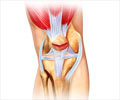
Patella fracture is a kneecap injury that needs surgical correction. Undisplaced fracture can be healed by using a brace to keep the knee immobile.
Patella fracture is a kneecap injury that needs surgical correction. Undisplaced fracture can be healed by using a brace to keep the knee immobile.
Authors of the second study determined that patients who underwent arthroscopic Bankart repair, a surgical procedure to stabilize the shoulder by reattaching torn ligaments, had a 50 percent lower failure rate than patients receiving an open procedure, a surgical procedure in which an incision is made.
Advertisement

Colles Fracture / Broken Wrist
Colles fracture or broken wrist is a wrist fracture, which occurs within an inch of the wrist joint. Colles fracture involves the forearm bone’s distal end of the radius.
Colles fracture or broken wrist is a wrist fracture, which occurs within an inch of the wrist joint. Colles fracture involves the forearm bone’s distal end of the radius.
Although open Bankart repair has long been considered the gold-standard for shoulder instability repair, a refinement of technique and broader acceptance of arthroscopic repairs increased the prevalence of arthroscopic procedures to 90 percent of all Bankart repairs in 2008, according to the American Board of Orthopaedic Surgery. Yet, one in 10 military service members who underwent this procedure still needed revision surgery or were medically discharged from the military with a persistent shoulder disability.
Advertisement

About Lifestyle and Osteoporosis
Encyclopedia section of medindia briefly explains about Lifestyle and Osteoporosis
Encyclopedia section of medindia briefly explains about Lifestyle and Osteoporosis
The second study, "Outcomes After Bankart Repair in a Military Population: Predictors for Surgical Revision and Long-Term Disability," evaluated 3,854 patients who underwent Bankart repair. Of those patients, 3,230 underwent arthroscopic procedures and 624 had open repairs. Patients were predominately male (92 percent) with a mean age of 28.0 years. During the study time period (2003 to 2010), 193 (5.0 percent) patients had an additional stabilization procedure, 237 (6.2 percent) patients were medically discharged from the military with complaints of shoulder instability, and 100 patients underwent revision procedure and shoulder-related discharge, resulting in a total combined failure rate of 8.6 percent (n=330).
Source-Eurekalert