A Spanish study suggests that there exists no link between fried foods and increased risk for heart disease if olive or sunflower oil is used as the cooking medium. Frying as a mode of cooking foods is common not just in the West but in several Asian countries as well.
Most people are unaware of the fact that when food is fried, the nutritional contents undergo a transformation; the food loses water and absorbs fat, thereby increasing its calorie content. Through the processes of oxidation and hydrogenation, frying also brings about a change in the cooking medium and increases the trans fats content. The degraded content of the oil used are absorbed by the food that’s being fried.
In the EPIC –Spain cohort prospective study, an attempt was made to analyze the association between the consumption of food and the risk of developing coronary heart disease in people.
Healthy men from five Spanish regions of north and south Spain were the subjects of the study. These regions had widely varied food habits and were therefore highly suitable for the study. The subjects mostly comprised of blood donors, civil servants and the general public.
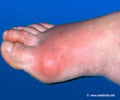
Foods to Avoid in Gout
Gout occurs due to excess uric acid content. Gout is a painful form of arthritis and is a disorder of purine metabolism. Find out the foods to avoid if you have gout.
Gout occurs due to excess uric acid content. Gout is a painful form of arthritis and is a disorder of purine metabolism. Find out the foods to avoid if you have gout.
Non- dietary variables such as smoking, exercise and educational levels were obtained. Standardized procedures were employed to measure weight, height and waist circumference.
Advertisement

Keeping Fried Foods at Bay is Vital to Maintain a Healthy Heart
A new study showing that fatty foods cooked at high temperatures may cause a significant dysfunction in blood vessel dilation that can lead to heart disease
A new study showing that fatty foods cooked at high temperatures may cause a significant dysfunction in blood vessel dilation that can lead to heart disease
It was observed that those who were younger and better educated consumed more fried food. They also consumed less fruits, vegetables, nuts, milk and non- fried fish. The habit of eating fried foods was more common in men than in women.
Advertisement

Fried Foods, Salt and Meat Could Mean Increased Chances of Heart Attack, Canadian Study Confirms
More proof to show that animal fat and junk food can lead to heart attacks. A Canadian study confirms that diet rich in fried foods, salt and meat
More proof to show that animal fat and junk food can lead to heart attacks. A Canadian study confirms that diet rich in fried foods, salt and meat
The EPIC-Spain cohort suggests that frying with olive oil or sunflower oil is not usually associated with a higher risk of coronary heart disease. That may not be the case if frying is carried out with other fats.
Although the study had limitations, it helped to put forth the fact that in Mediterranean countries where large amounts of fried food is consumed, the risk of coronary heart disease was not too high. This is largely due to the fact that most of the frying is done using olive or sunflower oil.
The results are mostly applicable in places where frying methods are similar to those carried out in Spain. Here, the oil used for frying is almost never reused and the amount of salt consumed with fried foods is low.
Reference: “Consumption of fried foods and risk of coronary heart disease:”
Spanish cohort of the European Prospective Investigation into Cancer and Nutrition study; Pilar et al; BMJ 2012;344:e363
Source-Medindia