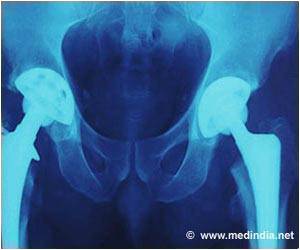
Hip replacement is undoubtedly one of the greatest achievements of modern medical science. It has mitigated the excruciating pain and has effectively restored movements to a large extent. Hip joint is a ball and socket joint. When the hip joint is damaged from arthritis or an injury, hip replacement surgery may be required. The surgical procedure involves replacing the diseased cartilage and bone of the hip joint with artificial material.
Artificial metallic ball and stem, called prosthesis, made from chromium and cobalt are commonly employed for the joint’s replacement. They are cemented in the femur central core with the aid of bony cement known as methylmethacrylate. However cement-less prosthesis is also used especially in younger patients because it allows bony ingrowths through its microscopic pores.Stemmed metal-on-metal (MoM) implants should be avoided as they have high failure rates. The failure rates are basically due to metal poisoning and dislocation. The MoM implants can cause the metals to rub against each other and shed tiny metal particles into the body causing damage to the soft tissues such as muscles and ligaments. The particles may also enter the bloodstream causing metal poisoning.
Again, loosening of the prosthesis can result in dislocation. To avoid this earlier researchers switched to implantation of large diameter MoM bearing surfaces on stemmed prostheses. However, failure rates didn’t lower. Young adults and women faced greater risks as compared to others.
So, to find out if MoM bearing surfaces lead to increased implant survival compared with other bearing surfaces in stemmed hip replacements, Alison Smith and colleagues from the University of Bristol, assessed information record of 402,051 hip replacements out of which 31171 were stemmed metal-on-metal.

Obesity Increase Risk Knee Hip Replacement
Being fat can increase the risk of primary joint replacement in patients with osteoarthritis, a new study suggests.
Being fat can increase the risk of primary joint replacement in patients with osteoarthritis, a new study suggests.
The probable failure rates for stemmed MOM (metal-on-metal) were based upon different sizes of femur head. The researchers compared the MOM with the prosthesis made from polythene and ceramic.
Advertisement
Link Between Metal Hip Replacements and Cancer
Metal hip replacements lead to cancer, poisoning and pain, caution surgeons.
Metal hip replacements lead to cancer, poisoning and pain, caution surgeons.
It was also seen that the failure rate was high with large head size and less with small head size. Prosthesis made from ceramic-on-ceramic was found to do better with the large head sizes.
Advertisement

Metal-on-Metal Hip Implants may be Harmful, Says Surgeon
One of the most popular hip replacement surgery could in fact prove to be harmful for the body, a Canadian orthopedic surgeon has warned.
One of the most popular hip replacement surgery could in fact prove to be harmful for the body, a Canadian orthopedic surgeon has warned.
The final conclusion drawn was -
• Poor implant survival rates were obtained with stemmed MOM therefore it should not be opted for.
• Patients with stemmed MOM should be carefully watched and monitored, especially young females implanted with large sized heads.
• Ceramics are found to do well in the large size category.
• Annual check-ups are mandatory as a review procedure.
Reference:
Failure rates of stemmed metal-on-metal hip replacements: analysis of data from the National Joint Registry of England and Wales; Alison et al; The Lancet; Online Publication 2012.
Source-Medindia