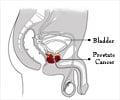
Enzalutamide was discovered by Charles Sawyers and was previously known as MDV3100. It is an androgen receptor antagonist medicine developed by Medivation pharmaceutical company.
About 89 percent of improvement in prostate cancer has been reported by administering enzalutamide for a month.
Quiz on Prostate Cancer
Prostate cancer is fast gaining as a common cancer form among men; more threatening since its symptoms often go unnoticed until it’s too late. This quiz tests your knowledge on prostate cancer, its diagnosis and treatment options and is as mandatory for men as the screening tests mentioned here are!
Prostate cancer is fast gaining as a common cancer form among men; more threatening since its symptoms often go unnoticed until it’s too late. This quiz tests your knowledge on prostate cancer, its diagnosis and treatment options and is as mandatory for men as the screening tests mentioned here are!
Thomas Flaig, co-author and MD, medical director of the University of Colorado Cancer Center's Clinical Investigations, said, “This is a major advance. Not only do we see more survival benefit than from traditional chemotherapy, but the side effects of Enzalutamide are much lower. It provides both more benefit and less harm -- you get the quantification of more life, but also see quality of life improvements."
This study is popularly known by the acronym AFFIRM. About 1100 volunteers with prostate cancer were enrolled for the study. Both chemotherapy and hormonal treatments were done but no actual relief was obtained.

Androgens bind to the cancer cells’ androgen receptors that are the tentacles present on the outer side of cells designed to entangle androgen molecules. Enzalutamide plugs or seals these receptors and does not allow them to grab androgen molecules.
Advertisement
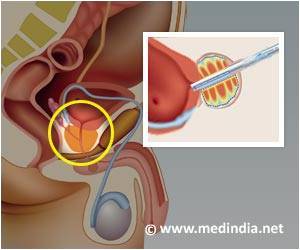
Managing Prostate Cancer with Focal Therapy
Focal therapies such as cryotherapy, High-Intensity-Focused Ultrasound (HIFU) Vascular targeted photodynamic therapy are effective ways of managing low risk or intermediate risk prostate cancer.
Focal therapies such as cryotherapy, High-Intensity-Focused Ultrasound (HIFU) Vascular targeted photodynamic therapy are effective ways of managing low risk or intermediate risk prostate cancer.
Thomas Flaig further mentioned, "Prostate cancer has traditionally been viewed as having two phases, first is the hormone-sensitive stage and second is the stage at which the disease is no longer dependent on hormones and we're forced to turn to more toxic chemotherapies."
Advertisement

Prostate Cancer Screening
PSA (Prostate Specific Antigen) test and Digital Rectal Examination are two tests that allow detection of prostate cancer at early stages.
PSA (Prostate Specific Antigen) test and Digital Rectal Examination are two tests that allow detection of prostate cancer at early stages.
However, this study has redefined ‘hormonal refractory’ prostate cancer and has confirmed the significance of androgen-targeted treatments in the later stages of the disease.
Flaig stated, "This approach represents a much more potent and effective means of targeting the androgen receptor than possible with previously available agents. While this study examined the effect of adding Enzalutamide to standard androgen deprivation therapy, future studies could explore a single agent approach with this drug to treat prostate cancer."
He added that further researches on pre-chemotherapy activity are in progress.
The scientist highlighted, "We are in a renaissance period in the medical therapy of prostate cancer. Enzalutamide is a key member of a half dozen new and emerging drugs and the challenge of the next five years is to discover how to best time and potentially combine these new agents. But even at this early stage, Enzalutamide is a game changer."
It was noticed that Enzalutamide considerably enhanced the survival rate of prostate cancer patients with metastatic castration-resistant cancer of prostate post chemotherapy. The study was financially supported by Medivation and Astellas Pharma Global Development.
Reference:
Increased Survival with Enzalutamide in Prostate Cancer after Chemotherapy; Howard Scher et al; N Engl J Med 2012; 367:1187-1197
Source-Medindia


![Prostate Specific Antigen [PSA]](https://www.medindia.net/images/common/patientinfo/120_100/prostate-specific-antigen.jpg "Prostate Specific Antigen [PSA]")