A recent study has claimed that women who take even small doses of painkillers, such as ibuprofen, early on in their pregnancy are two times more at a risk of suffering a miscarriage.
The research which was published in the Canadian Medical Association Journal, revealed that pregnant women consuming any form or dose of NSAIDs (Non-steroidal anti-inflammatory drugs) during the first 20 weeks of pregnancy increased their risk of spontaneous abortion by 2.4 times.
Miscarriage - Causes - Symptoms - Diagnosis - Treatment - FAQs
A miscarriage (spontaneous abortion) is the spontaneous loss of a fetus before the 20th week of pregnancy.
A miscarriage (spontaneous abortion) is the spontaneous loss of a fetus before the 20th week of pregnancy.
The study was carried out on 4,705 cases of miscarriage, of which 352 (7.5%) were administered a non-aspirin NSAID. The women who were part of the study were between the ages of 15 to 45. They were compared with 47,050 women of the same age, who did not suffer miscarriage, of whom 1,213 (2.6%) had used an NSAID.
The drug which was found to be the most deleterious, with the highest risk of miscarriage, was Diclofenac when used on its own, and the drug with the lowest risk was rofecoxib. Interestingly the latter was taken out of use in 2004 because of safety concerns.
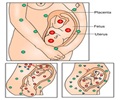
First Trimester - Drugs
Encyclopedia section of medindia explains in brief about the drugs in first trimester of pregnancy
Encyclopedia section of medindia explains in brief about the drugs in first trimester of pregnancy
The researchers conclude, "Women who were exposed to any type and dosage of non-aspirin NSAID during early pregnancy were more likely to have a spontaneous abortion. Given that the use of non-aspirin NSAIDs during early pregnancy has been shown to increase the risk of major congenital malformations and that our results suggest a class effect on the risk of clinically detected spontaneous abortion, non-aspirin NSAIDs should be used with caution during pregnancy." Earlier studies conducted on similar lines have produced mixed results.
Advertisement

Quiz on Abortion
Statistics say that approximately 42 million abortions are done every year, worldwide. So take this quiz on abortion and get to know its essential facts.
Statistics say that approximately 42 million abortions are done every year, worldwide. So take this quiz on abortion and get to know its essential facts.
According to Janey Fyle, the RCM’s professional policy adviser, the most important advice to pregnant women is to report any pain to the midwife and avoid buying over the counter medication, as it may be contraindicated in pregnancy.
Advertisement

NSAIDs In First trimester Linked To Congenital Anomalies In Babies
The use of NSAID by women in their first trimester could be associated with cardiac abnormalities in babies.
The use of NSAID by women in their first trimester could be associated with cardiac abnormalities in babies.
Reference:
Guardian.co.uk
Source-Medindia